HSE Decision Could Add 4,000 Patients Monthly to Outpatient Waiting Lists, Doctors Warn
Medical professionals have warned that an HSE administrative decision could add up to 4,000 patients per month to already-strained outpatient waiting lists, exacerbating a crisis that has seen hundreds of thousands of people waiting for specialist appointments across the Republic of Ireland. The warning, which has not yet been formally responded to by the HSE, comes as the health service faces broader scrutiny over its use of insourcing arrangements to reduce waiting lists and the governance of several funded organisations.
Background
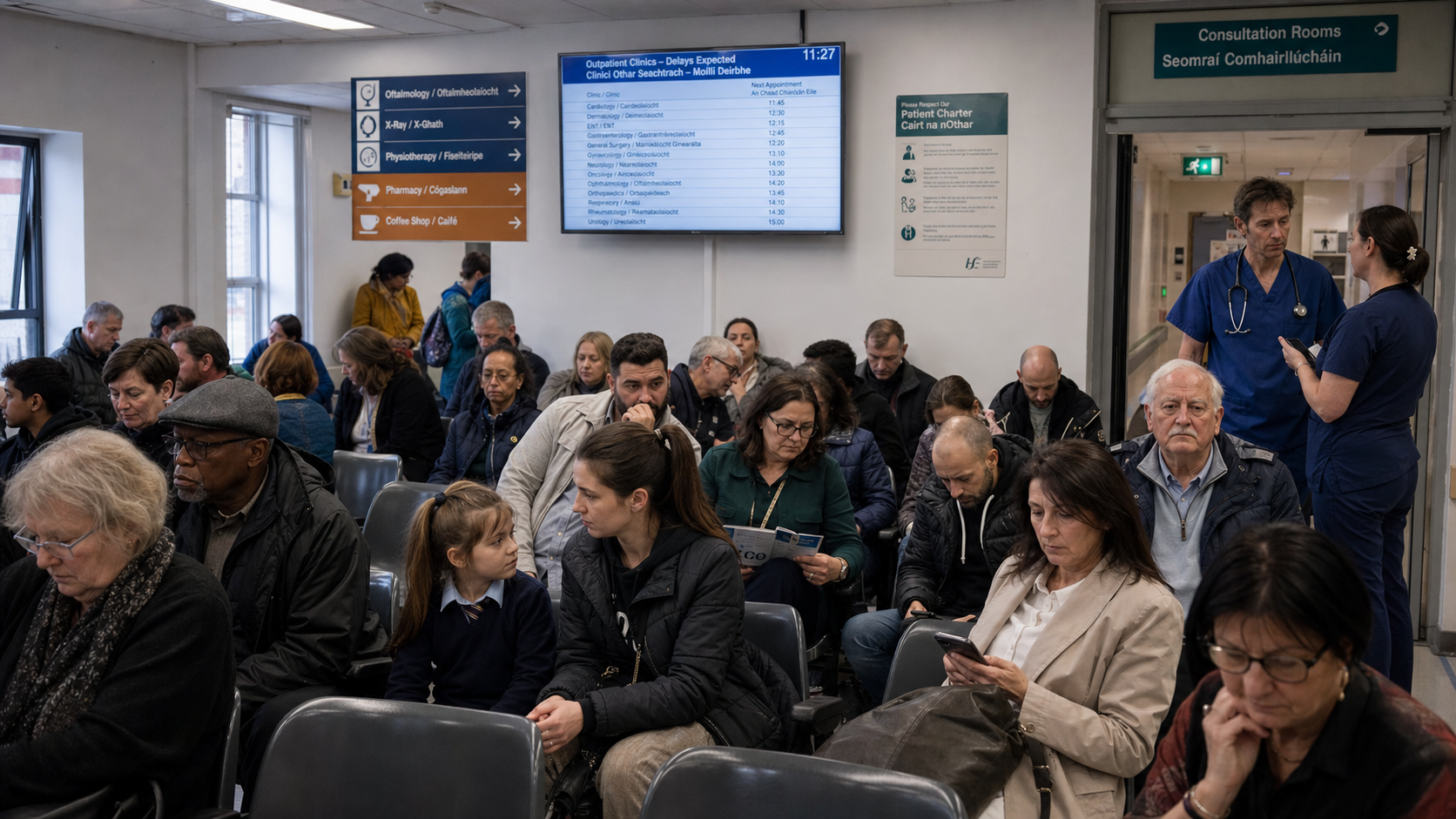
Ireland's outpatient waiting list crisis is one of the most persistent and politically sensitive challenges facing the health system. Hundreds of thousands of people are waiting for specialist appointments at any given time, with waits of two, three, or even four years not uncommon for certain specialties. The crisis has multiple causes: an undersupply of specialist consultants relative to population, inadequate outpatient clinic capacity, inefficient referral pathways, and a primary care system that is insufficiently resourced to manage conditions that would otherwise require specialist input.
The HSE has deployed a range of measures to address the waiting list backlog, including the establishment of surgical hubs designed for low-complexity, high-volume procedures, the use of insourcing arrangements under which consultants are paid additional fees to see patients outside their contracted hours, and the development of new outpatient models that use advanced nurse practitioners and other non-consultant healthcare professionals to manage demand. These measures have had some impact, but the underlying structural problems have not been resolved, and the waiting list figures remain stubbornly high.
The specific administrative decision that has prompted the latest warning has not been publicly identified by the HSE, but medical sources indicate that it relates to changes in how patients are categorised and managed within the outpatient system. The concern is that the decision will result in patients who were previously being managed through alternative pathways being returned to the main waiting list, adding to the already substantial backlog.
Key Developments
The warning was raised by medical professionals in communications with the Irish Times, which reported that the HSE decision could add up to 4,000 patients per month to outpatient waiting lists. The figure, if accurate, would represent a significant deterioration in the waiting list position at a time when the HSE is under pressure to demonstrate progress on reducing backlogs.
The HSE has also been facing scrutiny over its use of insourcing arrangements, which have been criticised by some healthcare analysts as an expensive and unsustainable way of managing waiting list demand. The arrangements, under which consultants are paid additional fees to see patients outside their contracted hours, have been effective in reducing waiting times in some specialties, but they have also raised questions about value for money and about the governance of the contracts involved.
A separate governance concern has emerged around the HSE's oversight of funded autism charities, with reports of a review into the financial records of at least one organisation that receives HSE funding. The review reflects broader concerns about the governance of the voluntary sector organisations that deliver a significant proportion of HSE-funded services, particularly in the disability and mental health areas.
Why It Matters
The outpatient waiting list crisis matters because it has direct, tangible consequences for the health and wellbeing of the people on those lists. A patient waiting two years for a specialist appointment is not simply experiencing an inconvenience — they may be living with undiagnosed or undertreated conditions that are affecting their quality of life, their ability to work, and their long-term health outcomes. The addition of 4,000 patients per month to an already-strained system would compound those consequences for tens of thousands of people.
The crisis also matters because it is a measure of the gap between the health system that Ireland aspires to have and the one it actually has. The Sláintecare reform programme, which was designed to transform the Irish health system into a universal, single-tier service, has been implemented only partially and unevenly, and the waiting list crisis is one of the most visible symptoms of that incomplete transformation. Unlike Northern Ireland, where the NHS provides a single-tier service with its own waiting list challenges, the Republic's two-tier system means that those who can afford private health insurance can access specialist care much more quickly than those who cannot.
Local Impact
The waiting list crisis affects patients across all HSE regions, but its impact is felt most acutely in areas where specialist services are concentrated — in Dublin, Cork, Galway, and Limerick — and in rural areas where patients must travel long distances to access specialist care. The HSE's six hospital groups, which are responsible for managing outpatient services across the country, have been working to develop regional solutions to the waiting list problem, but progress has been uneven. Patients in the Saolta Hospital Group, which covers the west and north-west, face some of the longest waits in the country for certain specialties.
What's Next
The HSE is expected to respond formally to the warning about the potential addition of 4,000 patients per month to outpatient waiting lists within the coming days. Health Minister Jennifer Carroll MacNeill has been briefed on the situation and is expected to make a statement to the Dáil when it returns from its summer recess in September. The HSE's next quarterly waiting list report, which will provide updated figures on the scale of the backlog, is due in August.