Dáithí's Law Three Years On: How Opt-Out Organ Donation Has Changed Northern Ireland
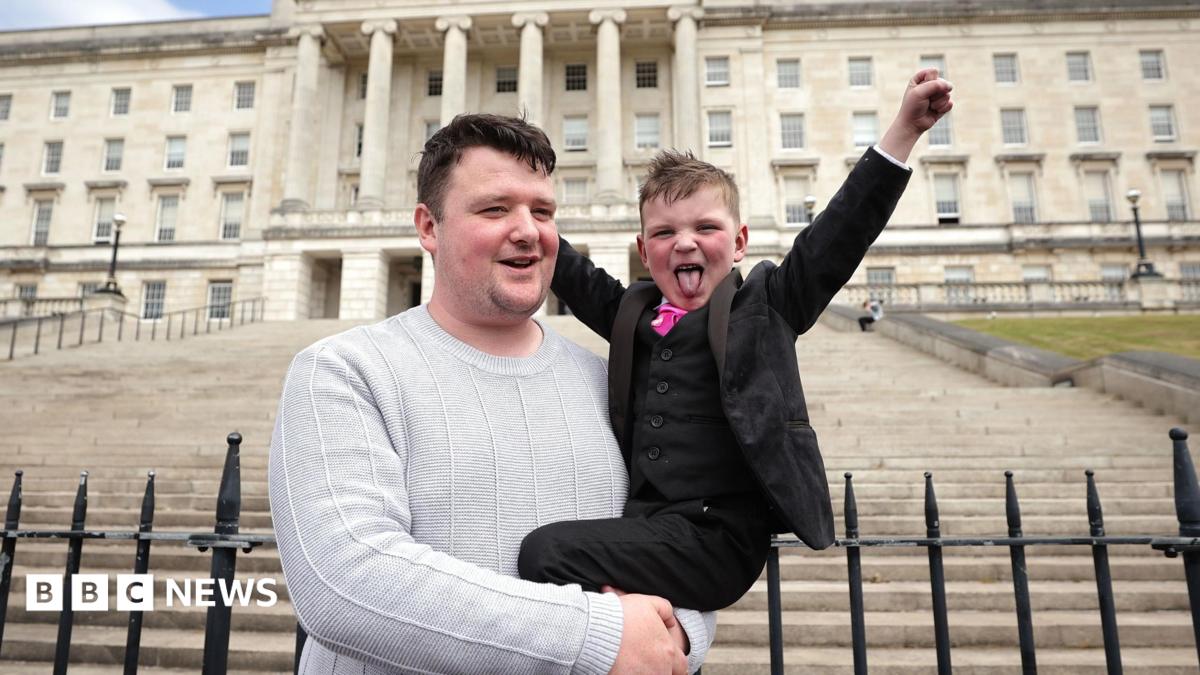
Three years after the introduction of Dáithí's Law — the opt-out organ donation legislation championed by the Mac Gabhann family of west Belfast — Northern Ireland's organ donation landscape has undergone a measurable transformation, with the soft opt-out system prompting thousands of conversations within families about end-of-life wishes and contributing to an increase in the pool of potential donors. The law's real-world impact has been brought into sharp focus this week by the news that nine-year-old Dáithí Mac Gabhann, the boy whose family's campaign drove the legislation, has received a life-saving heart transplant after an almost eight-year wait.
Background
The Organ and Tissue Donation (Deemed Consent) Act — Dáithí's Law — came into force in Northern Ireland in June 2023, establishing a soft opt-out system under which adults are presumed to consent to organ donation after death unless they have registered an objection. The legislation brought Northern Ireland into line with England, Wales, and Scotland, all of which had already adopted opt-out systems, and it represented the culmination of a campaign by Máirtín Mac Gabhann and Seph Ní Mheallain that had begun when their son Dáithí was placed on the transplant waiting list in 2018.
The opt-out model is based on the evidence that presumed consent increases donation rates by changing the default position from inaction to donation. Under the previous opt-in system, families were often asked to make a decision about donation at a moment of acute grief, without knowing what their loved one would have wanted. The opt-out system shifts that dynamic: it creates a presumption of consent that families can override, but it also encourages people to have conversations about their wishes while they are alive, reducing the burden on families at the most difficult moment.
Northern Ireland had historically had lower organ donation rates than the rest of the United Kingdom, a disparity that advocates attributed partly to the absence of an opt-out system and partly to cultural and religious factors that made conversations about death and donation more difficult in some communities. The introduction of Dáithí's Law was designed to address the first of those factors, while the public awareness campaign that accompanied it sought to address the second.
Key Developments
The Public Health Agency of Northern Ireland, which oversees the implementation of Dáithí's Law, has reported that the number of people on the organ donor register in Northern Ireland has increased significantly since the law came into force. More importantly, the number of families who have been asked about donation and have agreed to proceed has also increased, suggesting that the law is having the intended effect of normalising conversations about donation and reducing the rate of family refusals.
The Belfast Health and Social Care Trust, which manages the region's transplant services, has noted an improvement in the availability of donor organs for patients on the waiting list, though the trust has been careful to note that the relationship between the opt-out system and donation rates is complex and that other factors — including improvements in critical care and the identification of potential donors — also play a role.
The news of Dáithí Mac Gabhann's transplant has provided the most powerful possible illustration of what the law is for. Dáithí's eight-year wait was, by his family's account, the longest endured by any child in the world for a heart transplant — a statistic that underscores both the scarcity of paediatric donors and the importance of every measure that can increase the pool of available organs. His transplant is a reminder that behind every statistic about donation rates is a child, or an adult, whose life depends on the generosity of a donor family.
Why It Matters
The three-year review of Dáithí's Law matters because it provides an opportunity to assess whether the legislation is delivering the outcomes its advocates promised. The early evidence is encouraging, but the full impact of an opt-out system typically takes several years to become apparent, as the cultural shift it promotes — from donation as an exceptional act to donation as the expected default — takes time to embed itself in public consciousness.
The law also matters as a model for other jurisdictions. The Republic of Ireland introduced its own opt-out system in 2023, and several other countries are considering similar legislation. Northern Ireland's experience — including the public awareness campaign that accompanied the law and the community engagement that has been central to its implementation — provides a template that other jurisdictions can learn from.
Local Impact
The impact of Dáithí's Law is felt most directly by the families of patients on transplant waiting lists across Northern Ireland. The Belfast Health and Social Care Trust manages the region's transplant programme, and its staff — including the specialist nurses who approach families about donation — have been central to the implementation of the new system. The trust has reported that the conversations it has with families about donation have become easier since the law came into force, as the opt-out system has created a framework within which those conversations can take place more naturally.
What's Next
The Department of Health in Northern Ireland is expected to publish a formal review of Dáithí's Law's operational impact in late 2026, providing the first comprehensive assessment of how the legislation has affected donation rates and transplant outcomes. The Public Health Agency will continue its public awareness campaign, with a particular focus on reaching communities where conversations about donation have historically been less common. The Mac Gabhann family has indicated they intend to continue their advocacy work, ensuring that the momentum generated by their campaign is maintained.