State Pays Levies on Its Own Derelict Sites as HSE Faces Dáil Fury Over Vacant Properties
The Health Service Executive has been accused of a "cavalier approach" and "indifference" to Ireland's housing crisis after it emerged that the State is effectively paying derelict site levies to local authorities for its own neglected properties — a situation that opposition TDs described in the Dáil as an absurdity that encapsulates the dysfunction at the heart of the government's housing response.
Background
Ireland's housing crisis has been characterised by a persistent gap between the supply of homes and the demand for them, a gap that has driven rents and purchase prices to levels that are unaffordable for a growing proportion of the population. The government's response has focused primarily on stimulating private sector construction and expanding social housing delivery, but critics have long argued that the State is sitting on a significant asset base — vacant and derelict properties — that could be mobilised to address the crisis more quickly than new construction.
The derelict sites register, maintained by local authorities under the Derelict Sites Act 1990, provides a partial picture of the scale of the problem. Across Ireland's 31 local authorities, approximately 2,500 sites are currently listed as derelict — a figure that most housing experts believe significantly understates the true extent of vacancy and dereliction, given the inconsistent way in which local authorities apply the legislation.
The revelation that State bodies are among the owners of derelict sites — and are paying levies to local authorities for the privilege of leaving them in that condition — has added a new dimension to the debate. The derelict site levy, which is set at 7% of the market value of a derelict site per year, is intended to incentivise owners to bring properties back into use. When the owner is a State body, the levy is effectively a transfer of money from one part of the public sector to another, with no net benefit to the housing supply.
Key Developments
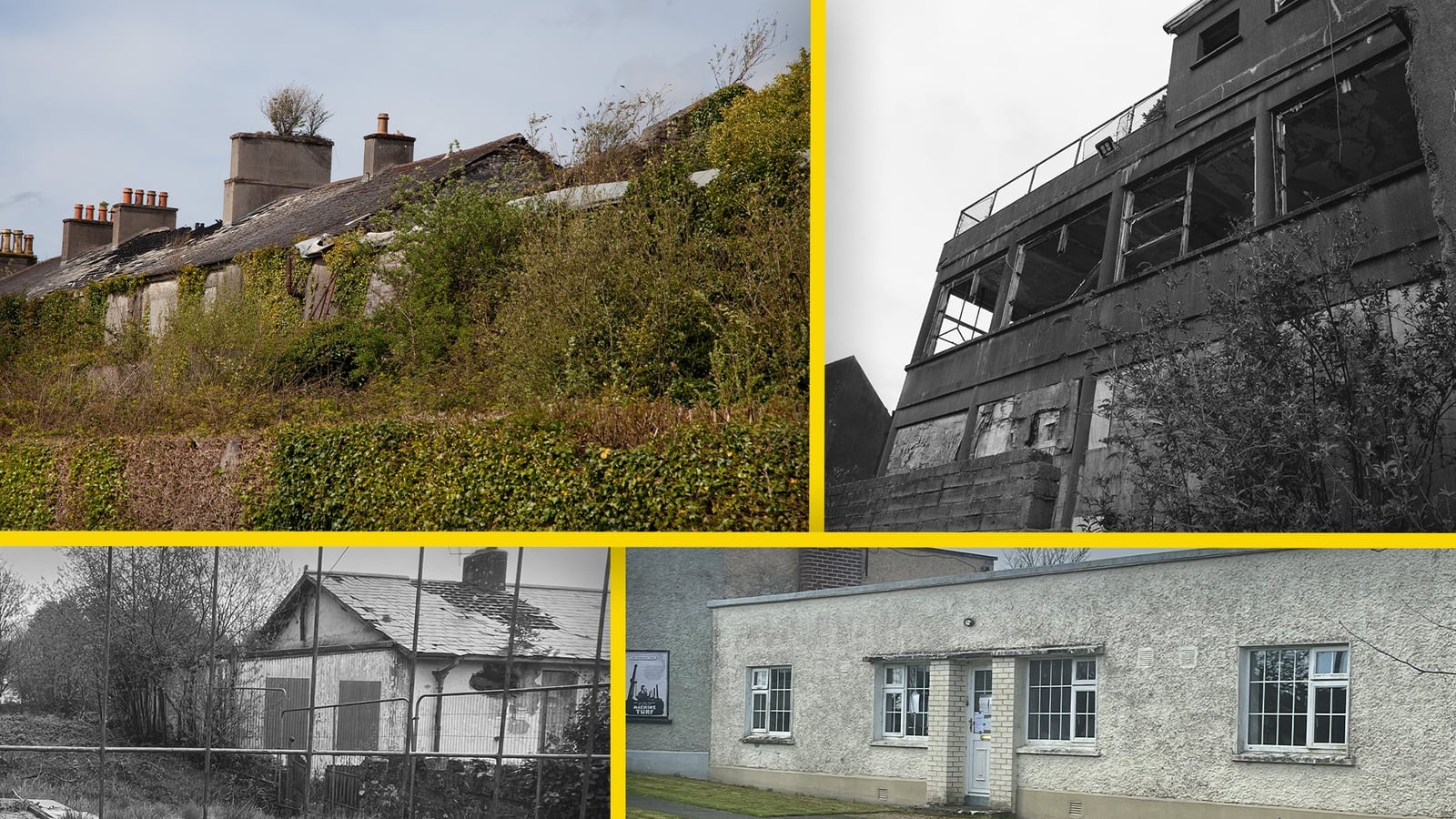
An RTÉ investigation, broadcast in late June, identified the HSE, CIÉ (the parent company of Irish Rail and Bus Éireann), the Office of Public Works, and the Department of Education as among the State bodies that own properties on local authority derelict sites registers. The HSE alone holds approximately 200 vacant properties across the country, in various states of disrepair.
The issue was raised in the Dáil, where opposition TDs from Sinn Féin, Labour, and the Social Democrats accused the government of allowing a "cavalier approach" to persist within State bodies that are nominally under ministerial oversight. Taoiseach Micheál Martin acknowledged the problem, stating that 168 of the HSE's vacant properties are in various stages of disposal, but was pressed on why the process has taken so long and why properties have been allowed to deteriorate to the point of dereliction.
Opposition TDs argued that the properties should be transferred to local authorities or approved housing bodies for conversion to social and affordable housing, rather than being sold on the open market. The government's position — that disposal through the market maximises the return to the State — was challenged on the grounds that the social cost of homelessness and housing insecurity far exceeds any financial gain from market disposal.
Why It Matters
The HSE's vacant properties are not evenly distributed across the country. Many are located in areas of high housing demand — Dublin, Cork, Galway, and Limerick — where the conversion of even a modest number of properties to residential use could make a meaningful difference to local housing supply. The argument that these properties should be prioritised for social and affordable housing, rather than sold to the highest bidder, is one that has been made consistently by housing charities and advocacy groups.
There is also a broader governance question. The fact that State bodies are paying derelict site levies for their own properties suggests a failure of coordination between different parts of the public sector. The Department of Housing, the HSE, CIÉ, and the OPW are all operating within the same government framework, yet appear to be making decisions about property disposal in isolation from each other and from the national housing strategy.
Local Impact
In Dublin, where the housing crisis is most acute, the HSE's vacant properties include former health centres, administrative buildings, and residential properties that were acquired for various purposes over the decades. In areas like Ballymun, Finglas, and Clondalkin — communities with high levels of social housing need — the presence of vacant State-owned properties that could be converted to housing is a source of particular frustration. In Cork city, former HSE properties in the Northside and Southside have been identified by local councillors as potential sites for social housing development. In Galway, the conversion of former health board properties in the city centre could contribute to addressing the severe shortage of affordable accommodation in a city where rents have risen sharply in recent years.
What's Next
The Taoiseach has committed to a review of the HSE's property disposal process, with a report expected before the end of the summer. The Department of Housing is also examining whether the legislative framework governing State property disposal could be amended to prioritise social and affordable housing use. Opposition parties have indicated they will continue to press the issue in the Dáil, and housing advocacy groups are calling for a comprehensive audit of all State-owned vacant and derelict properties to be published before the end of 2026.