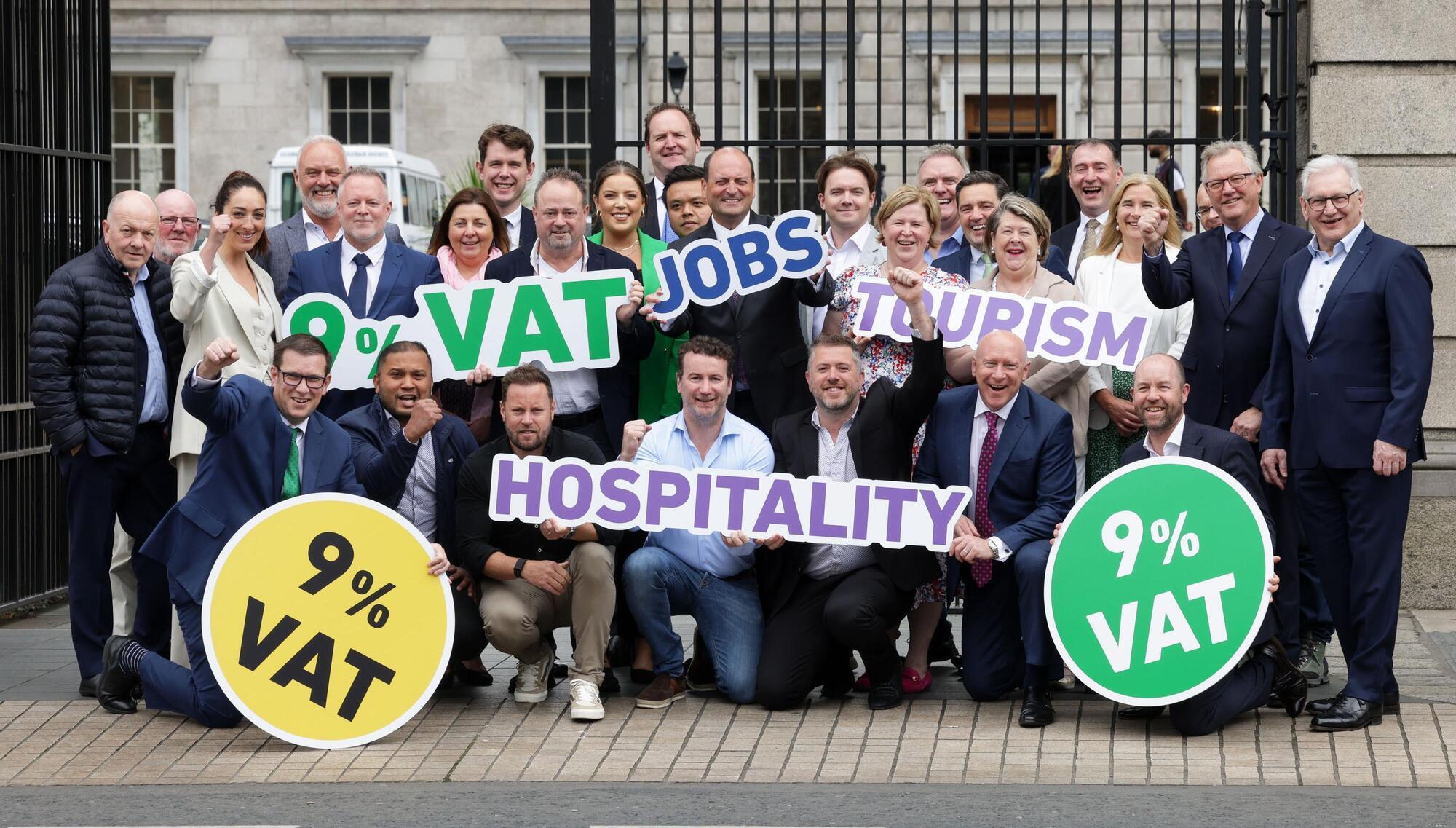
Ireland's hospitality sector welcomed the arrival of July with cautious optimism on Tuesday as the reduction in the VAT rate for food, catering, and hairdressing services from 13.5% to 9% officially took effect, delivering a measure that the industry has lobbied for over several years.
The change, announced in Budget 2026 and confirmed by the Department of Finance, applies to restaurants, cafés, certain takeaway food businesses, catering companies, hairdressers, and barber shops from 1 July 2026. It does not extend to hotel accommodation or guest lodging, which remain at 13.5%, nor does it apply to alcohol, which continues to attract its existing rate.
For the hospitality sector, which has faced a prolonged period of cost pressures driven by rising energy bills, higher wages following successive minimum wage increases, and elevated food input costs, the VAT reduction represents a meaningful intervention. The Restaurants Association of Ireland (RAI) described the measure as "long-fought" and said it would provide breathing room for businesses that had been operating on razor-thin margins.
RAI chief executive Adrian Cummins said the reduction would help operators make decisions about pricing, staffing, and investment that had been deferred during the period of elevated costs. "This is not a windfall — it is a lifeline for many businesses that have been struggling to stay viable," he said. "The question now is how individual operators choose to deploy the benefit, whether that means reducing prices for consumers, investing in staff, or simply stabilising their finances."
The decision on whether to pass the VAT saving on to customers is entirely at the discretion of individual businesses. Tax advisers have noted that operators facing higher labour, rent, or supplier costs may choose to maintain current pricing and use the VAT reduction to offset those pressures rather than cutting menu prices. Others, particularly those in competitive urban markets, may see a price reduction as a way to attract footfall during what is traditionally a strong summer trading period.
Consumer advocacy groups have urged businesses to be transparent about how they are applying the change. The Competition and Consumer Protection Commission (CCPC) said it would monitor pricing in the sector over the coming months to assess whether the reduction was being passed on to consumers in a meaningful way, as had been the stated intention of the government when the measure was announced.
For businesses, the practical implications of the change have required significant preparation. Accounting software, invoicing systems, and point-of-sale terminals have all needed to be updated to reflect the new rate, and staff in billing and finance roles have required training. Tax advisers have reported a surge in queries from hospitality operators in the weeks leading up to the change, with many seeking clarity on which services qualify and how to handle mixed supplies — for example, a restaurant that serves both food (now at 9%) and alcohol (remaining at 13.5%).
The broader economic context for the change is one of cautious recovery. Consumer spending in the hospitality sector has been resilient despite the cost-of-living pressures of recent years, but operators have noted that customers are increasingly price-sensitive and selective about where they choose to eat out. A reduction in VAT that translates into lower menu prices could provide a stimulus to footfall at a time when the sector is hoping to capitalise on strong summer tourism numbers.
Tourism Ireland has projected a strong summer season, with visitor numbers from North America and continental Europe expected to be robust. The hospitality VAT cut, if passed on to consumers, could make Ireland a more competitive destination for international visitors who compare prices across European cities.
The hairdressing sector, which has also been included in the reduction, welcomed the change as recognition of the pressures facing small, labour-intensive businesses. The Irish Hairdressers Federation said many of its members had been operating at or near break-even and that the VAT reduction would provide a meaningful improvement in their financial position.
Not everyone in the hospitality sector was entirely satisfied, however. Representatives of the pub trade noted that the reduction did not apply to alcohol, meaning that wet pubs — those that derive the majority of their revenue from drink rather than food — would see little direct benefit. The Licensed Vintners Association said the government had "failed to deliver" for the pub sector and called for a broader review of alcohol taxation in the context of the pressures facing the trade.
The government has indicated that it will review the impact of the VAT reduction in the context of Budget 2027, with the measure subject to assessment of its economic effect and its cost to the exchequer. The reduction is estimated to cost approximately €250 million per year in foregone VAT revenue, a figure that the government has said is justified by the employment and economic activity supported by the hospitality sector.
With the summer season now under way and the VAT change in effect, the coming months will provide the first real test of whether the measure delivers the consumer and business benefits that its proponents have promised.