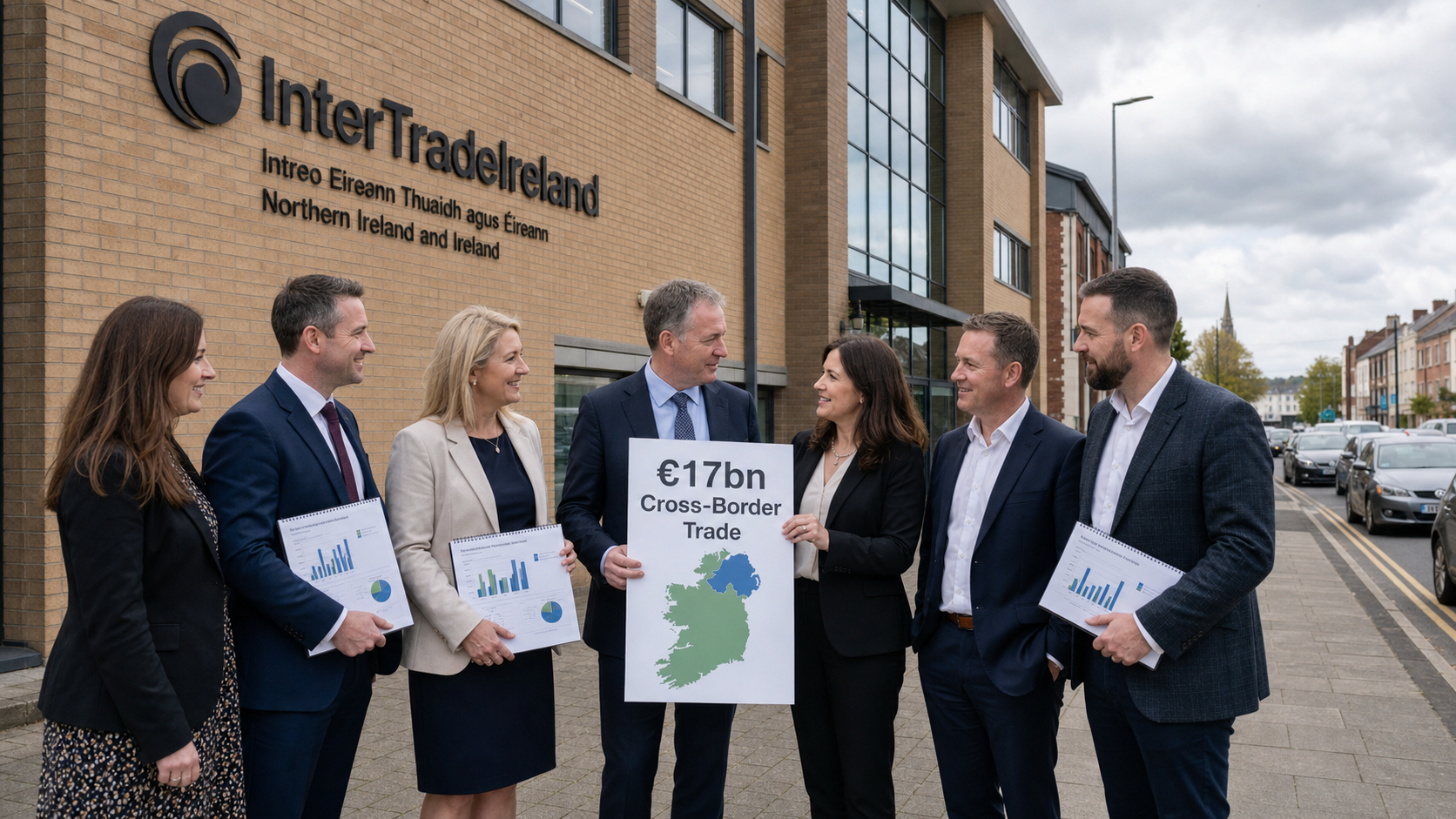
Cross-Border Trade Hits Record €17 Billion as InterTradeIreland Launches New All-Island Strategy
Cross-border trade on the island of Ireland has reached a record high of €17 billion, with InterTradeIreland launching a new strategy on Tuesday to further boost growth, innovation, and economic collaboration among indigenous SMEs — a development that underscores the growing economic integration of the island and the strategic importance of Northern Ireland's unique dual-market access to both Great Britain and the European Union.
Background
The economic relationship between the Republic of Ireland and Northern Ireland has been transformed over the past three decades by the peace process, the Good Friday Agreement, and Ireland's shared membership of the European Union. The removal of border controls, the harmonisation of regulations, and the development of cross-border infrastructure have created conditions for a level of economic integration that would have been unimaginable in the 1980s, when the border was a significant barrier to trade and movement.
InterTradeIreland, the cross-border trade and business development body established under the Good Friday Agreement, has been a central institution in this process. The body provides a range of services to businesses on both sides of the border, including market intelligence, trade facilitation, and support for cross-border collaboration in research and innovation. Its annual trade statistics are the most comprehensive measure of the economic relationship between the two jurisdictions.
The record €17 billion figure for cross-border trade represents a significant increase on previous years and reflects the growing maturity and depth of the all-island economy. The figure encompasses trade in goods and services across all sectors, from agri-food and manufacturing to professional services and technology. The agri-food sector remains the largest component of cross-border trade, reflecting the deep integration of the island's food supply chains.
Key Developments
InterTradeIreland's new strategy, launched on Tuesday, sets out a framework for further developing the all-island economy over the next five years. The strategy identifies three priority areas: boosting the competitiveness of indigenous SMEs through cross-border collaboration, accelerating innovation and research partnerships between businesses and universities on both sides of the border, and developing the infrastructure and regulatory environment needed to support continued growth in cross-border trade.
The strategy acknowledges the unique position of Northern Ireland, which has dual-market access to both Great Britain and the European Union under the Windsor Framework. This access — which allows Northern Ireland businesses to trade freely with both markets — is seen as a significant competitive advantage, particularly for manufacturers who source inputs from Great Britain and sell finished products to EU customers.
However, the strategy also acknowledges the administrative friction that the Windsor Framework creates for small businesses importing from Great Britain. The additional paperwork and compliance costs associated with the framework have been a source of frustration for many NI businesses, and InterTradeIreland has committed to providing enhanced support to help businesses navigate these requirements.
The launch of the strategy was attended by ministers from both the Irish government and the Stormont Executive, reflecting the cross-jurisdictional nature of the initiative. Finance Minister O'Dowd and his counterpart in the Irish government both expressed strong support for the strategy and committed to providing the resources needed to implement it.
Why It Matters
The record cross-border trade figure is significant for several reasons. It demonstrates that the all-island economy is a real and growing phenomenon, not merely a political aspiration. The €17 billion figure represents a substantial share of both economies' total trade, and the depth of the economic relationship creates powerful incentives for continued cooperation and integration.
The figure also has implications for the political debate about Irish unity. Economists who have studied the all-island economy have consistently found that the economic case for unity is strengthening, as the two economies become more integrated and as the costs of the border — in terms of regulatory divergence, administrative friction, and missed opportunities for collaboration — become more apparent. The record trade figure is a data point that will feature prominently in that debate.
For businesses on both sides of the border, the InterTradeIreland strategy offers practical support for developing cross-border relationships and accessing new markets. The body's programmes — which include trade missions, networking events, and financial support for cross-border collaboration — have a strong track record of delivering results for participating businesses.
Local Impact
The impact of cross-border trade is felt most directly in the border counties, where businesses on both sides of the border have developed deep commercial relationships over decades. In counties like Donegal, Cavan, Monaghan, and Louth on the southern side, and Derry, Fermanagh, Armagh, and Down on the northern side, cross-border trade is not an abstract economic concept — it is the daily reality of businesses that source supplies, sell products, and employ workers across the border.
In Newry, which sits just south of the border and has historically been one of the most economically active cross-border towns, the record trade figure is a source of considerable satisfaction. The town's retail and commercial sector has long benefited from its position as a hub for cross-border shopping and commerce, and the growth in cross-border trade has supported the development of a diverse and resilient local economy.
What's Next
InterTradeIreland will begin implementing the new strategy immediately, with the first tranche of new programmes expected to launch in September. The body has committed to publishing annual progress reports against the strategy's targets, providing transparency and accountability for the investment of public funds. The North-South Ministerial Council is expected to receive a briefing on the strategy at its next meeting, and both governments have indicated they will provide the resources needed to support its implementation.