Hosepipe Ban Extended to End of September in 13 Counties as Uisce Éireann Warns Water Sources Still Under Pressure
Uisce Éireann has extended the water conservation order — commonly known as the hosepipe ban — until the end of September in 13 counties across Munster and Leinster, including Dublin, Cork, and Limerick, while lifting the restriction in the remaining 13 counties where improved rainfall has allowed water sources to begin recovering from the pressures of a prolonged dry summer.
Background
Ireland experienced an unusually dry summer in 2026, with rainfall significantly below average across much of the country from June through August. The prolonged dry spell placed considerable pressure on drinking water sources, including reservoirs, rivers, and groundwater aquifers, particularly in the east and south of the country where population density is highest and demand for water is greatest.
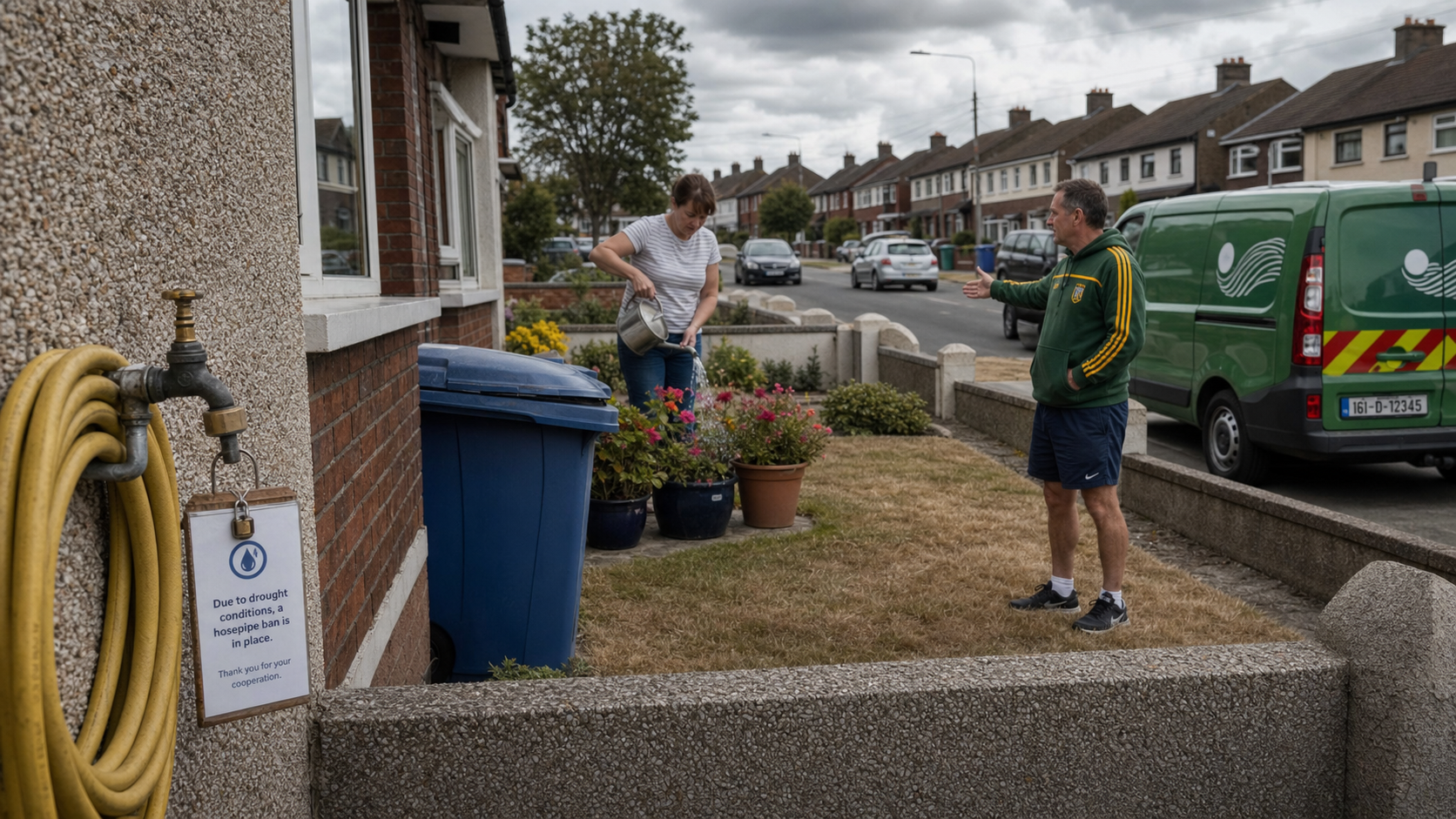
Uisce Éireann, the national water utility, introduced a nationwide water conservation order in July 2026 under the provisions of the Water Services Act 2007. The order legally prohibits the use of water drawn through a hosepipe or similar equipment for non-essential purposes, including watering gardens, washing private vehicles, filling swimming pools, and maintaining ornamental ponds. Contravention of the order is an offence carrying a fine of up to €5,000 on summary conviction.
The conservation order was introduced as a precautionary measure to protect essential water supplies for homes, businesses, farms, hospitals, and other critical services. Uisce Éireann noted that public conservation efforts during the initial weeks of the order helped to reduce demand, but that water sources in parts of the east and south required additional time to recover before restrictions could be safely lifted.
Key Developments
Following an assessment of water availability across the country, Uisce Éireann announced on Wednesday that the conservation order would be lifted at midnight on 26 August 2026 for 13 counties — Cavan, Clare, Donegal, Galway, Kerry, Leitrim, Longford, Louth, Mayo, Monaghan, Roscommon, Sligo, and Westmeath — where improved rainfall had allowed water sources to recover sufficiently.
However, the order has been extended until 23:59 on 30 September 2026 for the remaining 13 counties: Carlow, Cork, Dublin, Kildare, Kilkenny, Laois, Limerick, Meath, Offaly, Tipperary, Waterford, Wexford, and Wicklow. Uisce Éireann has indicated that water sources in these counties, which include the most densely populated parts of the country, remain under pressure and require further time to recover before restrictions can be safely lifted.
The utility has emphasised that the duration of the order remains subject to change based on prevailing weather conditions, with the possibility of further extensions or early lifting if circumstances dictate. It has urged residents in the affected counties to continue conserving water and to report any leaks or wastage they observe.
Why It Matters
The extended hosepipe ban is a tangible consequence of the changing climate patterns that are increasingly affecting Ireland. The 2026 summer drought is not an isolated event — it follows a pattern of more frequent and more intense dry spells that climate scientists have been warning about for years. Ireland's water infrastructure, much of which was designed for a wetter climate, is struggling to cope with the demands placed on it during extended dry periods, particularly in the east and south where population growth has increased demand significantly.
The ban affects a wide range of activities beyond garden watering. Car washing businesses, garden centres, sports clubs with grass pitches, and agricultural operations all face restrictions on their water use. For farmers in the affected counties, the ban adds to the pressures of a difficult summer, with some livestock farmers already reporting difficulties in maintaining adequate water supplies for their animals.
The situation also highlights the need for investment in water storage and distribution infrastructure. Ireland has one of the highest rates of water leakage in Europe, with Uisce Éireann estimating that approximately 40 per cent of treated water is lost through leaks in the distribution network before it reaches consumers. Addressing this leakage would significantly reduce the pressure on water sources during dry periods.
Local Impact
In Dublin, the extended ban affects all four local authority areas — Dublin City, Fingal, South Dublin, and Dún Laoghaire-Rathdown. Residents in areas served by the Vartry reservoir in County Wicklow and the Leixlip water treatment plant on the River Liffey are among those most directly affected. In Cork city and county, the ban covers both urban and rural areas, with particular pressure on the Lee Road water treatment plant. In Limerick, the Shannon water supply system has been under strain, and the utility has urged residents in the city and county to minimise non-essential water use. Kerry, despite being lifted from the ban, has been asked to continue voluntary conservation measures given the proximity of its water sources to those still under pressure.
What's Next
Uisce Éireann will review the status of the conservation order on a weekly basis and will provide updates on its website and social media channels. The utility has indicated it will lift the ban in the remaining 13 counties as soon as water sources have recovered sufficiently, and that it does not intend to maintain the restriction beyond 30 September unless conditions deteriorate significantly. The Department of Housing, Local Government and Heritage has been briefed on the situation and is monitoring the utility's response. A review of Ireland's water infrastructure resilience in the context of climate change is expected to be published by the Environmental Protection Agency before the end of the year.