Holy Cross Dispute Remembered as 'Hatred at Its Worst' as North Belfast Community Marks 25 Years Since School Blockade
The Holy Cross dispute — in which loyalist protesters blockaded a Catholic girls' primary school in north Belfast for months in 2001, subjecting children and parents to sustained sectarian abuse — is being remembered as 'hatred at its worst' as the community marks 25 years since the crisis that shocked the world and left a generation of children with lasting psychological trauma. Survivors, parents, and community leaders have spoken of the long road to healing and the lessons that must not be forgotten.
Background
The Holy Cross dispute erupted in the Ardoyne area of north Belfast in June 2001, when loyalist protesters began picketing the route to Holy Cross Girls' Primary School, which required Catholic pupils to walk through the adjacent Protestant Glenbryn estate. The protesters alleged that Catholic residents had attacked their homes and denied them access to local facilities — claims that were disputed by nationalist community representatives. What followed was one of the most disturbing episodes of the post-Good Friday Agreement period in Northern Ireland.
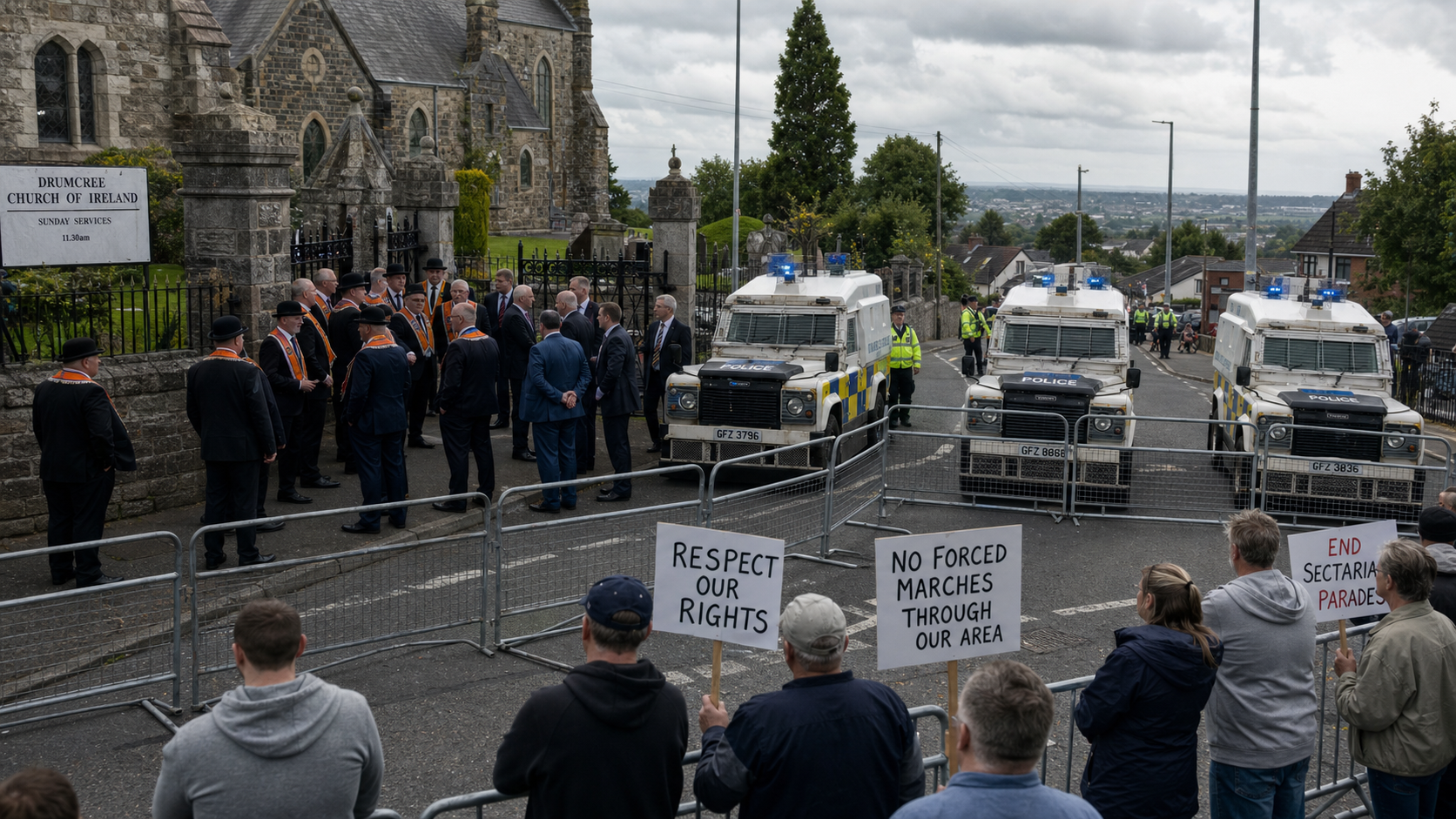
When the new school term began on 3 September 2001, the situation escalated dramatically. For weeks, hundreds of loyalist protesters attempted to block the route to the school, forcing children as young as four to pass through a security cordon of riot police and British soldiers. The girls were subjected to sustained sectarian abuse — shouting, spitting, the throwing of missiles including balloons filled with urine, and, in at least one instance, a pipe bomb. The Red Hand Defenders, a loyalist paramilitary group, issued death threats against staff and parents. The images of small children in school uniforms being escorted through lines of screaming protesters were broadcast around the world and drew international condemnation.
The protest continued through the autumn of 2001, even as global media attention shifted to the September 11 attacks in the United States. It was eventually suspended in November 2001 following promises of a redevelopment scheme and increased security measures. The damage, however, had been done. Many of the children who walked that gauntlet required long-term counselling, and the trauma of the experience has been documented in subsequent research and testimony.
Key Developments
As the 25th anniversary of the dispute's most intense phase approaches, community leaders in Ardoyne and Glenbryn have spoken of the progress made in the intervening years while acknowledging that the wounds have not fully healed. Gerry Kelly, the Sinn Féin MLA who was among those who accompanied parents and children to school during the blockade, has spoken of the bravery of the families who refused to be intimidated and of the importance of remembering what happened accurately.
Former pupils who were children during the dispute have spoken publicly about the lasting impact on their lives. Many describe symptoms consistent with post-traumatic stress — nightmares, anxiety, and a heightened sense of threat — that persisted for years after the blockade ended. Some have spoken of the difficulty of explaining to their own children what they experienced, and of the importance of ensuring that the history is not sanitised or forgotten.
The Ardoyne community has changed significantly in the 25 years since the dispute. The Glenbryn estate, which was at the centre of the loyalist protest, has seen significant demographic change, and the interface tensions that characterised the area in 2001 have diminished, though they have not disappeared entirely. Community relations work, supported by organisations including the Community Relations Council and various cross-community initiatives, has contributed to a gradual improvement in the relationship between the two communities.
Why It Matters
The Holy Cross dispute matters because it happened after the Good Friday Agreement — after the political framework for peace had been established — and demonstrated that the Agreement alone was not sufficient to transform community relations on the ground. The children who walked to school through lines of protesters in September 2001 were living in a post-Agreement Northern Ireland, and yet they were subjected to a level of sectarian hatred that would not have been out of place in the darkest years of the Troubles.
For context, the dispute occurred at a moment when Northern Ireland was supposed to be moving forward. The Assembly had been established, the decommissioning process was under way, and there was genuine optimism about the future. The Holy Cross blockade was a brutal reminder that political progress at the top does not automatically translate into changed attitudes and behaviours at community level. That lesson remains relevant today, as Northern Ireland continues to navigate the complex relationship between political institutions and community realities.
The 25th anniversary is also an opportunity to acknowledge the resilience of the families who refused to be driven from their community and who continued to send their children to school despite the intimidation. Their courage, and the courage of the teachers and school staff who maintained the school's operation throughout the crisis, deserves to be remembered and honoured.
Local Impact
In north Belfast, the anniversary has prompted reflection on how far the area has come and how far it still has to travel. The Ardoyne area has seen significant investment in community infrastructure over the past two decades, and the Holy Cross school itself continues to serve the local community. Interface barriers — the so-called peace walls — remain in place in parts of north Belfast, a physical reminder of the divisions that the Holy Cross dispute so vividly illustrated. Community workers in the area have noted that while day-to-day relations between the communities have improved, the underlying tensions that produced the dispute have not been fully resolved, and continued investment in community relations work remains essential.
What's Next
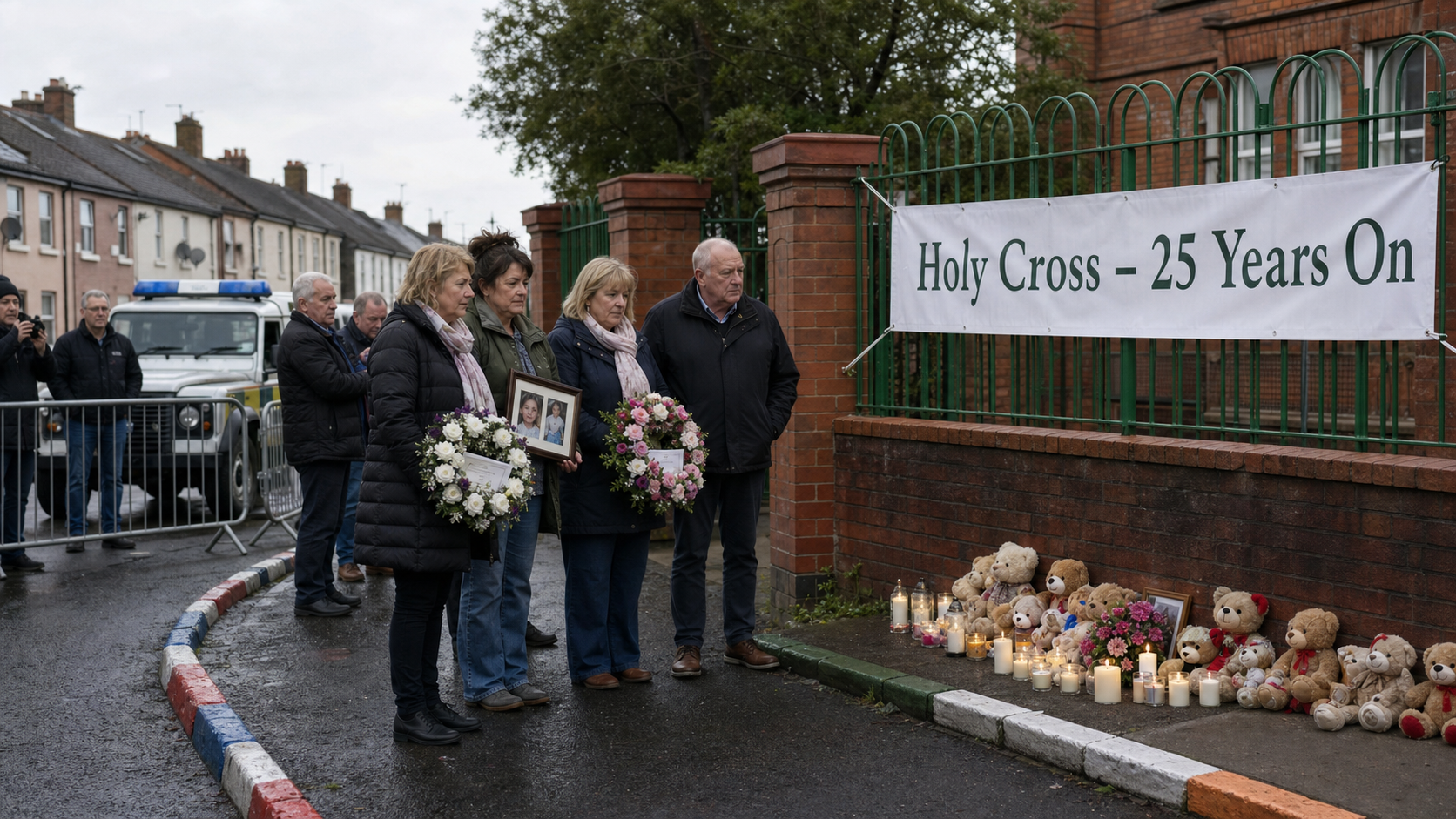
A series of community events to mark the 25th anniversary of the Holy Cross dispute are planned for September 2026, including a commemorative gathering at the school and a public discussion on the lessons of the crisis for community relations in Northern Ireland today. The Community Relations Council has commissioned a new oral history project to record the testimonies of those who lived through the dispute, ensuring that the experiences of the children and families involved are preserved for future generations.