Historic Sign Language Bill Passes Stormont, Making Northern Ireland First in UK to Offer Free Classes
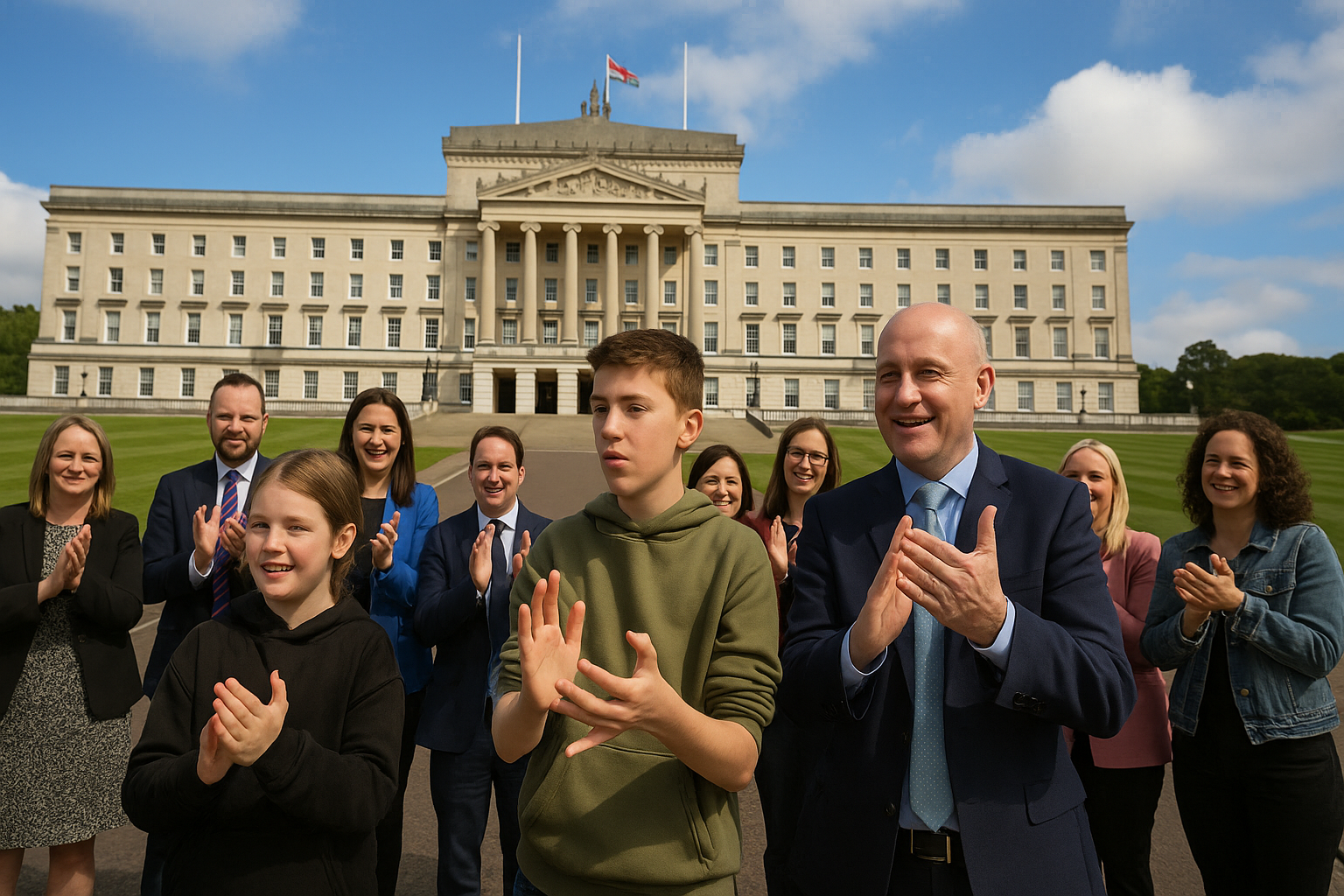
The Northern Ireland Assembly has passed a landmark sign language bill that will make the region the first in the United Kingdom to offer free sign language classes to deaf children and young people under the age of 25, as well as to their close family members and carers — a development that has been celebrated by the deaf community as one of the most significant advances in their rights and inclusion in a generation.Background
The campaign for sign language recognition and support in Northern Ireland has been a long and patient one. The deaf community in Northern Ireland — estimated at around 4,000 people who use British Sign Language (BSL) or Irish Sign Language (ISL) as their primary means of communication — has long argued that the absence of formal recognition and support for sign language creates significant barriers to education, employment, and social participation.
The UK government passed the British Sign Language Act in 2022, which recognised BSL as a language of Great Britain and required ministers to report on what they were doing to promote and facilitate its use. But that legislation stopped short of mandating specific support measures, and the practical impact on the lives of deaf people has been limited. Northern Ireland, which has its own devolved legislature, was not covered by the 2022 Act and has been developing its own approach.
The sign language bill that has now passed the Assembly goes significantly further than the 2022 UK legislation. By mandating free classes for deaf children and young people under 25, and for their family members and carers, it addresses one of the most significant practical barriers to sign language acquisition: the cost of classes, which can be prohibitive for families already managing the additional expenses associated with raising a deaf child.
Key Developments
The bill passed the Northern Ireland Assembly with cross-party support, reflecting a rare moment of consensus in an institution that is more often characterised by division. The legislation will make Northern Ireland the first region in the UK to offer free sign language classes to deaf children and young people under 25, as well as to their close family members and carers. The classes will be funded by the Department of Education and will be available through a network of approved providers.
The bill's passage has been welcomed by deaf community organisations across Northern Ireland, who have described it as a "historic" and "transformative" development. The inclusion of family members and carers in the free classes provision is particularly significant: research consistently shows that deaf children's language development is significantly enhanced when their families can communicate with them in sign language, and the cost of classes has historically been a barrier to this.
The legislation also comes at a time when Northern Ireland is grappling with significant demographic challenges. Figures released by the Northern Ireland Statistics and Research Agency (Nisra) suggest that the region's population is ageing rapidly and is projected to begin an overall decline by 2031 — a trend that will have implications for public services, including those serving the deaf community.
Why It Matters
The sign language bill matters because it represents a genuine advance in the rights and inclusion of a community that has historically been marginalised. Deaf children who grow up with access to sign language — and whose families can communicate with them in that language — have significantly better educational outcomes, better mental health, and better life chances than those who do not. The free classes provision removes a significant financial barrier to that access.
Northern Ireland's position as the first region in the UK to offer this provision is a source of genuine pride, and it sets a precedent that other devolved legislatures — in Scotland and Wales — may choose to follow. It also demonstrates that the Stormont Assembly, despite its well-documented difficulties, is capable of delivering meaningful legislation that makes a real difference to people's lives. That is a message worth amplifying at a time when the institutions are under significant political pressure.
Local Impact
For deaf children and young people across Northern Ireland — in Belfast, Derry, Newry, and every town and village in between — the bill's passage is a moment of genuine significance. The free classes will be available through approved providers across the region, and the Department of Education has committed to ensuring that provision is accessible in both urban and rural areas. For families in areas like north and west Belfast, where access to specialist services has historically been more limited, the commitment to geographic accessibility is particularly important. The Belfast Deaf Society and other community organisations have already begun working with the Department of Education on the implementation framework.
What's Next
The Department of Education will now develop the implementation framework for the free classes provision, including the accreditation of approved providers and the development of a curriculum. The first classes are expected to be available from September 2026, in time for the new academic year. The Assembly's Education Committee will monitor the implementation of the legislation and will hold the Department to account for its delivery. Community organisations have called for the implementation to be accompanied by a public awareness campaign to ensure that all eligible families know about the free classes and how to access them.
Sources: BBC Northern Ireland | Belfast Telegraph