Motorcyclist Patrick Deery Named Among Victims as Emergency Doctors Call for Urgent Action
Five people died on Northern Ireland's roads over the weekend in four separate accidents, including a 16-year-old passenger from Tipperary and a 61-year-old motorcyclist named Patrick Deery from the Dungannon area — a devastating toll that has prompted renewed calls from emergency doctors and road safety campaigners for urgent action to address what they describe as a crisis on the province's roads.
Background
Northern Ireland has one of the highest road fatality rates in the United Kingdom, a disparity that has persisted for decades despite significant improvements in road safety across the rest of the country. The province's road network — characterised by a high proportion of rural single-carriageway roads, limited motorway coverage outside the greater Belfast area, and significant volumes of agricultural and heavy goods traffic — presents particular challenges for road safety. The PSNI's Roads Policing Unit and the Department for Infrastructure have both identified speeding, drink-driving, and the use of mobile phones while driving as the primary causes of fatal collisions.
The weekend's deaths come against a backdrop of persistent concern about road safety in Northern Ireland. Emergency doctors have been calling for urgent action to address road fatalities, noting that the trauma burden on emergency departments — particularly at the Royal Victoria Hospital in Belfast and Altnagelvin Hospital in Derry — is significant and growing. The human cost of road deaths extends far beyond the immediate victims, affecting families, communities, and the emergency services personnel who attend the scenes of fatal collisions.
The involvement of a 16-year-old passenger from Tipperary — who died in a collision at Nutts Corner in County Antrim — is a reminder that road deaths in Northern Ireland affect people from across the island of Ireland, not just local residents. The cross-border nature of travel on the island means that road safety is a shared concern for communities and governments on both sides of the border.
Key Developments
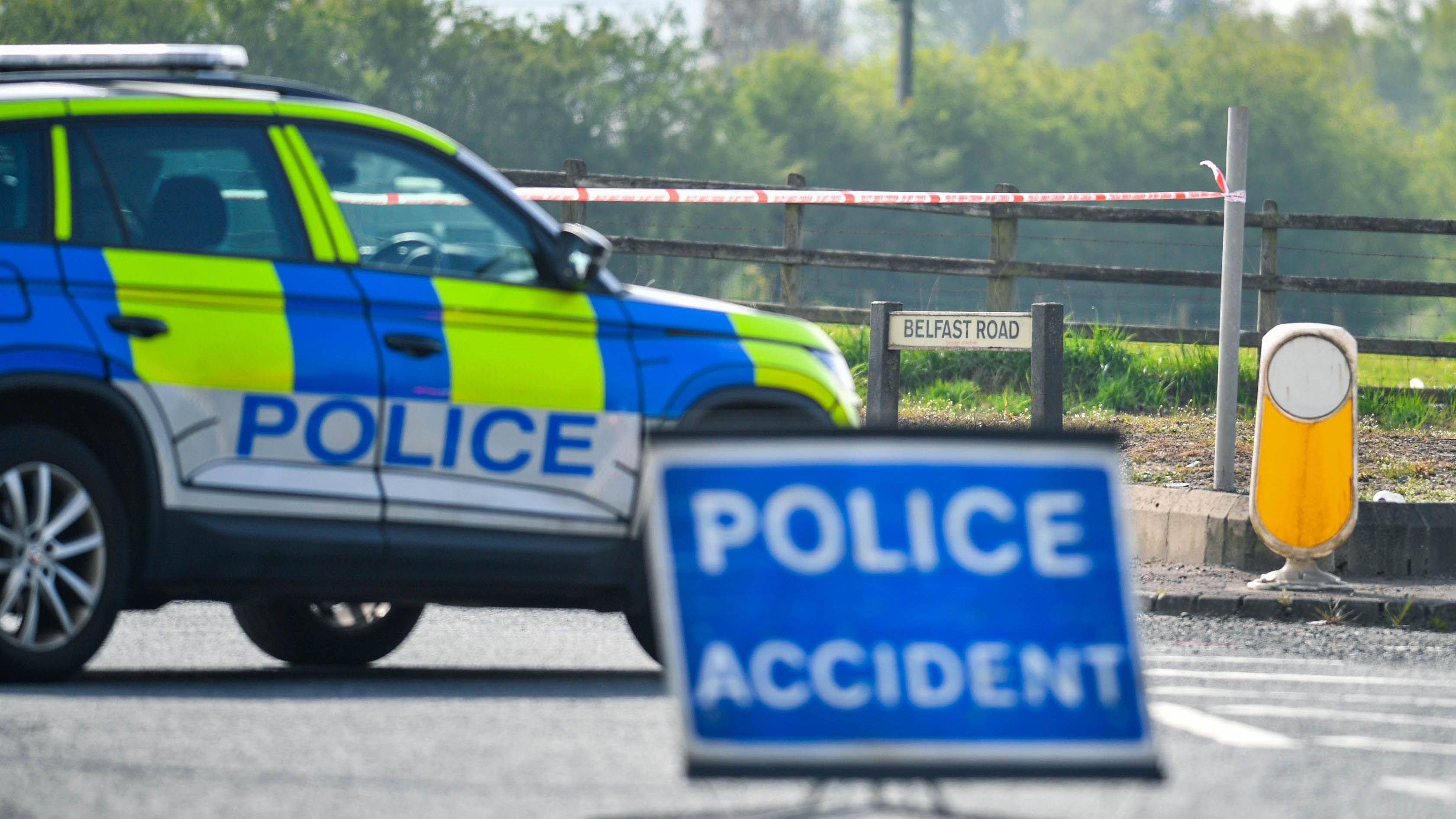
Patrick Deery, 61, from the Dungannon area, died in a single-vehicle motorcycle accident on the Clanabogan Road in Omagh on Sunday morning. A 16-year-old male passenger from Tipperary died in a two-vehicle collision involving a Volkswagen Golf and a Volkswagen Passat on the Belfast Road at Nutts Corner on Sunday morning. Two other passengers — including a 10-year-old child — remain in critical condition. The driver of the Golf was arrested on suspicion of motoring offences.
Two people — the drivers of a car and a motorbike — died in a collision on the Glenavy Road in Upper Ballinderry, County Antrim, on Saturday evening. A further fatality occurred in a single-vehicle van collision on Derrycourtney Road near Caledon on Saturday evening, with one arrest made. Sinn Féin councillor Declan Lynch and MLA Colm Gildernew extended condolences to the families and friends of the victims and commended the emergency services.
The weekend's deaths bring the total number of road fatalities in Northern Ireland in 2026 to a figure that is tracking above the same period in 2025, according to PSNI data. Emergency doctors have called for urgent action, including increased enforcement of speed limits, greater investment in road infrastructure, and a public awareness campaign targeting the specific behaviours most associated with fatal collisions.
Why It Matters
Five deaths in a single weekend is a stark reminder of the human cost of road collisions — a cost that is often invisible in public debate because it accumulates gradually rather than in a single catastrophic event. For the families of those who died this weekend, the loss is devastating and permanent. For the communities in Omagh, Nutts Corner, Upper Ballinderry, and Caledon, the deaths leave a mark that will be felt for years.
Northern Ireland's road fatality rate has historically been higher than the UK average, a disparity that reflects both the character of the road network and the challenges of policing it effectively. Unlike Great Britain, where motorway coverage is extensive and average journey speeds are higher but collisions are often less severe, Northern Ireland's rural roads combine high speeds with limited safety infrastructure — no central barriers, narrow carriageways, and poor sight lines. Investment in road infrastructure has been constrained by the pressures on the Department for Infrastructure's budget, and the PSNI's Roads Policing Unit has faced staffing challenges that limit its capacity for enforcement.
Local Impact
The impact of the weekend's deaths is felt most acutely in the communities where they occurred. In Omagh, the death of Patrick Deery — a motorcyclist from the Dungannon area — will be mourned by family, friends, and the wider community. In Nutts Corner, the death of the 16-year-old passenger from Tipperary and the critical condition of a 10-year-old child have shocked a community that is not accustomed to such tragedy. The Royal Victoria Hospital's emergency department, which receives the most seriously injured road collision victims from across Northern Ireland, will have been under significant pressure over the weekend. Translink services in affected areas were disrupted as police cordoned off collision scenes.
What's Next
The PSNI's Collision Investigation Unit is conducting investigations into all four incidents. The driver of the Golf involved in the Nutts Corner collision has been arrested and is expected to appear in court in the coming days. The Department for Infrastructure is expected to respond to the emergency doctors' call for action, though any significant investment in road infrastructure would require Executive approval and budget allocation. Watch for any statement from the Infrastructure Minister on road safety measures in the coming week.
Sources: Belfast Telegraph, BBC News