Historic Peace Agreement Signed Between Long-Standing Regional Rivals
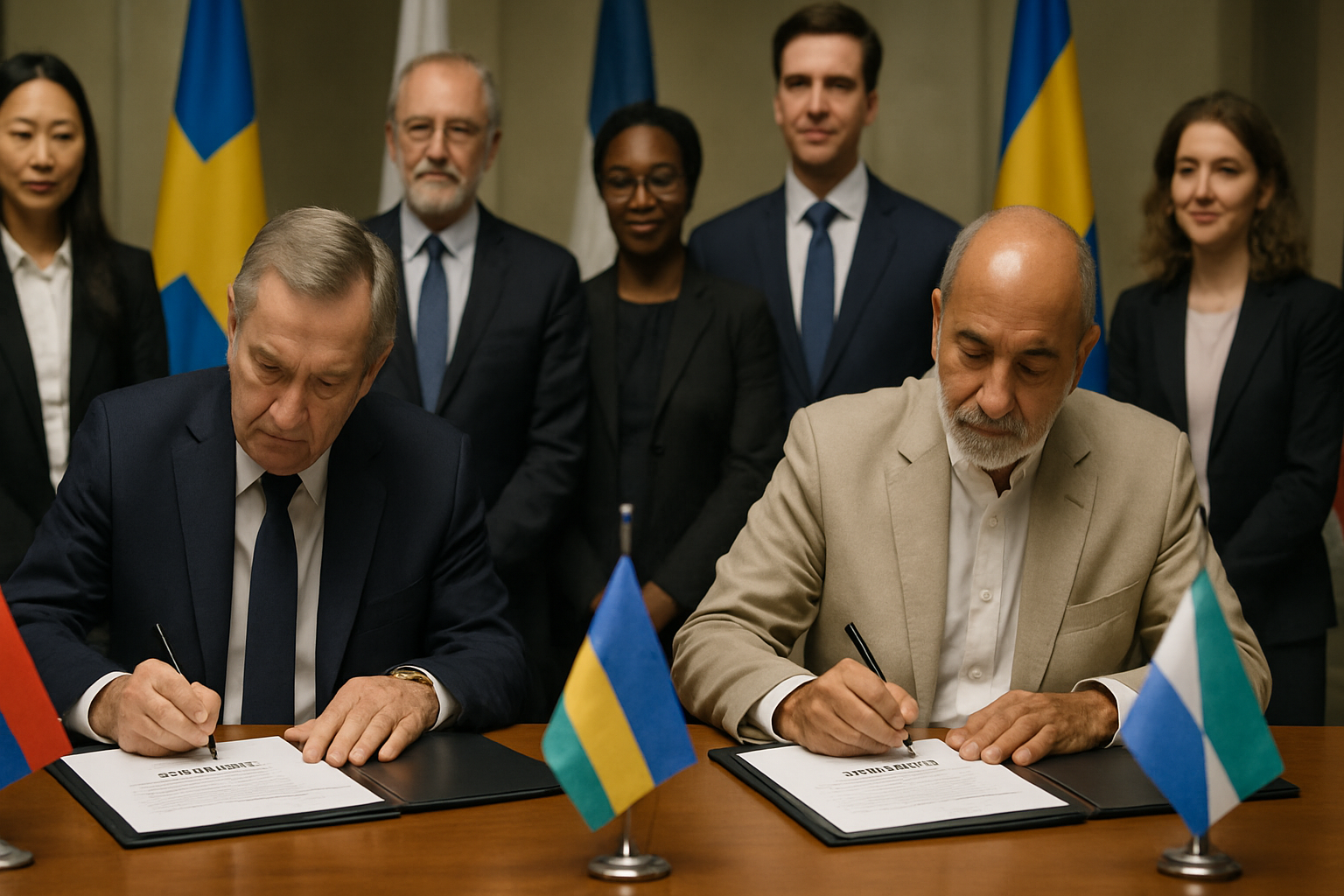
In a ceremony witnessed by world leaders and broadcast to millions, representatives of two long-standing regional rivals have signed a comprehensive peace agreement that brings to an end decades of conflict and opens a new chapter in their shared history. The accord, negotiated over 18 months of intensive diplomatic effort, has been described by international mediators as "historic and comprehensive" — a settlement that addresses not merely the symptoms of the conflict but its deepest structural causes.
Background
The conflict between the two nations had its roots in territorial disputes, ethnic divisions, and competing historical narratives that hardened over generations into entrenched enmity. Periodic outbreaks of violence had claimed tens of thousands of lives over the decades, displaced millions of civilians, and stunted the economic development of an entire region. Previous attempts at negotiation had foundered on the intractability of the core disputes and the unwillingness of domestic political actors on both sides to accept the compromises that peace required.
The breakthrough came through a combination of sustained international pressure, the emergence of new political leadership on both sides willing to take political risks for peace, and the quiet but persistent work of international mediators who spent years building the trust necessary for substantive dialogue. The 18-month negotiating process was conducted largely in secret, with the involvement of senior diplomats from multiple countries and the United Nations, whose good offices proved essential in bridging the most difficult gaps.
The history of successful peace processes — from Northern Ireland's Good Friday Agreement to the Oslo Accords — demonstrates that durable settlements require not just political will at the top but genuine buy-in from communities on the ground. International observers have noted that the architects of this agreement studied those precedents carefully, incorporating lessons about implementation, verification, and the management of spoilers who seek to undermine peace, as documented by the United Nations' peace and security framework.
Key Developments
The peace accord includes provisions for mutual recognition, the establishment of full diplomatic relations, the opening of borders for trade and travel, and joint management of shared natural resources that had been a source of bitter dispute. A multinational peacekeeping force will oversee the implementation of security arrangements during the transition period, providing the confidence-building measures that both sides required before committing to demilitarisation.
Crucially, the agreement also establishes mechanisms for addressing past grievances — a truth and reconciliation process modelled on successful examples from South Africa and Colombia, designed to acknowledge the suffering of victims on all sides without foreclosing the possibility of a shared future. Economic cooperation frameworks will allow both nations to benefit from joint infrastructure projects, trade liberalisation, and coordinated approaches to regional development challenges including climate adaptation and energy security.
International reaction has been overwhelmingly positive, with leaders from across the globe offering congratulations and pledging financial and technical support for the implementation process. The World Bank and International Monetary Fund have indicated readiness to provide substantial development assistance to support the post-conflict economic transition, recognising that sustainable peace requires tangible improvements in living standards for ordinary citizens, as outlined by the World Bank's conflict and fragility programme.
Why It Matters
In an era characterised by rising geopolitical tensions, democratic backsliding, and the resurgence of nationalist conflict in multiple regions, a successful peace agreement between long-standing adversaries carries significance that extends far beyond the two nations directly involved. It demonstrates that diplomacy can still succeed where force has failed, that political leaders can choose the harder path of compromise over the easier path of continued confrontation, and that international institutions retain the capacity to facilitate peaceful resolution of even the most intractable disputes. For the millions of civilians who have lived their entire lives under the shadow of conflict — whose economic opportunities, freedom of movement, and basic security have been constrained by a war they did not choose — the signing of this accord represents the possibility of a fundamentally different future.
Local Impact
The agreement has been followed with particular interest in the United Kingdom, where the experience of the Northern Ireland peace process gives British and Irish observers a distinctive perspective on the challenges and possibilities of post-conflict settlement. British diplomats have been involved in supporting the mediation effort, and the Foreign Office has welcomed the agreement as a vindication of the patient, multilateral approach to conflict resolution. For communities in the UK with diaspora connections to the affected region, the news has brought relief and hope. The agreement also has implications for British trade and investment interests in the region, with the opening of borders and the establishment of economic cooperation frameworks creating new commercial opportunities that UK businesses are well-positioned to pursue.
What's Next
The signing of a peace agreement is the beginning of a process, not its conclusion. The coming months will test whether the political will that produced the accord can be sustained through the difficult work of implementation — disarmament, the return of displaced persons, the establishment of new institutions, and the management of inevitable setbacks and provocations from those who oppose the settlement. International monitors will play a critical role in verifying compliance and providing early warning of threats to the process. The experience of other peace processes suggests that the first two years are the most fragile, and that sustained international engagement and financial support are essential to seeing the agreement through to consolidation. The world is watching — and hoping.