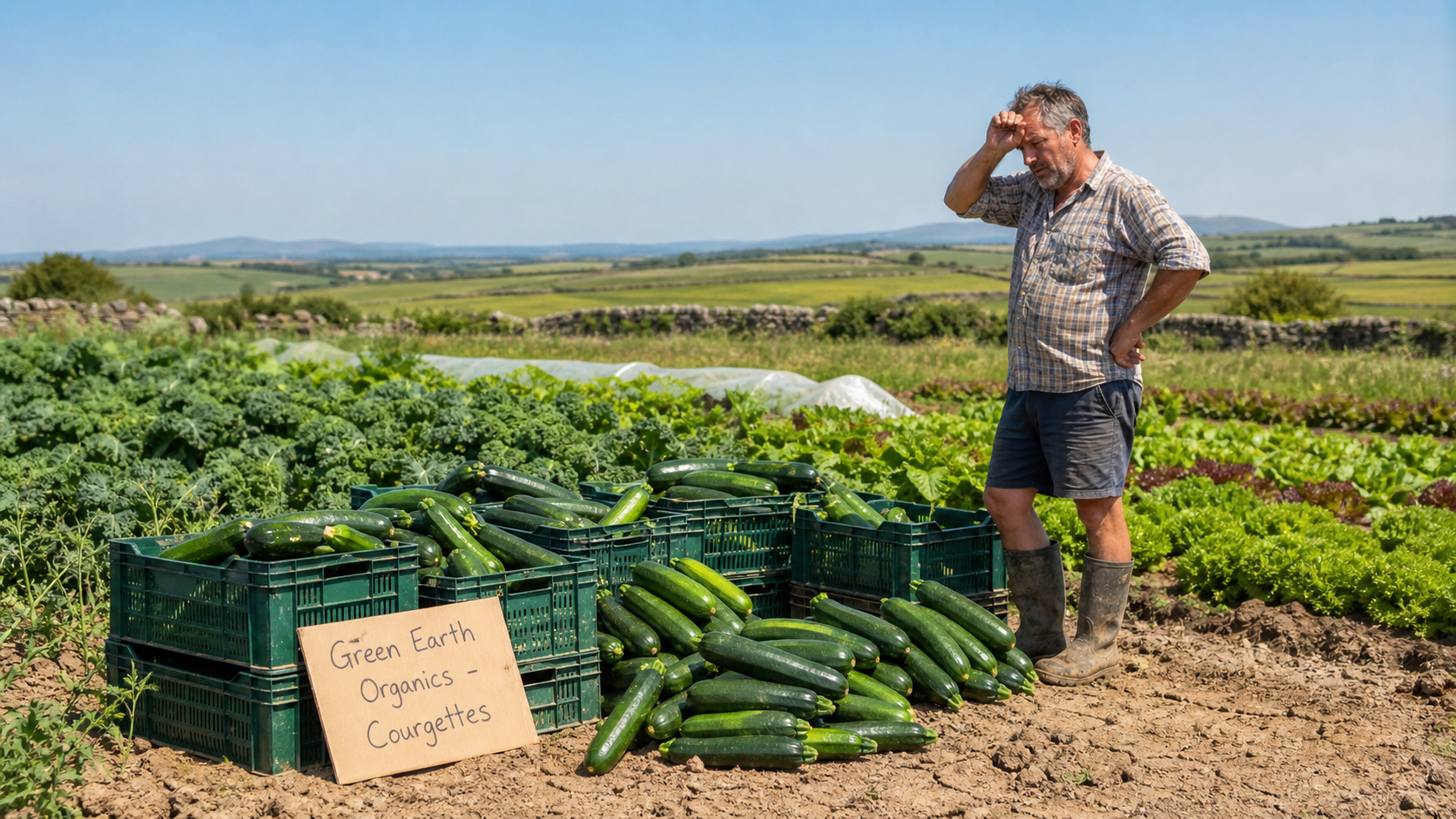
Heatwave Leaves Irish Vegetable Farmers Facing 'Courgette Mountain' as Bumper Harvest Goes to Waste
Irish vegetable farmers are experiencing a deeply frustrating paradox this summer: the prolonged heatwave that has gripped the country for weeks has produced some of the most abundant harvests in recent memory, but the same heat that is filling fields with courgettes, kale, and lettuce has caused consumer demand to collapse, leaving growers with mountains of unsellable produce and mounting financial losses. Kenneth Keavey of Green Earth Organics in Co Galway described the situation as 'extremely demoralising', telling The Irish Times that he had been forced to issue social media pleas for support as surplus crops piled up on compost heaps.
Background
Ireland's vegetable growing sector is a relatively small but economically significant part of the agricultural economy, concentrated in counties including Galway, Wexford, Meath, and Cork. The sector has faced a series of challenges in recent years, including labour shortages, rising input costs, and the increasing unpredictability of Irish weather — which has swung between prolonged wet periods that damage crops and dry spells that stress plants and reduce yields.
The 2026 summer has been characterised by an exceptional and sustained heatwave that has broken temperature records across Ireland and generated significant public health concerns. Met Éireann has issued a series of warnings about drought conditions, wildfire risk, and animal welfare, and the agricultural sector has been among the most severely affected by the prolonged dry and hot conditions.
For vegetable growers, the heatwave has created a situation without obvious precedent in recent Irish agricultural history. The combination of high temperatures and long daylight hours has accelerated crop growth dramatically, producing yields that in normal circumstances would be cause for celebration. But the same conditions that are filling fields with produce are keeping consumers away from their kitchens, creating a supply-demand mismatch that is causing real financial pain for growers.
Key Developments
Kenneth Keavey of Green Earth Organics described the situation in stark terms, telling The Irish Times that the heat had caused a 'drastic decline' in orders as people simply did not want to cook hearty meals in the hot weather. He described a 'courgette mountain' building up on his farm, with surplus produce being composted rather than sold. His social media appeals for support generated a significant public response, with many consumers expressing sympathy and pledging to buy more local vegetables.
The Irish Farmers' Association highlighted that consumer habits had shifted sharply toward salads and cold foods during the heatwave, reducing demand for the traditional vegetables — cabbage, kale, courgettes, and root vegetables — that Irish growers produce in abundance. Farmers noted that the heat also required them to harvest during early morning hours to prevent vegetables from effectively cooking in the field, adding to the labour intensity of an already difficult season.
Fruit growers faced distinct but equally serious challenges. Des Jeffares, Ireland's only commercial blackcurrant producer, reported that the harvest season had been forced to occur seven to ten days earlier than normal due to moisture stress, threatening the viability of what he described as his 'banker crop'. Apple growers reported that soil moisture deficits had reached extreme levels, with some orchards recording the maximum deficit ever measured. Fruit grown in polytunnels faced issues with extreme humidity and heat, requiring harvesting to be completed by midday.
Why It Matters
The crisis facing Irish vegetable farmers is a vivid illustration of the agricultural consequences of climate change, which is making Irish summers both hotter and more unpredictable. The 2026 heatwave is not an isolated event but part of a pattern of increasingly extreme summer weather that is forcing Irish farmers to adapt their practices, their crop choices, and their business models in ways that were not anticipated even a decade ago.
The financial impact on individual growers is severe. Vegetable farming operates on thin margins at the best of times, and a season in which bumper yields cannot be sold represents a potentially catastrophic loss of income. Unlike arable farmers, who can store grain, vegetable growers are dealing with perishable produce that must be sold quickly or composted. The waste involved — both financial and environmental — is significant.
The situation also raises questions about the resilience of Ireland's food supply chain. A domestic vegetable sector that is financially stressed and unable to invest in the infrastructure — irrigation systems, cold storage, processing facilities — needed to cope with extreme weather is a vulnerability that has implications for food security as well as for the livelihoods of individual farming families.
Local Impact
The impact is being felt most acutely in the vegetable-growing heartlands of Galway, Wexford, and Meath, where family farms that have been growing vegetables for generations are facing their most difficult season in living memory. In Galway, where Green Earth Organics operates, the local farming community has rallied around affected growers, with farmers' markets and community supported agriculture schemes reporting increased interest from consumers who want to support local producers. Bus Éireann and Irish Rail routes serving these agricultural counties have seen increased traffic from urban consumers making day trips to farm shops and pick-your-own operations.
What's Next
The IFA has called on the government to consider emergency support measures for vegetable growers affected by the heatwave, including potential access to the EU's agricultural crisis fund. Met Éireann's forecasts suggest that the current heatwave conditions are likely to persist for at least another week, meaning the crisis for vegetable farmers is unlikely to ease in the short term. The Department of Agriculture is expected to assess the scale of the losses once the heatwave breaks and to consider what support measures may be appropriate.