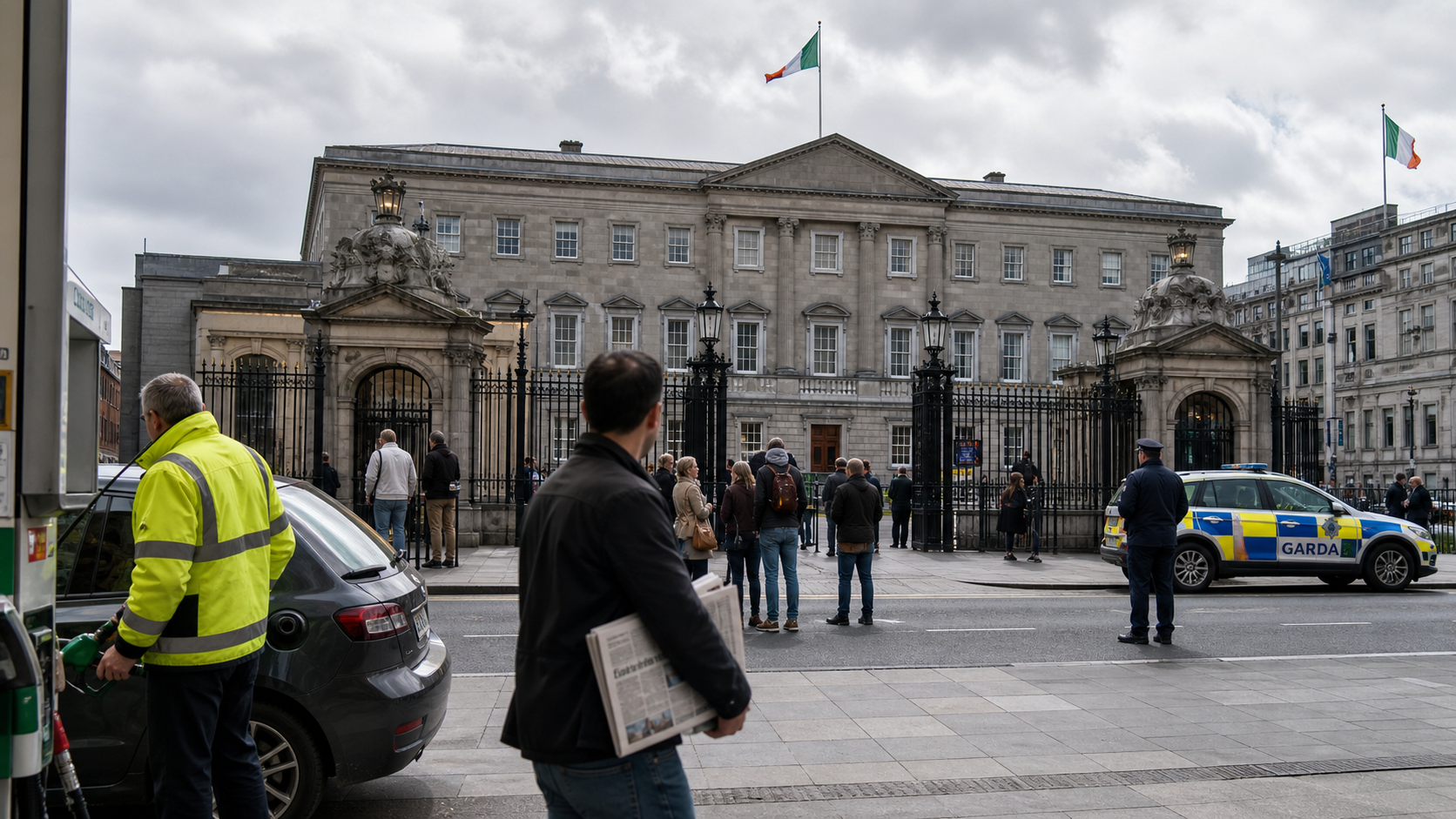
Government Confirms Fuel Excise Duty Increases Will Not Go Ahead as Dáil Set for Early Recall
The Irish government has confirmed that planned increases in fuel excise duty, scheduled to take effect on 1 September and 1 October 2026, will not proceed, citing the ongoing impact of the Iran conflict on global energy prices — a decision that will spare motorists and hauliers from increases that could have pushed diesel above €2 per litre and triggered a repeat of the protests that disrupted the country in April.
Background
The fuel excise duty saga has been one of the defining economic policy stories of 2026. In the spring, a surge in global energy prices — driven by renewed hostilities involving Iran and the resulting spike in oil and gas markets — prompted widespread protests by hauliers and farmers, who argued that fuel costs were making their businesses unviable. The government responded with a package of excise duty cuts worth approximately €750 million, reducing duty on diesel by 32 cents per litre and on petrol by 27 cents per litre.
In June 2026, the government established a "pathway" to gradually restore these cuts to pre-reduction levels, with the first phased increase scheduled for 1 September and a second for 1 October. The rationale was that the emergency conditions that had justified the cuts had eased, and that the exchequer could not sustain the cost of the supports indefinitely. However, the global energy market had other ideas: the Iran situation deteriorated again over the summer, pushing wholesale electricity prices in Ireland up by over 56% in the twelve months to July 2026 and keeping pump prices elevated.
By mid-August, with diesel at approximately €1.92 per litre and petrol at around €1.84 per litre, lobby groups including Fuels for Ireland were warning that the planned September increase would push diesel above €2 per litre — a psychologically and practically significant threshold that would almost certainly trigger renewed protests. Sinn Féin leader Mary Lou McDonald formally wrote to the Taoiseach demanding that the Dáil be recalled early from its summer recess to address the issue.
Key Developments
The government announced on Thursday, 21 August, that the scheduled increases for both September and October will not go ahead. The announcement was made by the Minister for Finance, who emphasised that the decision was driven by the ongoing geopolitical situation and its impact on consumer fuel costs. "We are monitoring the situation closely and will remain agile in our response," the Minister said. "We are not ruling out further adjustments as necessary."
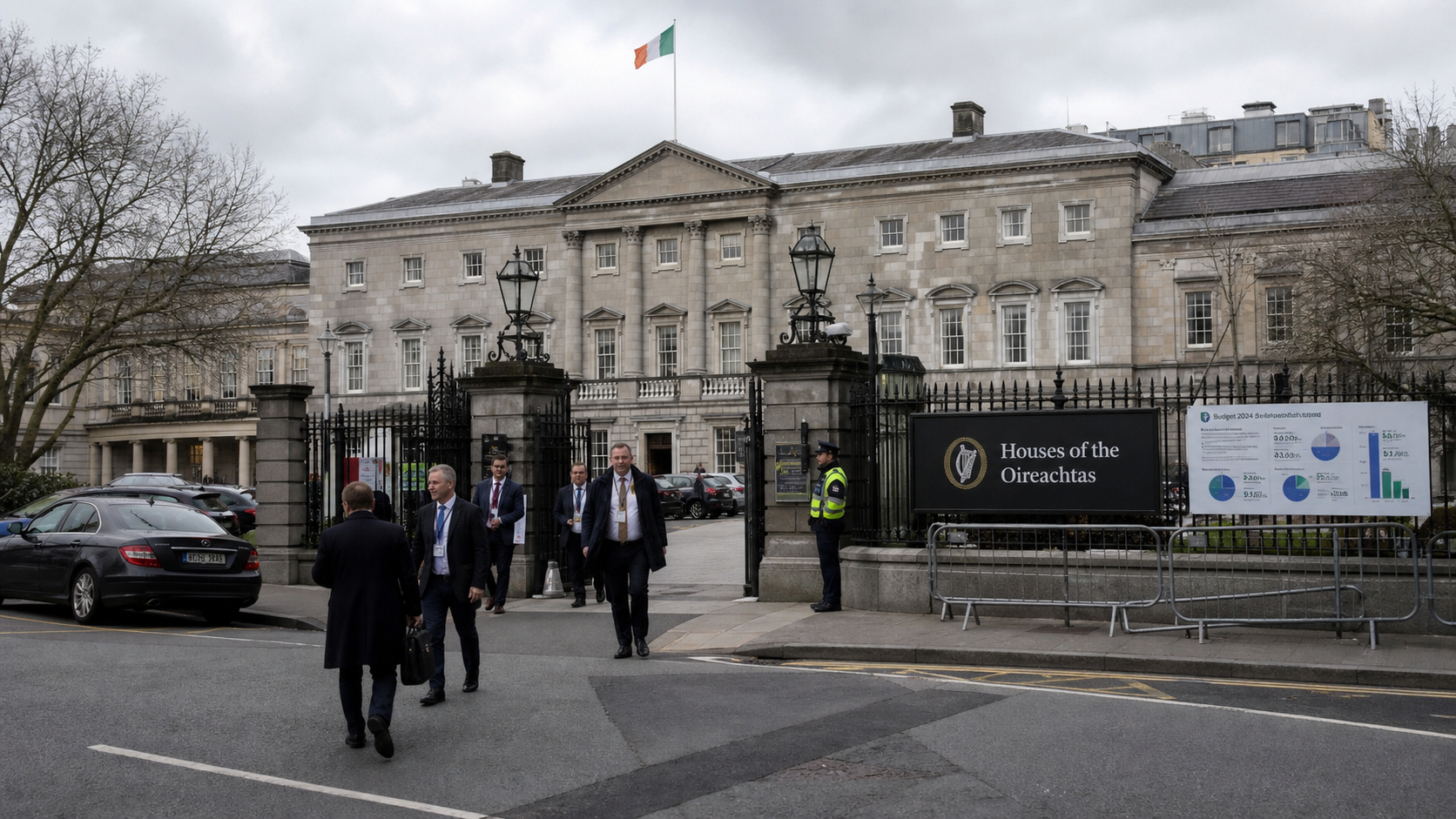
The Dáil, which is currently in its summer recess and was not scheduled to return until 16 September, is expected to be recalled as early as Friday, 28 August, to approve the financial resolution required to formalise the decision. The government confirmed that it had accepted the opposition's argument that the recall was necessary to provide legal certainty before the September deadline.
The decision has been broadly welcomed by business groups, hauliers, and farming organisations, though some opposition parties have argued that the government should go further and make the excise cuts permanent rather than maintaining the fiction of a "pathway" to restoration. The Irish Fiscal Advisory Council, which has warned of "sizeable" budgetary overruns in 2026, is expected to comment on the fiscal implications of the decision in its next assessment.
Why It Matters
The fuel excise decision matters for several reasons. Most immediately, it provides relief to the approximately 2.5 million motorists in the Republic, as well as to the haulage and farming sectors that are particularly sensitive to fuel costs. For a family running two cars in a rural area — where public transport alternatives are limited — the difference between €1.92 and €2.10 per litre of diesel is not trivial over the course of a year.
More broadly, the episode illustrates the difficulty of unwinding emergency support measures once they have been introduced. The government's original "pathway" to restoring excise duty was a reasonable policy response to a temporary emergency, but the persistence of elevated energy prices has made it politically and practically impossible to implement. This is the third time in two years that planned excise increases have been deferred or reversed — a pattern that raises legitimate questions about the long-term sustainability of the support package and the government's ability to manage the public finances in a volatile energy environment.
Local Impact
The impact of the decision will be felt most acutely in rural Ireland, where dependence on private transport is highest and where the cost of fuel represents a larger share of household budgets. In counties such as Mayo, Roscommon, Donegal, and Kerry — where public transport networks are sparse and distances between towns are significant — the decision to hold excise duty at current levels will provide meaningful financial relief. For the haulage sector, which is concentrated in the midlands and along the main arterial routes, the decision removes a significant cost pressure that had been threatening the viability of smaller operators. Bus Éireann and Irish Rail, which have been managing their own fuel cost pressures, will also benefit from the decision, though the impact on fares will depend on broader cost management decisions within those organisations.
What's Next
The Dáil is expected to be recalled on 28 August to pass the financial resolution. The government has indicated that it will continue to monitor global energy prices and will make further adjustments to excise duty if the situation warrants. The Budget, scheduled for October, will provide an opportunity to set out a longer-term approach to fuel taxation — including the question of how to balance the cost-of-living concerns of motorists with the government's climate commitments, which require a gradual increase in carbon taxes over the coming years. The Irish Fiscal Advisory Council's next assessment, expected in September, will provide an independent view of the fiscal implications of the decision.