Gordon Brown Says United Ireland Is 'Inevitable in the Long Term' as Burnham Border Poll Row Continues
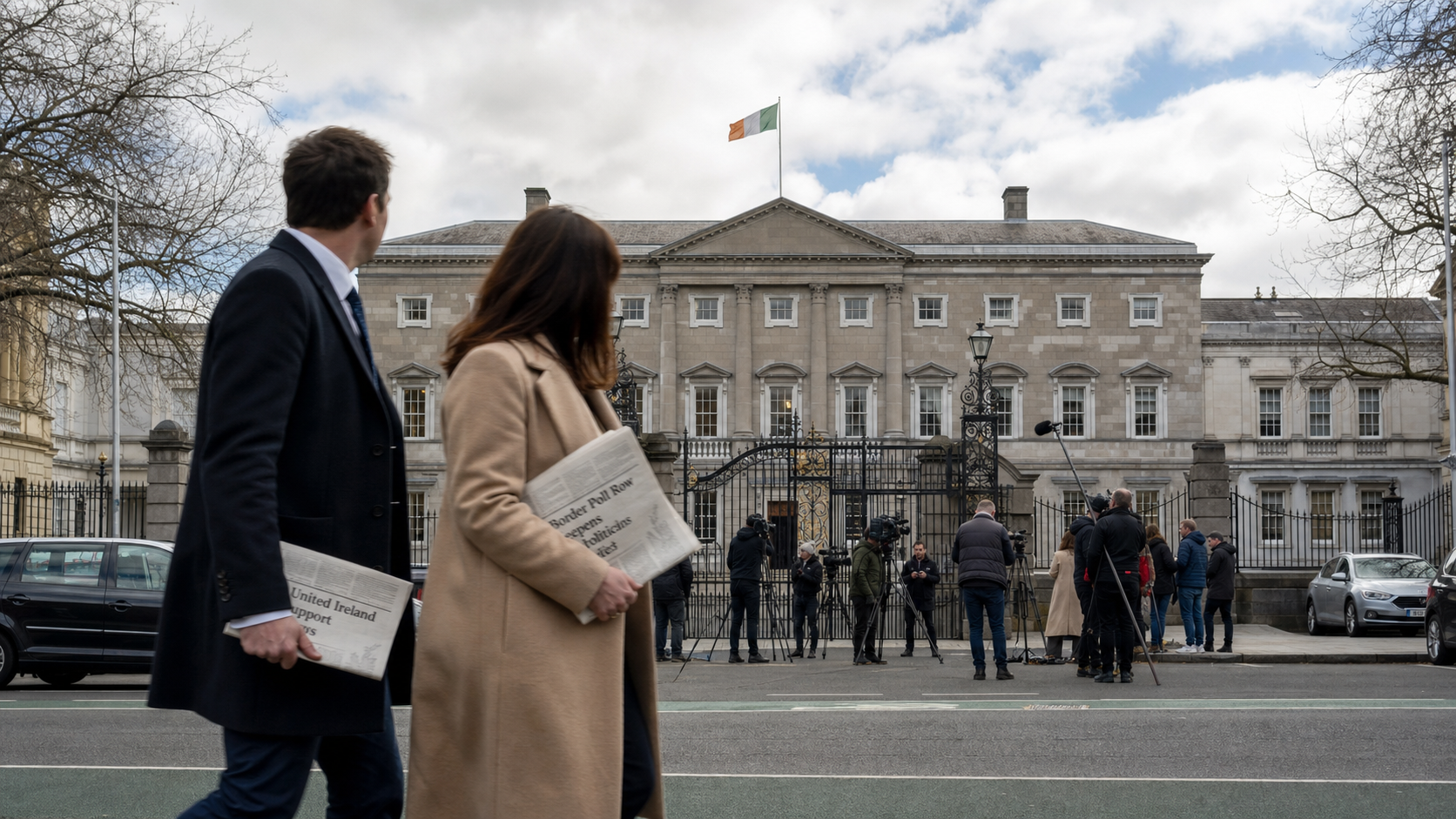
Former British Prime Minister Gordon Brown has declared that a united Ireland is 'inevitable in the long term', describing the process as one that would be 'long' and must be rooted in mutual agreement, in an interview with The Guardian that has significantly complicated the political position of current Prime Minister Andy Burnham, who sparked a constitutional row during his first visit to Belfast by declaring that a border poll on Irish unity is 'off the table' — a remark that drew immediate condemnation from Sinn Féin and has forced Northern Ireland Secretary Sir Chris Bryant into a series of clarifying statements.
Background
Gordon Brown's relationship with the Irish question is long and complex. As Chancellor of the Exchequer under Tony Blair, he was a key figure in the economic architecture of the Good Friday Agreement, and his support for the peace process was genuine and sustained. His comments on Irish unity therefore carry a weight that those of a more peripheral political figure would not — Brown is not a commentator on the sidelines but a former head of government who was intimately involved in the negotiations that produced the current constitutional settlement.
The Good Friday Agreement, which Brown helped to shape, contains a provision — Section 1 of the Agreement — that commits the British government to holding a border poll if it appears likely that a majority of people in Northern Ireland would vote for a united Ireland. The Secretary of State for Northern Ireland has the power to call such a poll, and the Agreement is explicit that the outcome of any such poll would be respected by both governments. This provision is not a concession to nationalism — it is a fundamental element of the constitutional framework that underpins the peace process.
Andy Burnham's declaration that a border poll is 'off the table' was therefore not merely a political statement — it was a claim about the constitutional position that many legal and political experts argued was simply incorrect. The Good Friday Agreement does not give any Prime Minister the power to take a border poll 'off the table'; it gives the Secretary of State the power to call one when the conditions are met. Burnham's language, whether intentional or not, suggested a unilateral British government decision to override a provision of an international agreement.
Key Developments
Brown's comments, published in The Guardian on Saturday, were made in the context of a broader discussion about the future of the United Kingdom. While arguing against Scottish independence on the grounds of Scotland's deep economic and social ties to the rest of the UK, Brown was asked specifically whether the land border between Northern Ireland and the Republic made Irish unification logical. He affirmed that it did, and stated his belief that unity is inevitable in the long term, while emphasising that the process must be one of mutual agreement.
Northern Ireland Secretary Sir Chris Bryant moved quickly to contain the political damage, stating that both he and the Prime Minister remain fully committed to the entirety of the Good Friday Agreement. Bryant argued that Burnham had not made a mistake but was simply speaking to the current political situation — a distinction that Sinn Féin leader Mary Lou McDonald rejected, accusing the Prime Minister of attempting to 'high-handedly' remove a provision of the Agreement from the political agenda.
The row has exposed a tension within the Labour government between its stated commitment to the Good Friday Agreement and its apparent desire to avoid the political complications that arise from the border poll provision. Burnham's comments during his Belfast visit were widely interpreted as an attempt to reassure unionist opinion, but the effect has been to alarm nationalist politicians and to invite the kind of constitutional commentary from figures like Brown that the government would have preferred to avoid.
Why It Matters
The border poll debate is not merely an academic constitutional question — it has real implications for the political stability of Northern Ireland and for the relationship between the two governments on the island of Ireland. The Good Friday Agreement's genius was to create a framework that could accommodate both unionist and nationalist aspirations without requiring either side to abandon its fundamental position. The border poll provision is central to that framework: it tells nationalists that their aspiration for unity is legitimate and that there is a democratic path to achieving it, while telling unionists that any change to the constitutional status of Northern Ireland requires the consent of a majority of its people.
When a British Prime Minister appears to suggest that this provision can be set aside, it undermines the confidence of the nationalist community in the Agreement's guarantees. It also creates a political opportunity for Sinn Féin, which has been arguing for years that the conditions for a border poll are approaching, to present itself as the defender of the Agreement against British government backsliding.
Brown's intervention is significant precisely because it comes from within the Labour tradition. His endorsement of the inevitability of Irish unity — however carefully qualified — makes it harder for the Burnham government to maintain the position that the border poll question can simply be parked.
Local Impact
In Northern Ireland, the row has played out differently in different communities. In nationalist areas of Belfast, Derry, and across the border counties, Brown's comments were welcomed as a validation of the aspiration for unity from a figure of genuine political stature. In unionist communities, the reaction was more mixed — some unionists expressed frustration at what they saw as a British establishment figure undermining the constitutional position, while others noted that Brown's emphasis on the need for mutual agreement was a more nuanced position than the headlines suggested.
In the Republic, the reaction was broadly positive, with political figures across the spectrum welcoming Brown's acknowledgement of the long-term trajectory of Irish politics. Taoiseach Micheál Martin, who has been careful to avoid inflammatory language on the border poll question, noted that the Irish government's position is that unity must be achieved through consent and that the conditions for a poll must be carefully assessed.
What's Next
The political row is expected to continue into the autumn, with Sinn Féin likely to raise the issue at both Stormont and Westminster when the parliamentary terms resume. The Northern Ireland Affairs Committee at Westminster is expected to examine the government's position on the border poll provision of the Good Friday Agreement, and the issue is likely to feature prominently in the Dáil when it returns from recess. Brown's comments have ensured that the question of Irish unity will remain on the political agenda regardless of the Burnham government's preference for a quieter approach.