Georgia Bans High School Cell Phones, Mandates Literacy Coaches in Every K-3 School
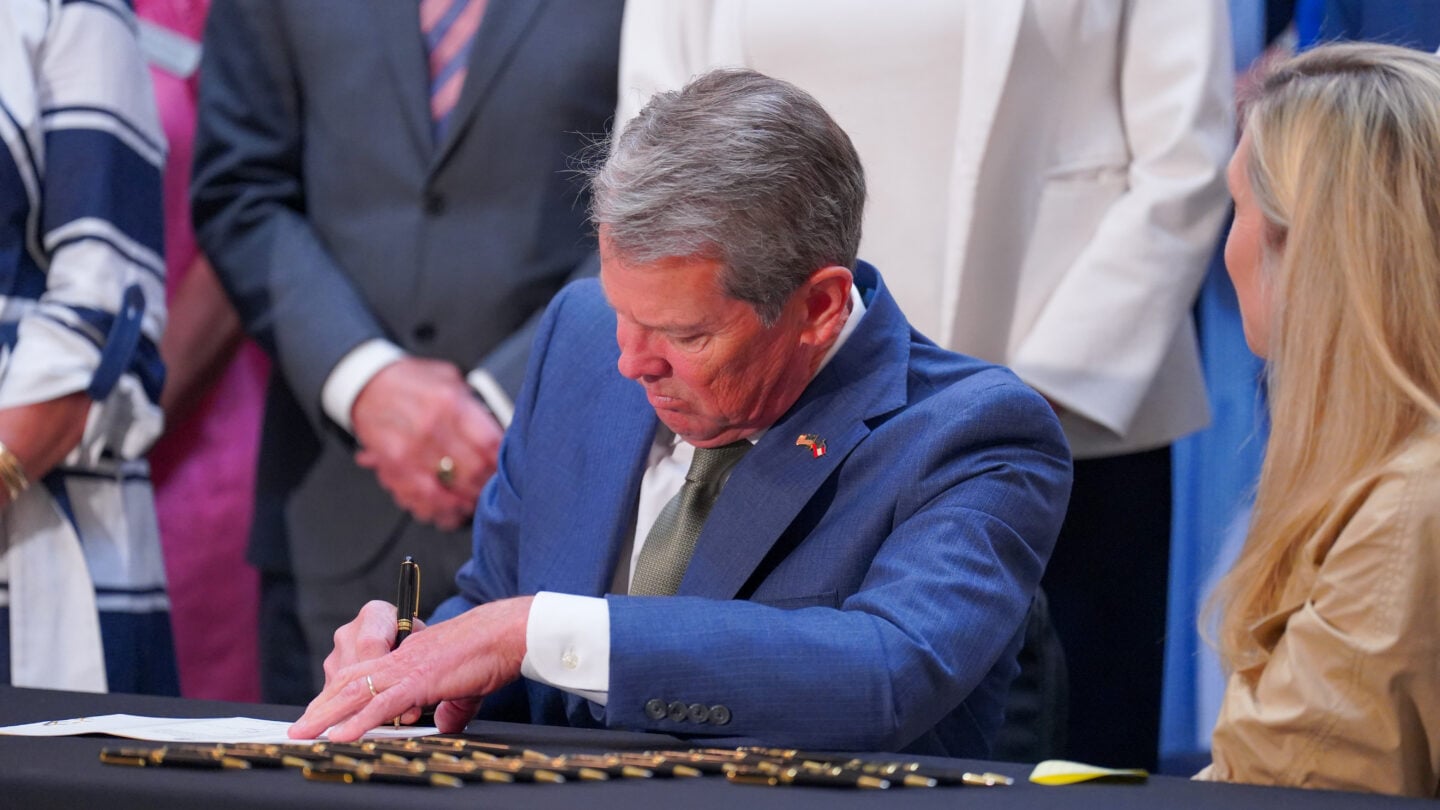
Georgia Governor Brian Kemp signed two sweeping education bills into law on May 5, 2026, extending the state's existing cell phone ban to all public high schools and committing $70 million to place a literacy coach in every kindergarten through third-grade school in Georgia — the most significant overhaul of the state's public education system in more than a decade.
Background
Georgia has been grappling with two persistent education challenges: declining early reading proficiency and the disruptive effects of smartphones in classrooms. The state's fourth-grade reading scores on the National Assessment of Educational Progress have lagged the national average for three consecutive testing cycles. Meanwhile, teachers and administrators across Atlanta, Savannah, and Augusta have reported that smartphone use during class has become one of the most significant barriers to student engagement.
The cell phone ban for K-8 grades was already in place, but high schools had been left to set their own policies — a patchwork approach that advocates argued created inconsistency and enforcement headaches. The literacy initiative, House Bill 1193, was a top legislative priority for Kemp heading into the 2026 session.
Key Developments
House Bill 1009 extends the existing device ban to all public high schools, prohibiting students from using personal cell phones, smartwatches, and headphones during the school day. The statewide policy must be implemented by the 2027-2028 school year. Exemptions exist for students with documented medical needs or Individualized Education Programs that require device use.
House Bill 1193, the K-3 Literacy Initiative, allocates $70 million in fiscal year 2027 to fund 1,313 dedicated literacy coach positions — one for every K-3 school in the state. Coaches must meet minimum qualification standards and spend at least 70 percent of their time working directly with teachers and students rather than on administrative tasks. The law also requires kindergarten attendance before first grade and gives schools the authority to retain students in first or second grade if they are not reading at grade level.
Kemp signed both bills at a ceremony at an Atlanta-area elementary school, flanked by teachers and school administrators. Georgia's children deserve every tool we can give them to succeed, the governor said. That starts with learning to read and learning to focus.
Why Americans Should Care
Georgia's moves are being watched closely by education policymakers in Texas, Florida, and Ohio, all of which are weighing similar legislation. The cell phone ban in particular has become a national flashpoint: more than 20 states have enacted or are considering restrictions on student device use, and the federal government has signaled interest in a national framework. For parents in Atlanta's Fulton County schools, Savannah-Chatham County, and the 159 other school districts across Georgia, the laws take effect as early as the 2026-2027 school year for literacy coaches and 2027-2028 for the device ban.
The literacy investment also carries implications for federal Title I funding formulas, which reward states that demonstrate measurable reading improvement. If Georgia's coach model produces gains on standardized assessments, it could influence how Congress structures the next reauthorization of the Elementary and Secondary Education Act.
Why It Matters
Georgia's dual approach — restricting technology while investing in human instruction — reflects a broader national reckoning with how schools should respond to the smartphone era. The research on cell phone bans is increasingly clear: a 2024 London School of Economics study found that banning phones in schools improved test scores by 6.4 percent for average students and 14.2 percent for low-achieving students. Georgia's high school ban, covering roughly 900,000 students, is one of the largest such experiments in the country.
On literacy, the coach model mirrors successful programs in Mississippi, which transformed from one of the worst-performing states in early reading to one of the fastest-improving over a decade by investing heavily in structured literacy instruction and teacher coaching. Georgia is betting that replicating that model at scale — with $70 million and 1,313 coaches — can produce similar gains. The stakes are high: students who cannot read proficiently by third grade are four times more likely to drop out of high school, according to the Annie E. Casey Foundation.
What's Next
The Georgia Department of Education will begin recruiting and certifying literacy coaches over the summer, with the goal of having all 1,313 positions filled before the 2026-2027 school year begins in August. School districts have until the 2027-2028 school year to implement the high school device ban, though several large districts including Gwinnett County and Cobb County have indicated they will move faster. Advocacy groups are already pushing for the literacy coach model to be extended to fourth and fifth grades in the next legislative session, and early polling suggests the cell phone ban has broad public support across party lines in Georgia.
Sources: WABE; Atlanta News First; Georgia Governor's Office