Cerebras Systems Files for $3.5 Billion Nasdaq IPO at $26.6 Billion Valuation
Cerebras Systems filed updated Nasdaq IPO paperwork in May 2026, seeking to raise up to $3.5 billion by offering 28 million shares priced between $115 and $125 — a valuation of up to $26.6 billion that reflects a 76 percent year-over-year revenue surge and a multi-year compute agreement with OpenAI worth more than $20 billion through 2028, making it the most anticipated technology public offering of the year.
Background
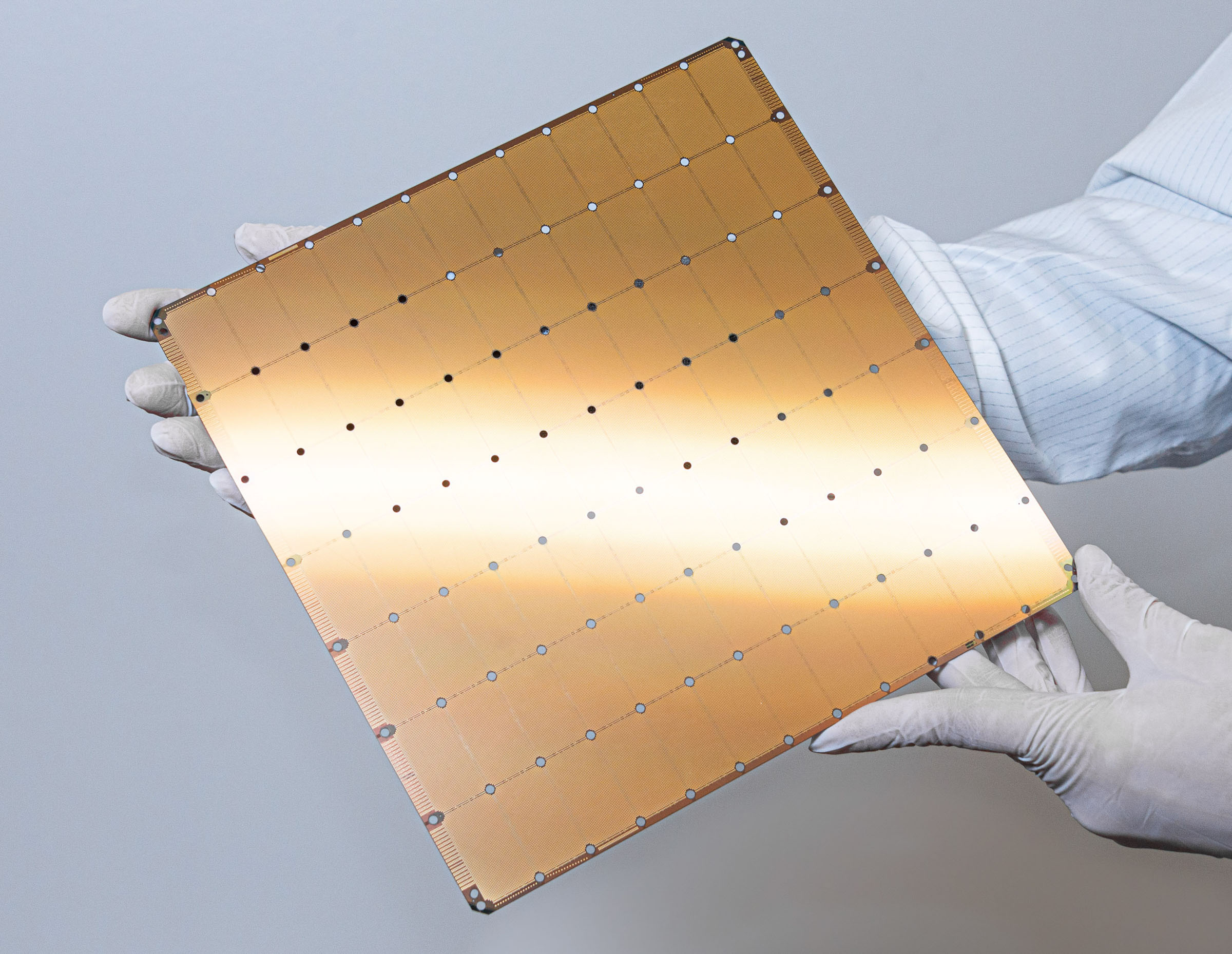
Cerebras was founded in 2016 with a singular engineering bet: that the future of high-performance computing lay not in connecting thousands of small chips but in building a single chip the size of an entire silicon wafer. The company's Wafer Scale Engine, now in its third generation, contains 4 trillion transistors and 900,000 processing cores — roughly 57 times more cores than Nvidia's flagship H100 GPU. The architecture delivers exceptional performance on certain workloads, particularly the training and inference of large language models.
The company had previously filed for an IPO in September 2024 but withdrew the offering amid regulatory scrutiny over its relationship with G42, an Abu Dhabi-based technology company that held a significant stake. That scrutiny has since been resolved, clearing the path for the current filing. Cerebras was valued at $23 billion in a February 2026 funding round.
Key Developments
The updated S-1 filing reveals that Cerebras posted a 76 percent year-over-year revenue increase in the fourth quarter of 2025, driven primarily by its compute-as-a-service business. The company's multi-year agreement with OpenAI, valued at more than $20 billion for compute capacity through 2028, provides revenue visibility that most pre-IPO technology companies cannot match.
The offering of 28 million shares at $115 to $125 per share would raise between $3.22 billion and $3.5 billion, with proceeds earmarked for manufacturing capacity expansion, research and development, and working capital. At the top of the range, the $26.6 billion valuation would make Cerebras one of the most valuable semiconductor companies to go public since Nvidia's own IPO in 1999.
The filing comes as KKR and Co. announced it has secured more than $10 billion to launch Helix Digital Infrastructure, a new entity focused on building specialized computing facilities, and as Foxconn reported a 29.7 percent year-over-year revenue increase in April driven by demand for computing servers and related components. The broader infrastructure buildout is creating a market that Cerebras is positioned to serve at the chip level.
Why Americans Should Care
A successful Cerebras IPO would represent a significant milestone for American semiconductor competitiveness at a moment when the US government has invested more than $52 billion through the CHIPS and Science Act to rebuild domestic chip manufacturing. Cerebras designs its chips in Sunnyvale, California, and has manufacturing partnerships with TSMC's Arizona facilities — meaning a portion of its production already touches US soil. For investors in California, Texas, and New York — the three states with the largest retail brokerage account concentrations — the IPO will be one of the most closely watched offerings of 2026.
Beyond investment returns, the Cerebras story matters for American workers in the semiconductor supply chain. The company's growth creates demand for specialized engineers, materials scientists, and manufacturing technicians at a time when the CHIPS Act is funding new fabrication plants in Ohio, Arizona, and New York. A thriving domestic chip design ecosystem is the demand side of the equation that makes those manufacturing investments viable.
Why It Matters
Cerebras represents the most serious challenge to Nvidia's near-monopoly on chip supply for advanced computing since the current boom began. Nvidia currently captures an estimated 80 percent of the market for high-performance training chips, a dominance that has made it the most valuable semiconductor company in history. The concentration of that market in a single supplier has made the entire computing infrastructure buildout vulnerable to supply shocks, export restrictions, and pricing power — concerns that have driven hyperscalers including Microsoft, Google, and Amazon to develop their own custom chips.
Cerebras occupies a different niche: its wafer-scale architecture is not a direct substitute for Nvidia's GPUs but excels at specific inference workloads where its massive on-chip memory eliminates the bottleneck of moving data between chips. The OpenAI deal validates that niche at commercial scale. If the IPO succeeds, it will accelerate investment in alternative chip architectures and reduce the semiconductor industry's dependence on a single design paradigm — a structural diversification that benefits the entire US technology sector.
What's Next
Cerebras is expected to begin its investor roadshow in late May, with the IPO pricing anticipated in early June. The offering will be closely watched as a barometer of institutional appetite for high-valuation technology companies in a market where the Federal Reserve has signaled no rate cuts for 2026. If the deal prices at the top of the range, it will likely trigger a wave of follow-on filings from other well-funded technology infrastructure companies that have been waiting for a market signal before proceeding with their own public offerings.
Sources: TechStartups.com; TechStartups Funding; SEC EDGAR