Mitchell Portrait Stays at Hillsborough as Peace Process Legacy Outweighs Epstein Controversy, Curators Rule
The portrait of former United States Senator George Mitchell will remain on display at Hillsborough Castle in County Down, the independent charity Historic Royal Palaces confirmed on Monday, resisting pressure to follow other institutions that have severed ties with the former peace envoy following the release of US Department of Justice files relating to convicted sex offender Jeffrey Epstein.
Background
George Mitchell's place in Northern Irish history is singular. As the US Special Envoy for Northern Ireland appointed by President Bill Clinton in 1995, he chaired the multi-party talks that produced the Good Friday Agreement of April 1998 — the document that ended three decades of conflict and transformed the political landscape of the island of Ireland. His patience, diplomatic skill, and personal authority were widely credited with holding the negotiations together during their most difficult moments, and his name has been synonymous with the peace process ever since.
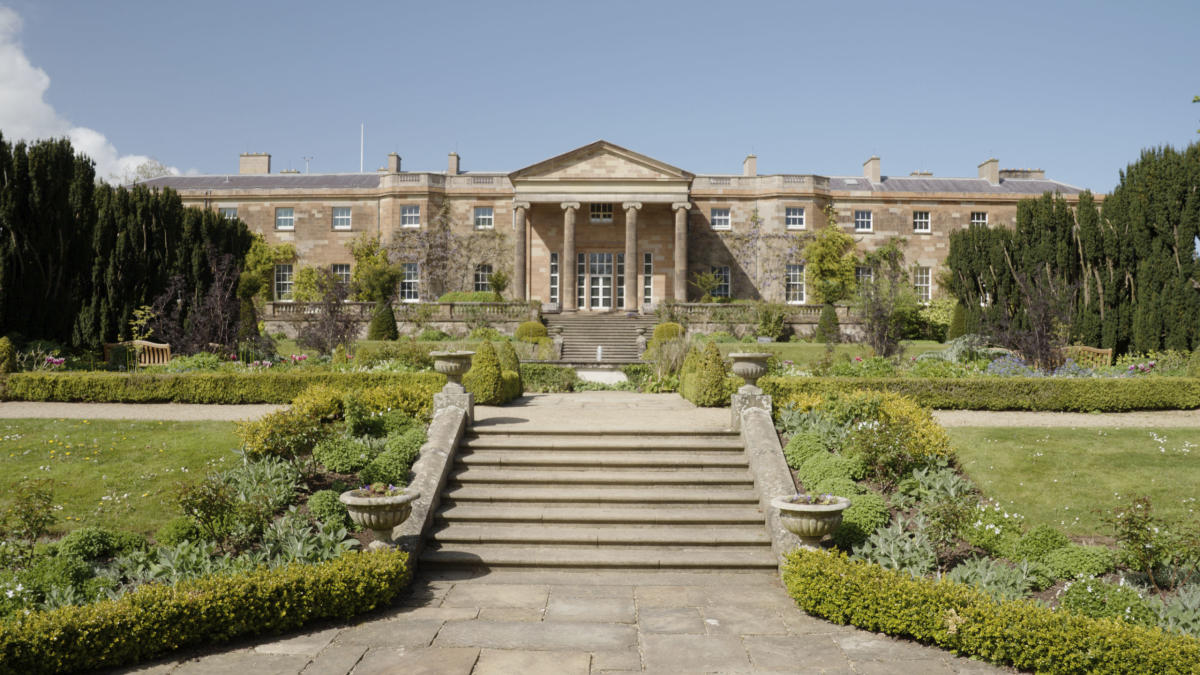
The portrait in question hangs in Lady Grey's study at Hillsborough Castle, the official residence of the Secretary of State for Northern Ireland and a venue that played a central role in the peace negotiations. It forms part of the castle's "Preparing the Peace" exhibition, which documents the bilateral talks and diplomatic efforts that led to the Agreement. The exhibition is one of the most visited features of the castle, which attracts tens of thousands of tourists annually.
The controversy surrounding Mitchell intensified in 2026 following the release of US Department of Justice files relating to Jeffrey Epstein, which included references to allegations — consistently denied by Mitchell — that he had sexual contact with Epstein victim Virginia Giuffre. The allegations prompted a wave of institutional distancing, with Queen's University Belfast removing a £35,000 bust of Mitchell from its grounds and the US-Ireland Alliance renaming its scholarship programme, which had previously borne his name.
Key Developments
Historic Royal Palaces, the independent charity responsible for the curation of Hillsborough Castle, issued a statement on Monday confirming that the portrait would remain in place. The charity emphasised that the display does not serve to endorse or promote any individual, and that the selection of figures featured in the "Preparing the Peace" exhibition is based solely on their participation in peace talks held at the castle.
"The portrait of Senator Mitchell is part of the castle's important story about the Northern Ireland peace process," the statement read. "Its presence in the exhibition reflects his role in the negotiations that took place here, not an endorsement of his personal conduct. We have no plans to alter the collection at this time."
The Northern Ireland Office confirmed that responsibility for the castle's day-to-day operations and art collections rests entirely with Historic Royal Palaces, and that the Royal Household is not involved in curatorial decisions. The decision has been welcomed by some peace process veterans, who argued that removing Mitchell's image would amount to a rewriting of history.
Why It Matters
The debate over Mitchell's portrait raises questions that go well beyond the specifics of one man's reputation. It touches on how societies handle the legacy of individuals who made genuine contributions to the public good but whose personal conduct has subsequently come under scrutiny. The Good Friday Agreement is not Mitchell's alone — it was the product of years of work by hundreds of politicians, diplomats, community leaders, and ordinary citizens on both sides of the border and the Atlantic. But Mitchell's role was pivotal, and his image has become part of the visual language of the peace process.
The contrast with QUB's decision to remove its bust of Mitchell is instructive. A university, as an institution that shapes values and educates future generations, may reasonably take a different view of how it commemorates individuals than a heritage site whose primary purpose is historical documentation. Hillsborough Castle's argument — that the portrait records a historical fact rather than endorsing a person — is a defensible one, even if it will not satisfy everyone.
For Northern Ireland, where the peace process remains a live and contested political reality, the question of how to honour its architects without whitewashing their complexities is one that will recur. The Mitchell case is unlikely to be the last of its kind.
Local Impact
In Hillsborough village, where the castle is the dominant local landmark and a significant source of tourism revenue, the decision was broadly welcomed. Local business owners expressed relief that the controversy had not escalated to the point of affecting visitor numbers, which have recovered strongly since the pandemic. The castle's education programme, which brings school groups from across Northern Ireland to learn about the peace process, will continue to use the "Preparing the Peace" exhibition as a teaching resource. Teachers who use the programme said they welcomed the opportunity to discuss the complexity of Mitchell's legacy with students as part of a broader conversation about how history is made and remembered.
What's Next
Historic Royal Palaces has indicated that it will keep the situation under review and will consult with its board of trustees if new information emerges that materially changes the context of the display. The charity is also planning a series of public events in 2027 to mark the 29th anniversary of the Good Friday Agreement, at which the role of international figures including Mitchell will be discussed. The Northern Ireland Office has not indicated any intention to intervene in the curatorial decision, and the Secretary of State's office declined to comment on the specific question of the portrait's future.