Gavin Robinson Says Confidence in Parades Commission Remains 'Dangerously Low' as Drumcree Fallout Continues
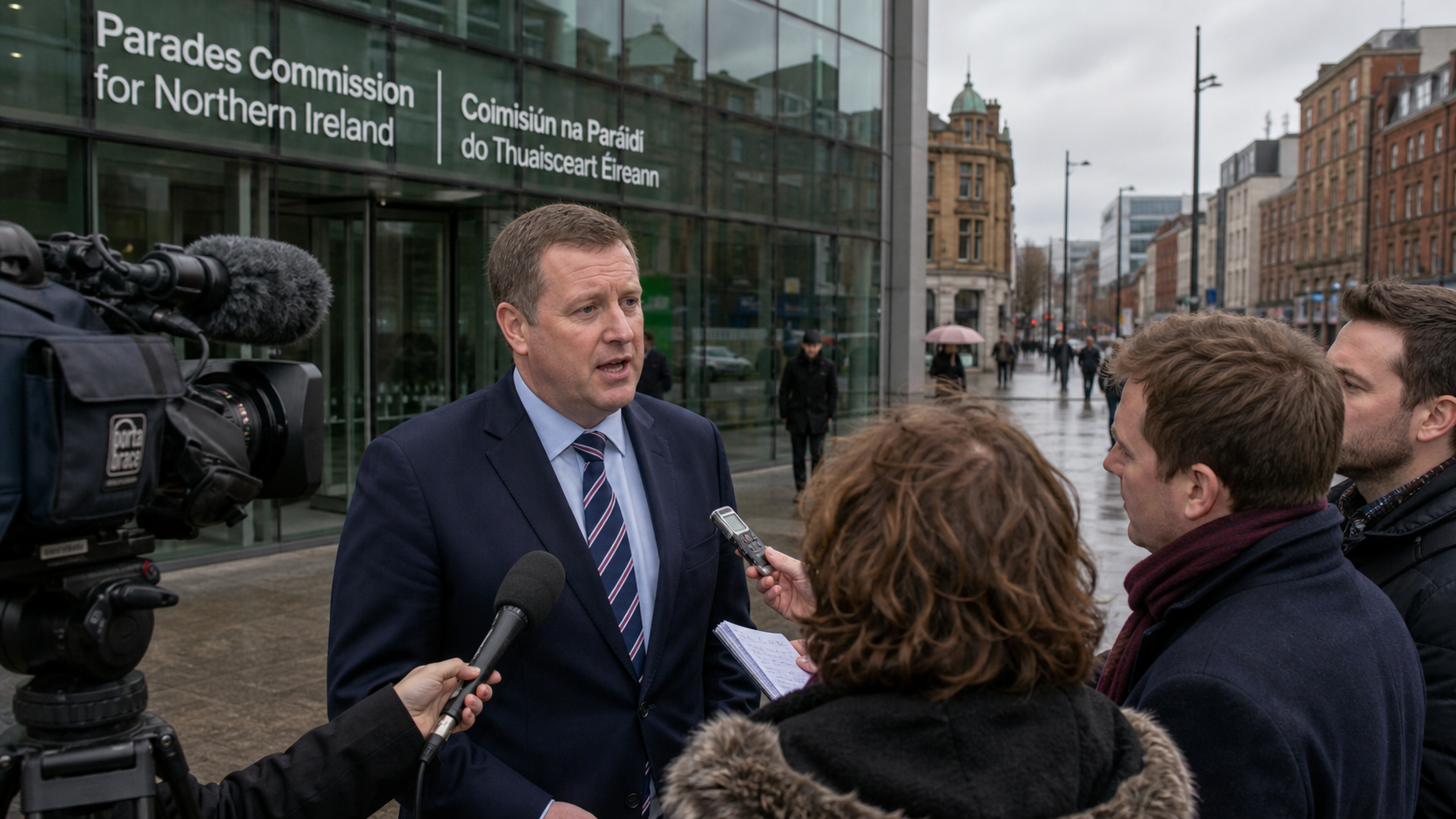
DUP leader Gavin Robinson has declared that public confidence in the Parades Commission remains at a 'dangerously low' level following the High Court ruling that struck down the body's determination on the Drumcree parade, as Northern Ireland Secretary Sir Chris Bryant faces mounting pressure from unionist leaders to take decisive action to reform or replace a body that they argue has lost the trust of the unionist community — a crisis that has placed the Commission's future in serious doubt just weeks before the marching season's final parades.
Background
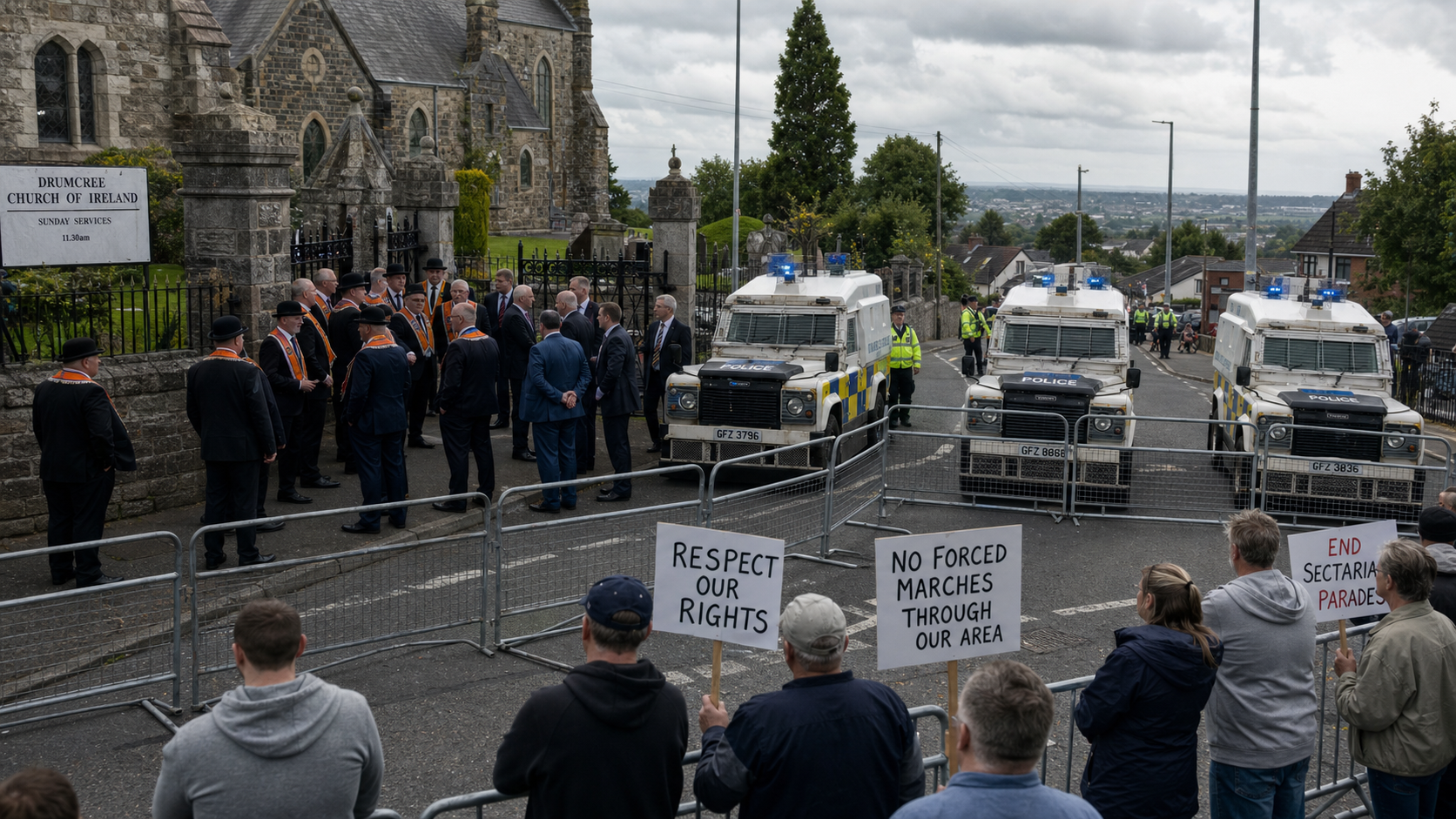
The Parades Commission for Northern Ireland was established under the Public Processions Act 1998 as an independent body responsible for making determinations about contentious parades and protests. Its creation was a direct response to the violence that erupted at Drumcree in the mid-1990s, when the Orange Order's insistence on marching along the Garvaghy Road in Portadown — a predominantly nationalist area — led to some of the most serious public disorder seen in Northern Ireland since the height of the Troubles.
The Commission has operated for nearly three decades in a deeply contested political environment, attempting to balance the rights of those who wish to march with the rights of residents who object to parades passing through their areas. Its determinations have never satisfied all parties — by definition, a body that must adjudicate between competing rights claims will always disappoint one side — but it has generally maintained sufficient credibility to function as a legitimate arbiter of parading disputes.
The current crisis originated from a High Court ruling in late August 2026 that struck down the Commission's determination on an Orange Order parade at Drumcree. The court found that the determination had been issued without the sign-off of all six commissioners — a procedural failure that the Commission itself acknowledged. The ruling prompted the resignation of Commissioner Billy Gamble and triggered a political storm that has called the entire body's future into question.
Key Developments
Gavin Robinson's comments on Saturday evening, in which he described confidence in the Commission as 'dangerously low', came after Northern Ireland Secretary Sir Chris Bryant confirmed that he had received a letter from the Commission outlining its plans to restore public confidence. Bryant had previously met with Commission chair Professor Evelyn Collins and demanded written assurances about the body's decision-making processes, its independence, and its strategy for rebuilding trust across all communities.
Robinson, speaking to BBC Northern Ireland, made clear that the DUP does not believe the Commission's letter represents an adequate response to the crisis. He called for a fundamental review of the body's composition, processes, and statutory basis, arguing that the Drumcree ruling had exposed systemic failures that go beyond the specific procedural error identified by the court. The Orange Order is expected to lodge a fresh application for a march along the Garvaghy Road, forcing the Commission to revisit one of the most contentious issues in Northern Ireland's parading history.
Professor Evelyn Collins, the Commission's chair, has stated that she does not intend to resign despite the pressure from unionist leaders. She has maintained that the High Court ruling does not affect the Commission's ability to make future determinations and that the body is committed to learning from the procedural failures identified in the Drumcree case.
Why It Matters
The Parades Commission crisis arrives at a particularly sensitive moment in Northern Ireland's political landscape. The body's ability to manage contentious parades is not merely a technical regulatory matter — it is a fundamental component of the peace process architecture. The Commission was created precisely because the alternative to regulated parading was the kind of violent confrontation that characterised Drumcree in the 1990s, when the standoff between the Orange Order and Garvaghy Road residents led to widespread rioting across Northern Ireland.
If the Commission loses the confidence of the unionist community to the point where its determinations are routinely challenged or ignored, the consequences for public order could be severe. The marching season, which runs from spring through to the end of August, is already one of the most challenging periods for community relations in Northern Ireland. A Parades Commission that is seen as illegitimate by one community is a Commission that cannot perform its core function.
The crisis also has implications for the broader political settlement. The Good Friday Agreement and subsequent agreements created a framework of institutions designed to manage the competing identities and aspirations of Northern Ireland's communities. The Parades Commission is one of those institutions, and its perceived failure reflects on the health of the overall settlement.
Local Impact
In Portadown, where the Drumcree dispute has its roots, the renewed controversy has reopened wounds that many in the community had hoped were healing. Residents of the Garvaghy Road area, who have lived with the annual tension of the Drumcree dispute for three decades, expressed concern that the High Court ruling and the Orange Order's anticipated fresh application could reignite a conflict that had been largely dormant in recent years. Community relations workers in the area have been in contact with both communities to assess the situation and to prepare for any escalation.
In Belfast, the political fallout from the crisis has dominated discussions at Stormont, with the Assembly's justice committee expected to examine the Commission's future when it returns from recess. The Northern Ireland Office, which has responsibility for the Commission, is under pressure from both unionist and nationalist politicians to provide clarity about the body's future direction.
What's Next
Northern Ireland Secretary Chris Bryant is expected to respond formally to the Commission's letter in the coming days, setting out the government's assessment of whether the assurances provided are sufficient. If Bryant concludes that the Commission's response is inadequate, he has the power to initiate a review of the body's statutory basis under the Public Processions Act 1998. The Orange Order's anticipated fresh application for a Drumcree march will be the first major test of the Commission's ability to function effectively in the aftermath of the crisis. The Stormont Assembly is due to return from summer recess in September, at which point the issue is expected to dominate the political agenda.