Gavin Bazunu Withdraws from Ireland Squad as Significant Majority of Players Vote to Face Israel in Nations League
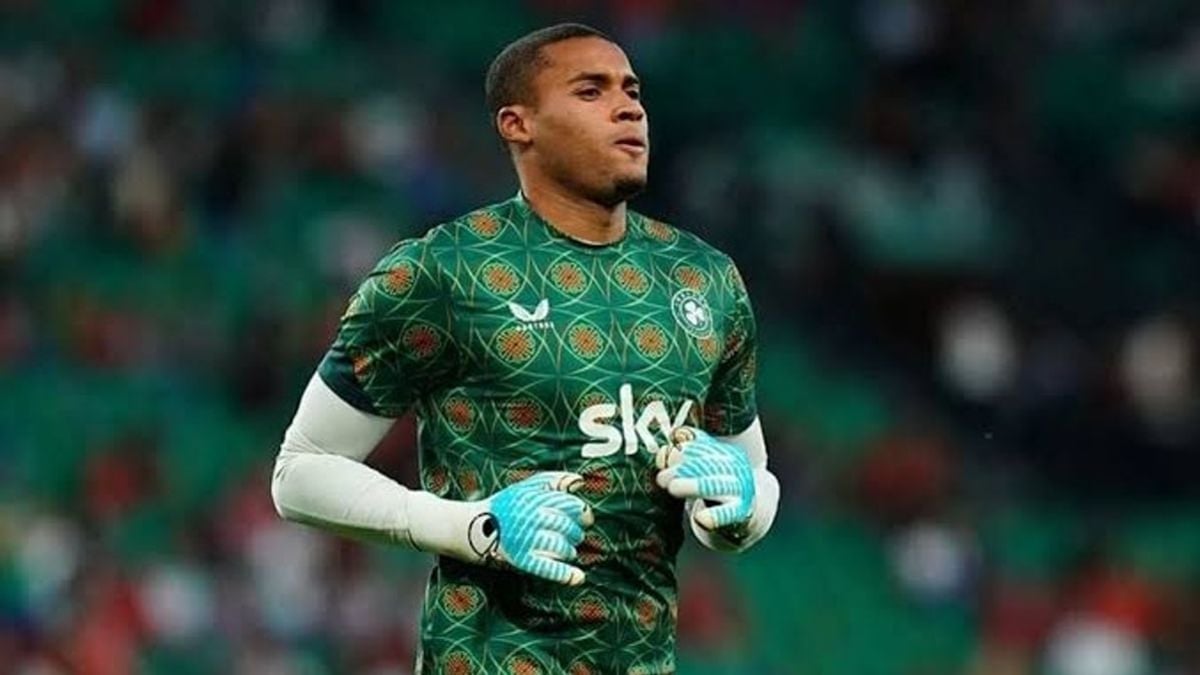
Bolton Wanderers goalkeeper Gavin Bazunu has withdrawn from the Republic of Ireland squad ahead of tonight's UEFA Nations League fixture against Israel at the Nagyerdei Stadion in Debrecen, Hungary, citing his personal faith and his belief that it would be wrong to participate in the match given the ongoing conflict in Gaza, as a significant majority of the remaining squad voted to fulfil the fixture following an extended period of internal deliberation that delayed training sessions and press conferences.
Background
The Republic of Ireland's Nations League fixtures against Israel have been among the most politically charged in the history of Irish international football. The matches — scheduled for Debrecen, Hungary, on September 27 and Backa Topola, Serbia, on October 4 — were relocated to neutral venues because Israel has been required to play its home matches outside its own territory since the outbreak of the conflict in Gaza in October 2023. The Football Association of Ireland faced sustained pressure from civil society groups, politicians, and more than 160 Irish athletes to boycott the fixtures, with opponents of the matches arguing that proceeding would normalise the participation of a state engaged in what many international observers have characterised as disproportionate military action.
The FAI's position throughout the controversy has been that it is obliged to fulfil its UEFA fixtures or face significant financial penalties and potential sporting sanctions. Chief Executive David Courell confirmed that the association had explored the possibility of postponement or relocation but had concluded that proceeding was the only viable option. Manager Heimir Hallgrímsson found himself at the centre of the controversy after describing the situation as "playing against genocide" — a characterisation he subsequently retracted, describing it as a "strong" and "wrong" word to use.
The pressure on individual players intensified in the days leading up to the match, with Jason Knight of Derby County becoming the first Ireland player to publicly suggest the fixture should not proceed. The squad held a vote on Saturday, following a period of deliberation that saw training sessions and press conferences postponed as players sought to reach a collective decision.
Key Developments
Gavin Bazunu announced his withdrawal from the squad on Saturday in a statement released on social media. The Bolton Wanderers goalkeeper, who has been one of Ireland's most consistent performers in recent seasons, was careful to frame his decision in personal rather than political terms. "My decision is not directed against the Israeli people or the Jewish community," he wrote. "It is rooted in my personal faith and my desire to act as a person of principle. The killing of innocent people is wrong, and it would be wrong for me to participate." Bazunu described himself as feeling "brutally isolated" by the squad's subsequent decision to proceed, though he expressed respect for his teammates' right to make their own choices.
The squad's vote resulted in a significant majority in favour of fulfilling the fixture. FAI CEO David Courell confirmed the outcome and announced that the players had agreed to a series of measures to mark their awareness of the humanitarian situation: they will wear black armbands throughout the match, decline to participate in the traditional pre-match handshakes and exchange of pennants, and have requested to be exempt from media obligations for the remainder of the international window. The Israel Football Association welcomed the decision, with officials stating that "football has won" and emphasising the importance of maintaining a separation between sport and politics.
Why It Matters
The Bazunu withdrawal and the squad's deliberations represent a significant moment in the relationship between Irish sport and Irish society. The fact that a senior international player was willing to sacrifice his place in the squad on grounds of conscience — and that the squad engaged in a genuine democratic process rather than simply deferring to the FAI — reflects a changing culture within Irish football in which players are increasingly willing to use their platform to engage with political and humanitarian questions. The outcome, however, also illustrates the limits of individual conscience within a collective sporting structure: the majority decision to proceed means that Ireland will take the field tonight, and Bazunu's principled stand will be noted but will not change the outcome. The controversy has also exposed the FAI's lack of a coherent public position on the matter, with the association appearing to manage the crisis reactively rather than proactively.
Local Impact
The controversy has generated significant public debate across Ireland, with opinion divided between those who believe the squad should have refused to play and those who argue that sport and politics should be kept separate. In Dublin, Cork, and Galway, pro-Palestinian groups have organised protests outside FAI offices and at public screenings of the match. The debate has also played out on social media, where the hashtag #IrelandBoycott trended throughout the week. For the players themselves, the experience of navigating a deeply divisive political question in the full glare of public scrutiny has been described by several sources close to the squad as one of the most difficult of their careers. The FAI is expected to conduct a review of its crisis communications strategy in the aftermath of the controversy.
What's Next
Tonight's match kicks off at 19:45 BST at the Nagyerdei Stadion in Debrecen. Ireland, who lost their Nations League opener 1-0 to Kosovo in Pristina, will be seeking their first points of the campaign. Israel, who lost 3-1 to Austria in their opener, are similarly under pressure. The second fixture between the two sides is scheduled for Backa Topola, Serbia, on October 4. The FAI is expected to hold a debrief with players and management following the international window to discuss the handling of the controversy and to develop a framework for managing similar situations in the future.