Garda Charged with Soliciting Murder of Woman and Three Children in Unprecedented Anti-Corruption Case
A 33-year-old Dublin-based garda has been charged with five criminal offences, including four counts of soliciting the murder of a woman and three children, following an investigation by the Garda Anti-Corruption Unit — a case that has sent shockwaves through An Garda Síochána and raised serious questions about the vetting and oversight of serving officers.
Background
The Garda Anti-Corruption Unit was established in recent years as part of a broader effort to address concerns about misconduct within An Garda Síochána. Its remit covers a range of offences, from corruption and bribery to the abuse of garda powers for personal gain. The unit operates with a degree of independence from the broader garda structure, reporting directly to senior management and, in serious cases, to the Policing Authority.
Cases involving serving members of An Garda Síochána charged with serious criminal offences are rare but not without precedent. In recent years, a small number of gardaí have faced charges relating to drug offences, corruption, and assault. But a charge of soliciting murder — the most serious category of offence in the criminal calendar — is without precedent in the modern history of the force. The case has therefore attracted an unusual degree of attention, both within the garda organisation and in the broader public sphere.
The accused, who was based in the Dublin region, was arrested at Kevin Street Garda Station on the morning of August 19 and brought before the Dublin District Court later that day. He has been suspended from duty pending the outcome of the proceedings. Strict reporting restrictions have been imposed by the court to protect the identities of the three children involved in the case, preventing the publication of the names of the accused, the victims, or the address of the accused.
Key Developments
The accused faces five charges in total. Four of the charges relate to soliciting an unknown person to murder a woman and three children — one girl and two boys — in August 2021. These charges are brought under Section 4 of the Offences Against the Person Act, 1861, which makes it a criminal offence to solicit, encourage, persuade, or endeavour to persuade another person to commit murder. The fifth charge relates to an alleged attempt to induce the woman by deception to refrain from seeking financial support for his child, an offence alleged to have occurred between February 2019 and July 2020.
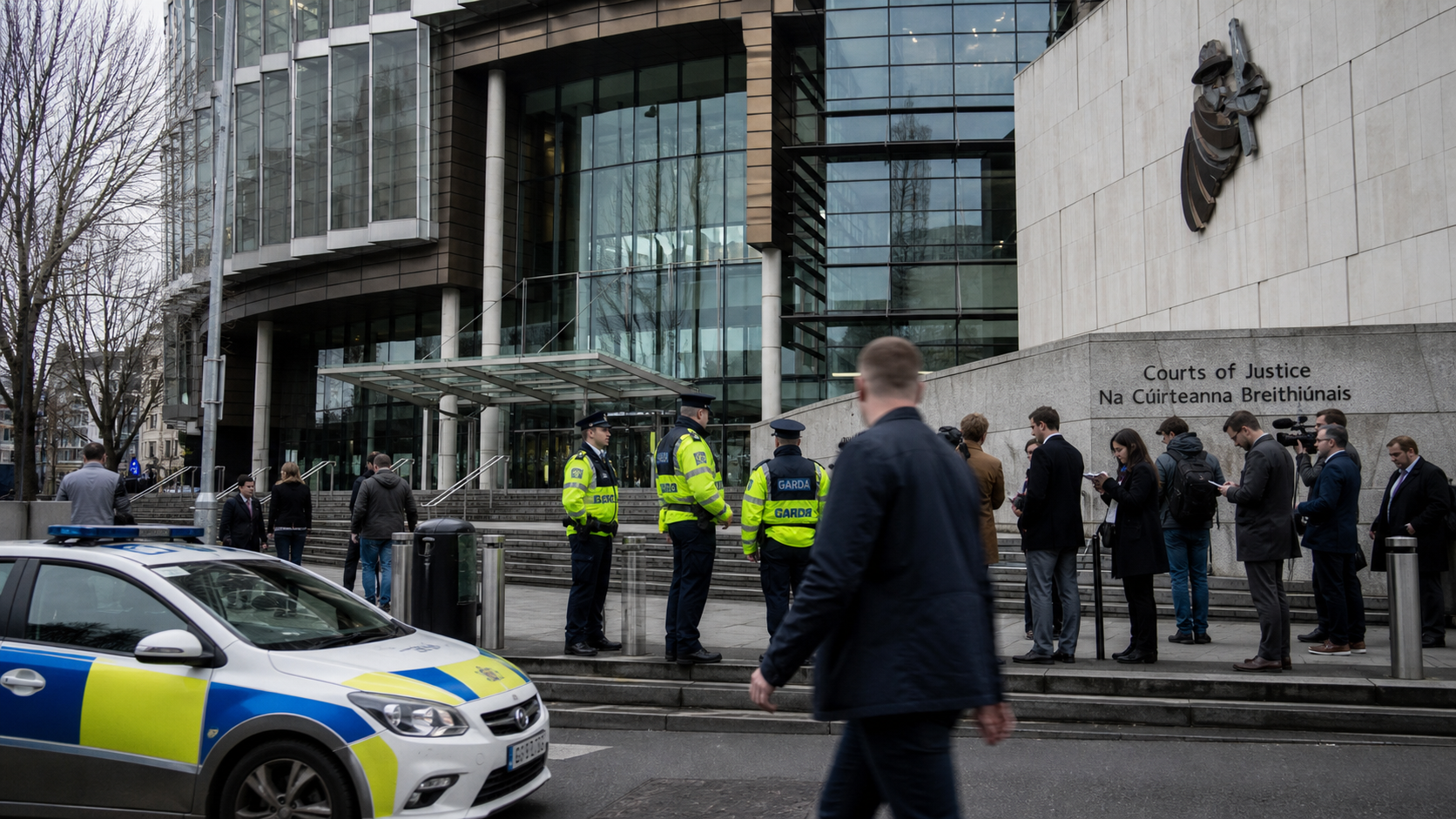
During the court proceedings, Detective Sergeant Mark Melbourne of the Anti-Corruption Unit testified that the accused made no reply to the charges when cautioned. The Director of Public Prosecutions has directed that the case proceed on indictment before the Central Criminal Court — the highest criminal court in the State, which handles the most serious offences. Judge Darach McCarthy granted bail on a €300 bond, with conditions that include the surrender of the accused's passport. The case is scheduled to return to court on September 25 for the service of the book of evidence.
Why It Matters
The case raises profound questions about the integrity of An Garda Síochána and the adequacy of the systems in place to identify and remove officers who pose a risk to the public. The allegations, if proven, would represent a catastrophic failure of the vetting and oversight processes that are supposed to ensure that those entrusted with the power of the State are fit to exercise it.
The Policing Authority, which has oversight responsibility for An Garda Síochána, is expected to seek a briefing from garda management on the circumstances of the case and the steps being taken to ensure that the integrity of the investigation is maintained. The Garda Síochána Ombudsman Commission, which investigates complaints against gardaí, may also have a role to play depending on the outcome of the criminal proceedings.
For the broader public, the case is a reminder that the power vested in members of An Garda Síochána — the power to arrest, to detain, to use force — carries with it a corresponding obligation of integrity that must be enforced rigorously. The Anti-Corruption Unit's investigation and the subsequent charges demonstrate that the system is capable of identifying and prosecuting serious misconduct. But the nature of the allegations will inevitably prompt questions about whether the existing oversight mechanisms are sufficient.
Local Impact
For the communities served by the garda station where the accused was based, the case is deeply unsettling. Gardaí are expected to be a source of protection and reassurance; the prospect that a serving officer could be charged with soliciting the murder of a woman and children undermines the trust that is essential to effective policing. Garda management has moved quickly to reassure the public that the case is being handled with the utmost seriousness and that the accused's suspension from duty means he has no access to garda systems or resources.
The case will also be closely watched by the Garda Representative Association and the Association of Garda Sergeants and Inspectors, both of which have a role in representing the interests of serving members while also maintaining the professional standards of the force. Both organisations are expected to issue statements in the coming days.
What's Next
The case returns to the Dublin District Court on September 25 for the service of the book of evidence, after which it will be sent forward to the Central Criminal Court for trial. Given the complexity of the charges and the reporting restrictions in place, the trial is unlikely to begin before 2027. The accused remains on bail in the interim, subject to the conditions imposed by Judge McCarthy. The Garda Anti-Corruption Unit's investigation is understood to be continuing, and it is possible that additional charges or additional accused persons could emerge as the inquiry progresses.