Féile an Phobail Unveils Largest-Ever Programme with 700 Events as Belfast Prepares for Cultural Fortnight
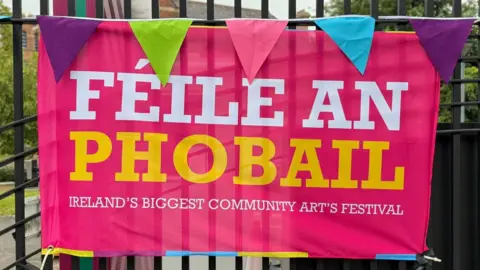
Féile an Phobail, Ireland's largest community arts festival, has unveiled its most ambitious programme in its 38-year history, with over 700 events planned across more than 50 venues in Belfast between 25 July and 9 August — a fortnight of cultural activity that will coincide with the city's inaugural hosting of the Fleadh Cheoil na hÉireann and that promises to transform west Belfast and the wider city into one of the most vibrant cultural destinations in Europe.
Background
Féile an Phobail — the Festival of the People — was founded in 1988 in the aftermath of the Milltown Cemetery attack, as a community response to the violence and trauma that had engulfed west Belfast during the Troubles. The festival's founders believed that culture, creativity, and community celebration could provide an alternative to the cycle of violence and despair that had defined life in the area for two decades, and that belief has been vindicated by the festival's remarkable growth over the subsequent four decades.
From its origins as a small community festival in the Falls Road area, Féile an Phobail has grown into Ireland's largest community arts festival, attracting hundreds of thousands of visitors each year and presenting a programme that spans music, theatre, film, debate, sport, and community events. The festival has been a catalyst for the cultural and economic regeneration of west Belfast, helping to transform an area that was once defined by conflict and deprivation into one of the most vibrant and creative communities in Ireland.
The 2026 edition of the festival is particularly significant because it coincides with Belfast's inaugural hosting of the Fleadh Cheoil na hÉireann, the world's premier traditional Irish music festival. The two events, which run consecutively and overlap for several days, will create an unprecedented concentration of cultural activity in Belfast that is expected to attract visitors from across Ireland and from Irish communities around the world.
Key Developments
The 2026 Féile an Phobail programme, which runs from 25 July to 9 August, features over 700 events across more than 50 venues in Belfast — the largest programme in the festival's history. The music programme includes headline performances from The Saw Doctors, The Whistlin' Donkeys, and DJ Ben Nicky, alongside a diverse range of traditional, folk, and contemporary acts that reflect the breadth of Belfast's musical culture. The festival's traditional music programme has been significantly expanded for 2026, with the introduction of a "Féile Trad Trail" that will see over 130 free traditional music sessions held in pubs, community centres, and public spaces across the city.
The Féile Trad Trail has been developed in close coordination with the organisers of the Fleadh Cheoil na hÉireann, creating a seamless integration between the two festivals that will allow visitors to move between the formal competition programme of the Fleadh and the informal, community-based sessions of the Féile. The trail is expected to be one of the most popular elements of the 2026 programme, providing an accessible and free introduction to traditional Irish music for visitors who may not have encountered the genre before.
The festival's debate and discussion programme, which has always been one of its most distinctive features, includes over 90 events covering a wide range of political, cultural, and social topics. Highlights include a lecture series on the partition of Ireland, marking the centenary of the establishment of the Irish Free State, and a panel discussion featuring former Scottish First Minister Nicola Sturgeon, who will speak about the parallels between the Scottish independence movement and the Irish unity debate. The inclusion of Sturgeon reflects the festival's tradition of engaging with political questions that extend beyond the immediate context of Belfast and Northern Ireland.
Why It Matters
Féile an Phobail's 2026 programme is significant for several reasons. Its scale — 700 events across 50 venues — reflects the remarkable growth of a festival that began as a small community response to violence and has become one of the most important cultural events in Ireland. Its integration with the Fleadh Cheoil na hÉireann creates a cultural fortnight that is without precedent in Belfast's history and that has the potential to transform the city's international profile as a cultural destination.
The festival's community roots are also significant. Unlike many arts festivals that are primarily driven by professional arts organisations and commercial considerations, Féile an Phobail remains deeply embedded in the community that created it. The festival's governance structure, its programming philosophy, and its commitment to free and accessible events all reflect its origins as a community response to adversity, and this community character is one of the things that makes it distinctive in the Irish and international festival landscape.
The festival's political dimension — its willingness to engage with controversial and contested questions about Irish history, identity, and constitutional futures — is also important. In a city where political debate is often conducted in the shadow of historical trauma, Féile an Phobail provides a space in which difficult questions can be addressed through the medium of culture and dialogue rather than through confrontation and conflict. This is a contribution to the peace process that is less visible than formal political negotiations but no less important.
Local Impact
The impact of Féile an Phobail on west Belfast is profound and multifaceted. The festival provides employment for hundreds of local people in technical, administrative, and artistic roles, and it generates significant economic activity for local businesses, including pubs, restaurants, and accommodation providers. The influx of visitors that the festival brings to the area — from across Belfast, from the rest of Ireland, and from the Irish diaspora — provides a vital injection of economic activity into a community that has historically had higher levels of deprivation than the Belfast average.
The festival's cultural impact is equally significant. By providing a platform for local artists, musicians, and performers, Féile an Phobail has helped to nurture a vibrant creative community in west Belfast that has produced some of Ireland's most talented and celebrated cultural figures. The festival's education and outreach programme, which includes workshops, masterclasses, and mentoring opportunities for young people, has been a consistent feature of the event and has helped to identify and support a new generation of creative talent.
What's Next
Féile an Phobail runs from 25 July to 9 August, with the full programme of events available on the festival's website. The majority of events are free to attend, with tickets required for the headline music concerts and some of the larger debate events. The festival's organisers have indicated that they are already planning for the 2027 edition, which will mark the festival's 39th year and will build on the momentum generated by the 2026 programme. The integration with the Fleadh Cheoil na hÉireann is expected to be a model for future collaboration between the two festivals, with discussions already underway about how the relationship can be developed further in the years ahead.