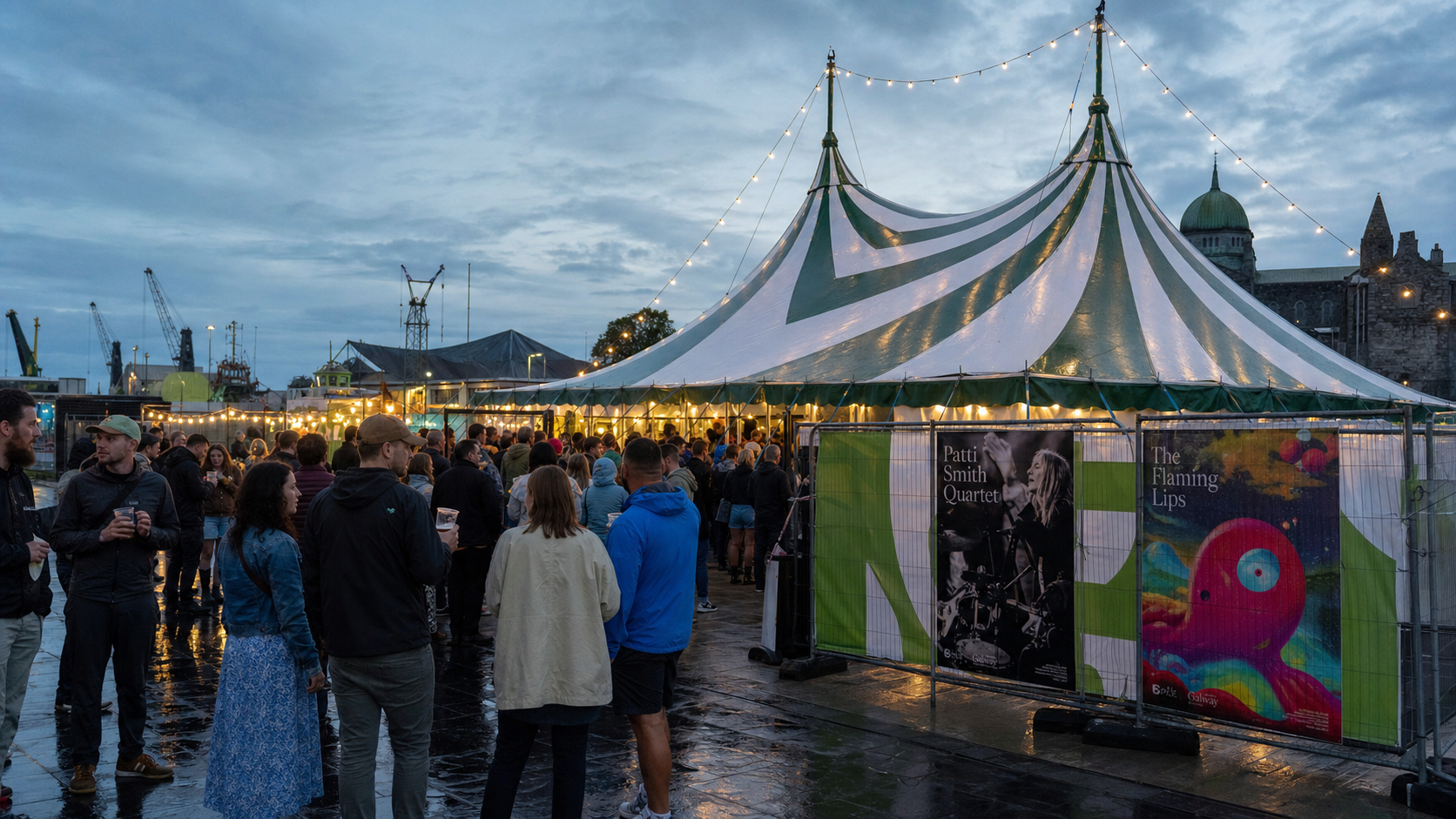
Galway International Arts Festival on Track for Record 500,000 Visitors as Patti Smith and Flaming Lips Headline
The 49th Galway International Arts Festival is on course for a record attendance of nearly 500,000 visitors as it enters its second week, with headline musical performances from the Patti Smith Quartet and The Flaming Lips at the Heineken Big Top, major theatrical productions from Druid Theatre Company, and an immersive circus spectacle transforming the city — all against the backdrop of Sunday's All-Ireland Hurling Final between Limerick and Galway, which is adding an extraordinary dimension of sporting excitement to an already electric festival atmosphere.
Background
The Galway International Arts Festival is one of Europe's leading multidisciplinary arts festivals, a two-week celebration of theatre, music, visual art, and street performance that has been transforming Galway city every July since 1978. Now in its 49th edition, the festival has grown from a modest local event into a major international cultural occasion, attracting artists and audiences from across Ireland, Europe, and beyond. Its combination of world-class programming, the unique atmosphere of Galway city, and the warmth of its welcome has made it one of the most beloved events in the Irish cultural calendar.
The festival's economic impact on Galway is substantial. In recent years, it has generated between €40 million and €50 million in economic activity for the city and the wider Connacht region, supporting thousands of jobs in hospitality, retail, and the creative industries. The festival is also a major driver of tourism, attracting visitors who might not otherwise travel to Galway and extending the tourism season beyond the traditional summer peak.
The 2026 edition has been particularly eagerly anticipated, with a programme that festival director Paul Fahy has described as one of the strongest in the event's history. The combination of major international music acts, ambitious theatrical productions, and innovative visual art and street performance has created a programme that offers something for every taste and interest.
Key Developments
The Heineken Big Top, the festival's main music venue, has been the focal point of the 2026 programme, with a series of headline performances that have drawn large and enthusiastic crowds. The Patti Smith Quartet, performing a set that drew on Smith's extraordinary career as one of rock music's most important and influential figures, delivered a performance that reviewers described as transcendent. The Flaming Lips, the Oklahoma-based psychedelic rock band known for their spectacular live shows, brought their trademark combination of confetti cannons, giant balloons, and musical ambition to Galway in a performance that was one of the most talked-about events of the festival.
On the theatrical front, Druid Theatre Company's production of Dion Boucicault's 'The Shaughraun' has been one of the critical highlights of the festival, with the Galway-based company delivering a production of characteristic energy and craft. The immersive circus spectacle 'Carnation,' created by the Welsh company NoFit State, has been one of the most visually spectacular events of the programme, transforming a large outdoor space into a world of aerial acrobatics, live music, and theatrical storytelling.
The visual arts programme has been anchored by an exhibition of monumental sculptures by British artist Sean Henry, displayed at key locations throughout the city. The sculptures, which depict solitary human figures in a range of poses and settings, have become an unexpected focal point for visitors and locals alike, generating significant social media interest and encouraging people to explore parts of the city they might not otherwise visit.
Why It Matters
The Galway International Arts Festival matters for reasons that extend well beyond its immediate cultural and economic impact. It is one of the clearest expressions of Ireland's identity as a country that takes arts and culture seriously — not as a luxury or an afterthought, but as a central part of national life. The festival's success demonstrates that there is a substantial and enthusiastic audience for ambitious, high-quality arts programming in Ireland, and that this audience is not confined to Dublin or to the major urban centres. Galway's ability to attract world-class artists and audiences from across the globe is a testament to the quality of the festival's programming and the unique appeal of the city as a cultural destination. The festival also plays an important role in supporting the Irish arts sector, providing commissions, employment, and performance opportunities for Irish artists at every stage of their careers.
Local Impact
The impact of the festival on Galway city is visible and tangible. Hotels, guesthouses, and short-term rental properties across the city and county are fully booked for the duration of the festival, with visitors from across Ireland and beyond filling the city's streets, restaurants, and bars. The festival's street performance programme has animated every corner of the city centre, from Eyre Square to the Latin Quarter, creating a festive atmosphere that extends well beyond the formal festival venues. For local businesses, the festival represents one of the most important trading periods of the year, with the combination of festival visitors and the influx of supporters for Sunday's All-Ireland Hurling Final creating exceptional demand. The city's public transport infrastructure has been tested by the volume of visitors, with Bus Éireann and Irish Rail both operating additional services to accommodate the demand.
What's Next
The Galway International Arts Festival continues until 26 July, with a further week of programming including additional performances at the Heineken Big Top, the conclusion of the theatrical programme, and the final days of the visual arts exhibitions. The festival will publish its full attendance and economic impact figures in August, with early indications suggesting that the 2026 edition will set new records on both measures. Planning for the 50th anniversary festival in 2027 is already underway, with festival director Paul Fahy indicating that the milestone edition will be marked with a programme of exceptional ambition and scale. The 50th anniversary will also provide an opportunity to reflect on the festival's remarkable history and its contribution to Irish cultural life over half a century.