From Dublin to Texas to Birmingham: Rhasidat Adeleke's Silver Medal Inspires Irish Diaspora Worldwide
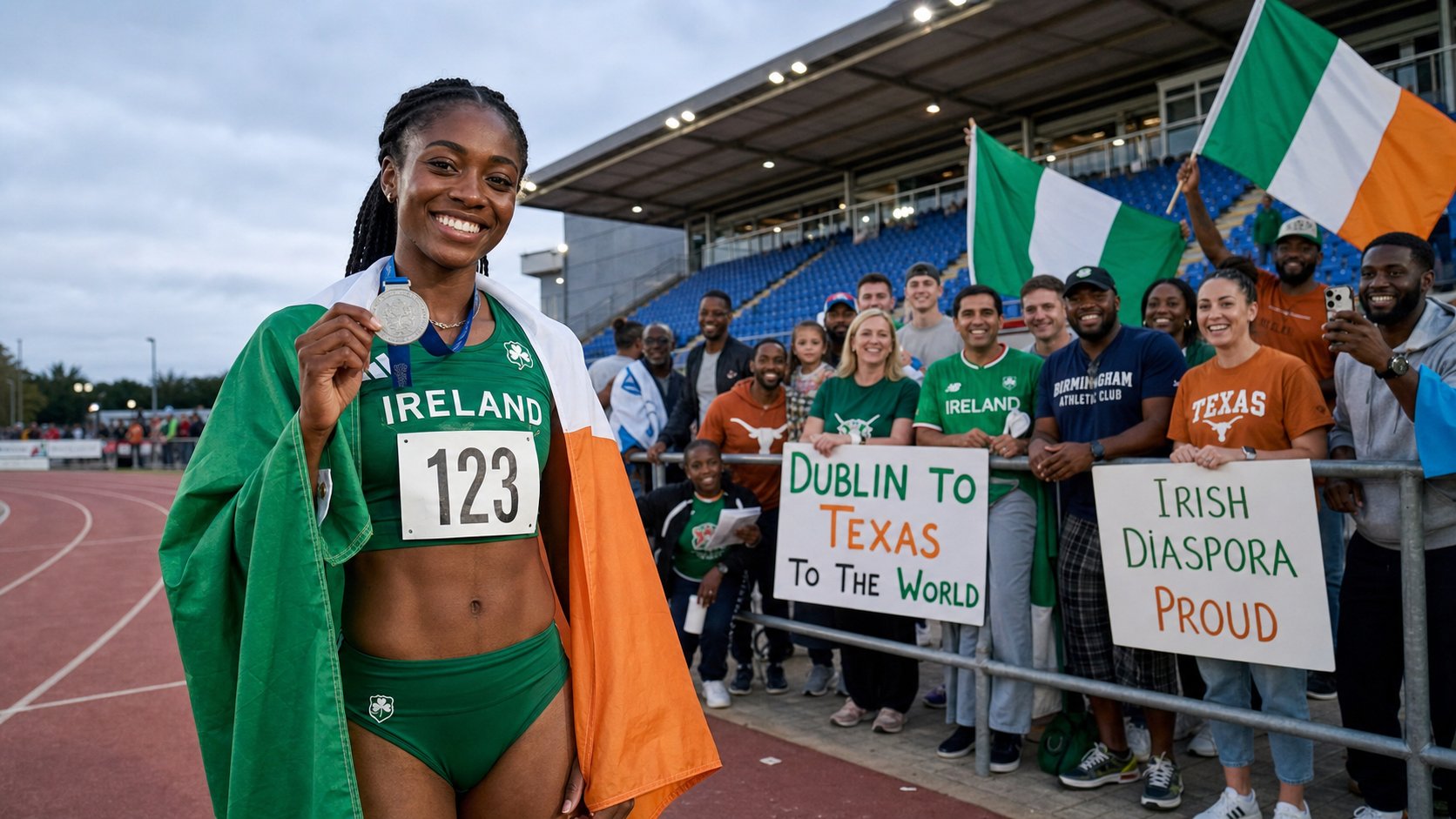
Rhasidat Adeleke's silver medal in the women's 200m final at the European Athletics Championships in Birmingham has resonated far beyond the track, inspiring Irish communities across the United States, Australia, and around the world — and prompting a broader conversation about what it means to be Irish in the twenty-first century, as the Irish-American sprinter's story challenges and enriches traditional notions of Irish identity.
Background
Rhasidat Adeleke's biography is a product of the globalised, interconnected world that Ireland has become part of over the past three decades. Born in Dublin to Nigerian parents, she spent part of her childhood in Ireland before moving to Texas, where she attended high school and subsequently the University of Texas on an athletics scholarship. Her decision to represent Ireland internationally — rather than the United States, for which she would also have been eligible — was a choice that reflected a genuine connection to the country of her birth and a desire to contribute to Irish athletics.
That decision has been transformative for Irish sprinting. Before Adeleke, Ireland had not produced a world-class sprinter in the women's events for a generation. Her emergence as a genuine contender in the 200m and 400m has opened up new possibilities for Irish athletics and has demonstrated that the country's talent pool is broader and more diverse than the traditional narrative of Irish athletics — focused on middle-distance running and field events — might suggest.
The Irish diaspora in the United States has followed Adeleke's career with particular interest. In cities with large Irish-American communities — Boston, New York, Chicago, San Francisco — her performances have been celebrated as evidence of the vitality and diversity of the Irish-American experience. The fact that she trains at the University of Texas, in the heart of one of America's most athletically competitive states, has also given her a profile in the US athletics community that extends well beyond the Irish diaspora.
Key Developments
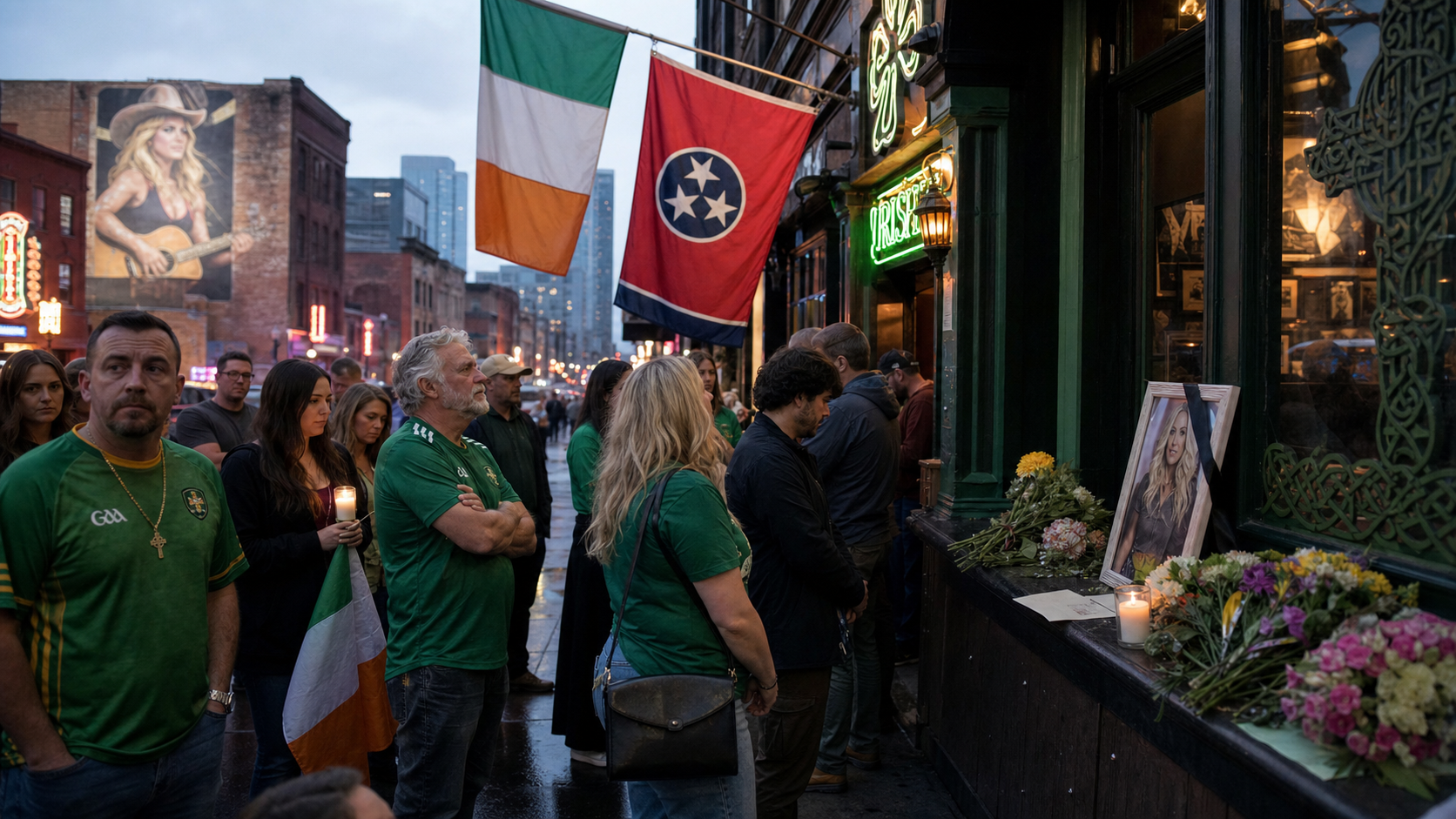
Adeleke's silver medal in Birmingham, achieved with a national record of 22.28 seconds, was celebrated by Irish communities around the world. In Austin, Texas, where she trains, members of the local Irish community gathered to watch the race live, with the time difference meaning the final was broadcast in the early hours of the morning. In Boston and New York, Irish bars and community centres that had been showing the European Championships coverage erupted when Adeleke crossed the line in second place.
The reaction on social media was equally enthusiastic, with Irish people around the world sharing messages of congratulation and pride. Many of the messages focused not just on the athletic achievement but on what Adeleke represents — a new kind of Irish identity that is inclusive, diverse, and confident in its complexity. Her story, as a woman of Nigerian heritage who was born in Dublin and who has chosen to represent Ireland on the world stage, resonates with the experience of many members of the Irish diaspora who have their own complex, multi-layered identities.
The Irish government's diaspora strategy, launched earlier this year, explicitly acknowledges the growing diversity of the Irish diaspora and the need for a more inclusive definition of Irish identity. Adeleke's story is a living embodiment of that shift — a reminder that Irishness is not defined by ancestry or geography alone but by connection, commitment, and choice.
Why It Matters
Rhasidat Adeleke's silver medal matters to the Irish diaspora for reasons that go beyond sport. For Irish communities around the world — many of whom are themselves navigating questions of identity, belonging, and the relationship between their Irish heritage and the cultures of the countries in which they live — her story is a powerful affirmation that Irish identity is capacious enough to accommodate complexity and diversity. The Ireland that Adeleke represents is not the Ireland of the emigrant ships or the Ireland of the Celtic Tiger — it is a twenty-first century Ireland that is comfortable with its own complexity and that celebrates the contributions of all those who choose to be part of it.
Her success also has practical implications for Irish athletics. The visibility that she brings to the sport — her social media following, her profile in the United States, and the attention that her performances attract from international media — has helped to raise the profile of Irish athletics in ways that benefit the entire sport. Young Irish sprinters, particularly those from diverse backgrounds, have cited Adeleke as an inspiration, and her success has contributed to a broader conversation about inclusion and representation in Irish sport.
Local Impact
In Dublin, where Adeleke was born and where she has maintained strong connections, the reaction to her silver medal has been one of enormous pride. Athletics Ireland has described her performance as a landmark moment for the sport in Ireland, and the national governing body has indicated it will work to ensure that the infrastructure and support systems are in place to help Adeleke and other elite Irish sprinters reach their full potential. The Irish-Nigerian community in Dublin has also celebrated her achievement, with community organisations noting that her success is a source of pride for the many Irish people of Nigerian heritage who have made Ireland their home.
What's Next
Adeleke has indicated she will return to the University of Texas for the start of the academic year before beginning her preparation for the 2027 World Athletics Championships in Tokyo. She has identified the World Championships as a key target, with the 2028 Los Angeles Olympics as the ultimate goal. Her coach at Texas has indicated that the training programme for the next two years will be designed to develop her speed and power across both the 200m and 400m, with the possibility of competing in both events at the Olympics. The Irish diaspora in the United States will be watching her progress with enormous interest and pride.