Fota Wildlife Park Invites Public to Name Only Second Indian Rhino Born in Ireland
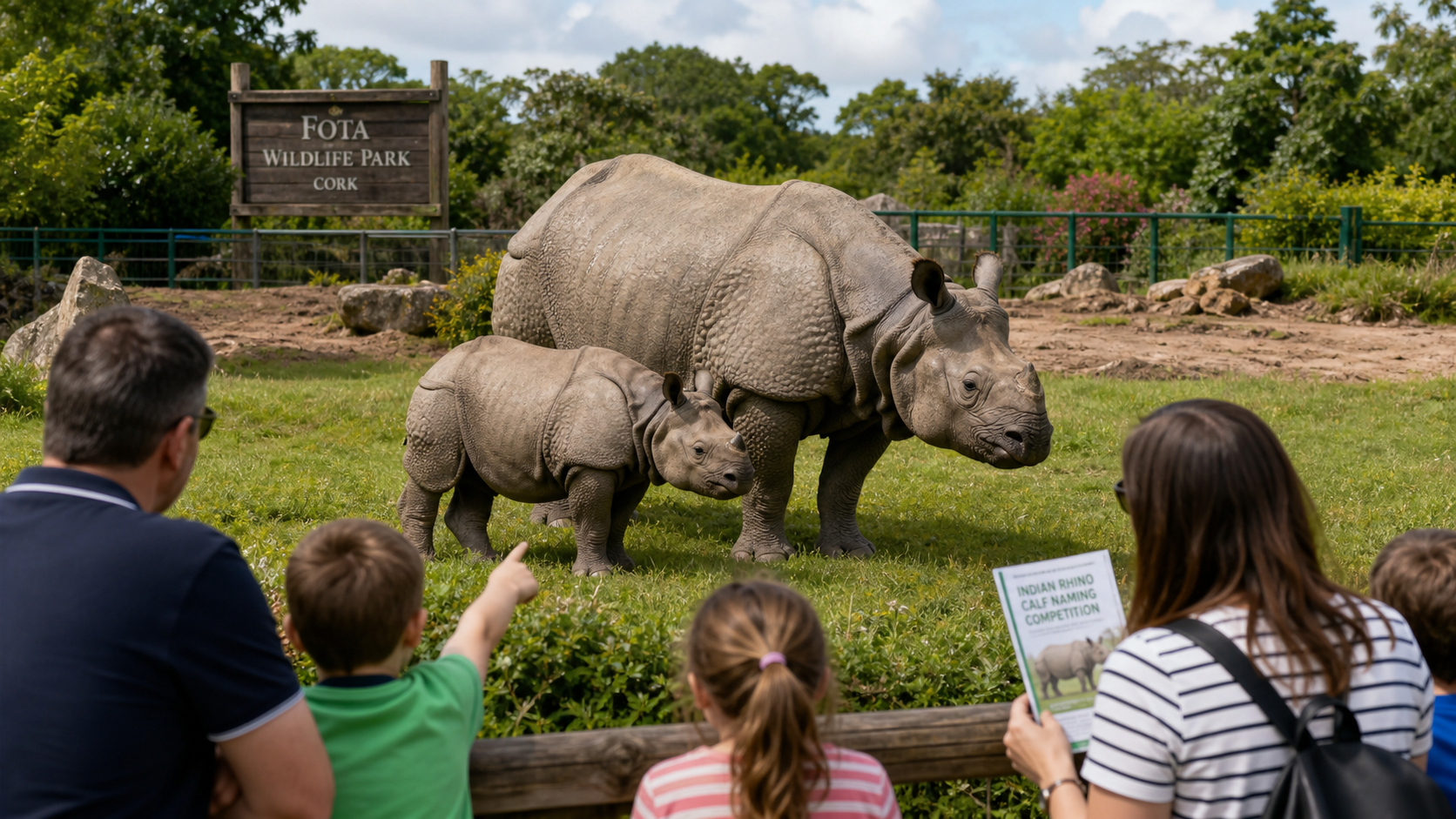
Fota Wildlife Park in County Cork is celebrating a remarkable conservation milestone after a male Indian rhinoceros calf — only the second of its species ever born in Ireland — was delivered on 13 July to mother Maya and father Jamil. The park has now launched a public naming competition, inviting visitors to submit suggestions that reflect the species' native range and cultural heritage, with entries accepted at the Serengeti Shop until 13 September.
Background
The Indian rhinoceros, known scientifically as Rhinoceros unicornis, is one of the world's most endangered large mammals. Once ranging across the entire northern Indian subcontinent, the species was hunted to near-extinction during the colonial era, with populations collapsing to fewer than 200 individuals by the early twentieth century. Intensive conservation efforts — centred primarily on Kaziranga National Park in Assam and Chitwan National Park in Nepal — have brought the global population back to approximately 4,000 animals, but the species remains classified as vulnerable by the International Union for Conservation of Nature.
Fota Wildlife Park has been a participant in the European Endangered Species Programme for Indian rhinoceroses for many years, maintaining a small but carefully managed group as part of a coordinated breeding effort that spans zoos and wildlife parks across the continent. The programme is designed to maintain genetic diversity within captive populations while supporting the broader conservation of the species in its native range.
The birth of a calf at Fota is therefore not simply a feel-good story for the Cork public — it is a meaningful contribution to a species recovery effort that has taken decades of painstaking work by conservationists, wildlife managers, and international organisations. The first Indian rhino born in Ireland was also at Fota, making this second birth a continuation of the park's distinguished record in this area.
Key Developments
The calf was born on 13 July 2026 and has been described by the park's animal care team as doing exceptionally well. Mother Maya has been highly protective of her offspring — a behaviour that is entirely typical of Indian rhinoceros mothers and a positive indicator of the calf's wellbeing. In recent weeks, the calf has been observed beginning to mimic his mother's feeding behaviour, nibbling on leaves and branches, though he continues to receive the majority of his nutrition through nursing.
The park announced the birth publicly in early August, and the response from the Cork public and from wildlife enthusiasts across Ireland has been enthusiastic. The naming competition, which requires entries to be submitted in person at the Serengeti Shop within the park, has been designed to encourage visitors to engage directly with the conservation story behind the birth. The winning entry will receive an annual pass to Fota Wildlife Park.
Park management has asked that name suggestions reflect the Indian rhinoceros's native range — encompassing the Assam region of northeastern India and the Terai grasslands of Nepal — and the cultural heritage of those areas. Names from Assamese, Nepali, or Sanskrit traditions would be particularly welcome, the park has indicated, though all thoughtful suggestions will be considered.
Why It Matters
The birth of an Indian rhinoceros calf at Fota is a reminder of the role that well-managed wildlife parks play in global conservation efforts. Critics of captive wildlife programmes sometimes argue that zoo breeding is a poor substitute for habitat protection, and they are not wrong to insist that wild habitat preservation must remain the primary focus of conservation investment. But the two approaches are not mutually exclusive, and the European Endangered Species Programme has demonstrated over several decades that coordinated captive breeding can maintain viable populations of critically threatened species while wild recovery efforts proceed.
For Ireland specifically, the birth is a point of genuine pride. Fota Wildlife Park has built a reputation as one of the leading conservation-focused wildlife parks in these islands, and its participation in international breeding programmes for species like the Indian rhinoceros, the cheetah, and the red panda reflects a serious institutional commitment to biodiversity that goes well beyond the entertainment function that wildlife parks sometimes serve.
The public naming competition is also a clever piece of conservation communication. By inviting the Cork public to engage with the calf's story — to learn about the species, its native range, its cultural significance — the park is building the kind of emotional connection that sustains long-term public support for conservation. People who name an animal tend to care about it, and people who care about a specific animal tend to care more broadly about the species and the ecosystems it inhabits.
Local Impact
Fota Wildlife Park is one of County Cork's most visited attractions, drawing hundreds of thousands of visitors annually from across Ireland and from overseas. The birth of the rhino calf has already generated significant media coverage and is expected to drive additional visitor numbers to the park over the coming weeks, particularly as families seek out summer activities during the school holidays. The park is located on Fota Island in Cork Harbour, accessible by rail from Cork city, and the surrounding area — including Fota House and Gardens and the Fota Island Resort — benefits considerably from the park's drawing power.
What's Next
The naming competition closes on 13 September 2026, with the winning name to be announced shortly thereafter. The calf will remain in the care of his mother for an extended period — Indian rhinoceros calves typically stay with their mothers for two to four years — and the park expects him to become a regular fixture in the rhino enclosure as he grows in confidence and independence. Fota Wildlife Park has indicated that it will provide regular updates on the calf's development through its social media channels and website.