Foras na Gaeilge Trapped in North-South Funding Impasse as Irish Language Groups Sound Alarm
Foras na Gaeilge, the cross-border body established under the Good Friday Agreement to promote the Irish language across the island of Ireland, remains mired in a structural funding crisis that has left language groups, community organisations, and Irish-medium schools in a state of chronic uncertainty — a situation that advocates describe as "structurally broken" and that exposes the practical limitations of the North-South institutional architecture established in 1998.
Background
Foras na Gaeilge was established in 1999 as one of the six cross-border implementation bodies created under the Good Friday Agreement. Its mandate is to promote the Irish language throughout the island of Ireland, supporting Irish-medium education, community language groups, arts and cultural organisations, and the development of Irish-language media. The body operates across both jurisdictions, with offices in Dublin and Belfast, and its work is funded jointly by the Irish government and the Northern Ireland Executive.
The funding mechanism for Foras na Gaeilge is determined by a rigid 75:25 ratio, with the Irish government providing 75% of the body's budget and the Northern Ireland Executive contributing 25%. This ratio was established at the time of the body's creation and has remained unchanged since, despite significant changes in the relative economic circumstances of the two jurisdictions and in the scale of the Irish language community's needs.
The structural problem created by this ratio is straightforward but intractable: the Irish government cannot unilaterally increase its contribution to Foras na Gaeilge without a proportional increase from the Northern Ireland Executive. If Dublin allocates an additional €2 million to the body, Stormont must provide an additional €667,000 to maintain the 75:25 ratio. If Stormont cannot or will not provide the matching funds — as has been the case during periods of political instability at Stormont — the Dublin money cannot be drawn down.
Key Developments
The current crisis has its roots in the two-year collapse of the Stormont institutions between 2022 and 2024, during which the Northern Ireland Executive was unable to make any financial commitments. The restoration of devolution in February 2024 did not immediately resolve the funding problem, as the restored Executive has been operating under severe financial constraints and has been unable to provide the matching funds needed to unlock the Dublin allocation.
Budget 2026, published in October 2025, included a €2 million allocation for Foras na Gaeilge from the Irish government. However, the body has been unable to draw down the full amount because the Northern Ireland Executive has not provided the required matching contribution. The result is that language groups and community organisations that depend on Foras na Gaeilge funding are operating with reduced budgets, unable to plan effectively or to implement the programmes that the Irish language community needs.
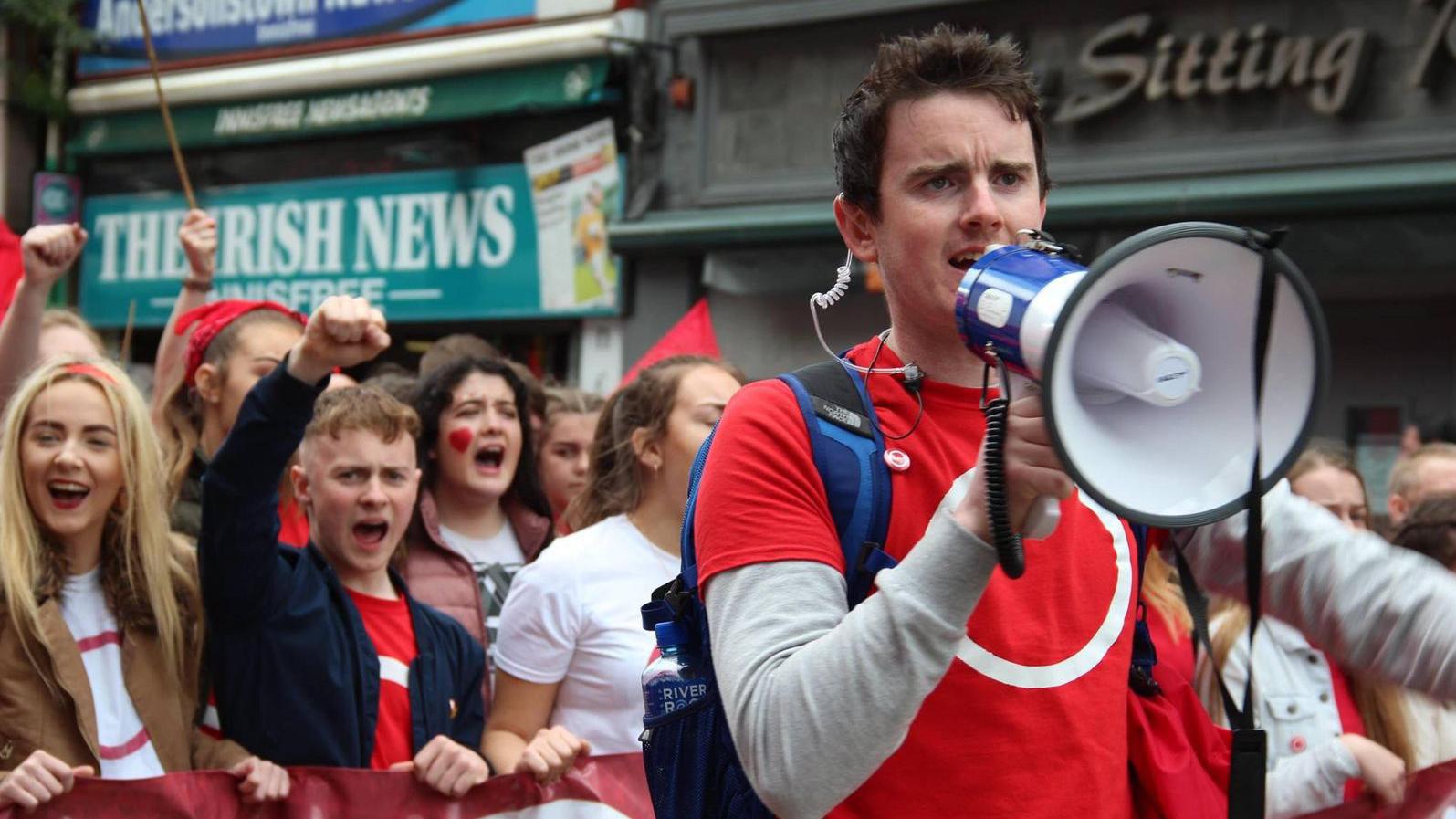
The situation led to strikes by language groups in early 2025, with staff at several Foras na Gaeilge-funded organisations taking industrial action to highlight the impact of the funding crisis on their work. Conradh na Gaeilge, the largest Irish language advocacy organisation, has described the funding mechanism as "structurally broken" and has called for an emergency review of the North-South architecture governing Foras na Gaeilge's finances. A spokesperson for the organisation stated: "The funding mechanism is structurally broken. We are in a ludicrous situation where money is available from Dublin but cannot be drawn down because of a blockage in the North-South architecture. Our language, and the community groups that sustain it, are being held hostage by political inertia."
Why It Matters
The Foras na Gaeilge funding crisis is a microcosm of a broader challenge facing the cross-border institutions established under the Good Friday Agreement. Those institutions were designed to create practical cooperation between the two jurisdictions on matters of mutual interest, but their effectiveness depends on the political will of both governments to provide adequate funding and to resolve disputes when they arise. When that political will is absent — as it has been during periods of Stormont instability — the institutions are left in a state of paralysis that has real consequences for the communities they serve.
The Irish language community is particularly vulnerable to this kind of institutional dysfunction. Unlike other areas of public policy, where services can be maintained by one jurisdiction even when the other is unable to contribute, the cross-border nature of Foras na Gaeilge's mandate means that a funding crisis in one jurisdiction affects the entire island. Irish-medium schools in Belfast and Derry are as dependent on Foras na Gaeilge funding as their counterparts in Galway and Kerry, and the uncertainty created by the funding crisis affects all of them equally.
The crisis also has implications for Ireland's international commitments on minority language rights. Ireland is a signatory to the European Charter for Regional or Minority Languages, which requires the state to take positive measures to support the Irish language. A funding crisis that leaves language groups unable to deliver their programmes is a potential breach of those commitments, and the Council of Europe's monitoring body has previously expressed concern about the adequacy of Ireland's support for the Irish language.
Local Impact
In Belfast, where the Irish language community has grown significantly in recent years — driven in part by the establishment of Irish-medium schools and the growing interest in the language among younger generations — the Foras na Gaeilge funding crisis has had a direct impact on community organisations and cultural groups. Several organisations in the Gaeltacht Quarter of west Belfast have been forced to reduce their programmes or to seek alternative funding sources to compensate for the shortfall in Foras na Gaeilge support.
In the Gaeltacht areas of the west and north-west — including Connemara, Donegal, and the Kerry Gaeltacht — the funding crisis has affected the community language groups and arts organisations that are the lifeblood of the Irish-speaking community. These organisations play a crucial role in sustaining the Irish language as a living vernacular, and any reduction in their funding has immediate and serious consequences for the health of the language in these communities.
What's Next
The North South Ministerial Council, which oversees the cross-border implementation bodies including Foras na Gaeilge, is expected to address the funding crisis at its next plenary meeting. The Irish government has indicated that it is seeking a resolution that would allow the Dublin allocation to be drawn down without requiring a full matching contribution from Stormont, but any change to the funding mechanism would require agreement from both governments and potentially an amendment to the legislation governing the body. Language advocacy groups have called for an emergency meeting of the North South Ministerial Council to address the crisis before the end of the summer.