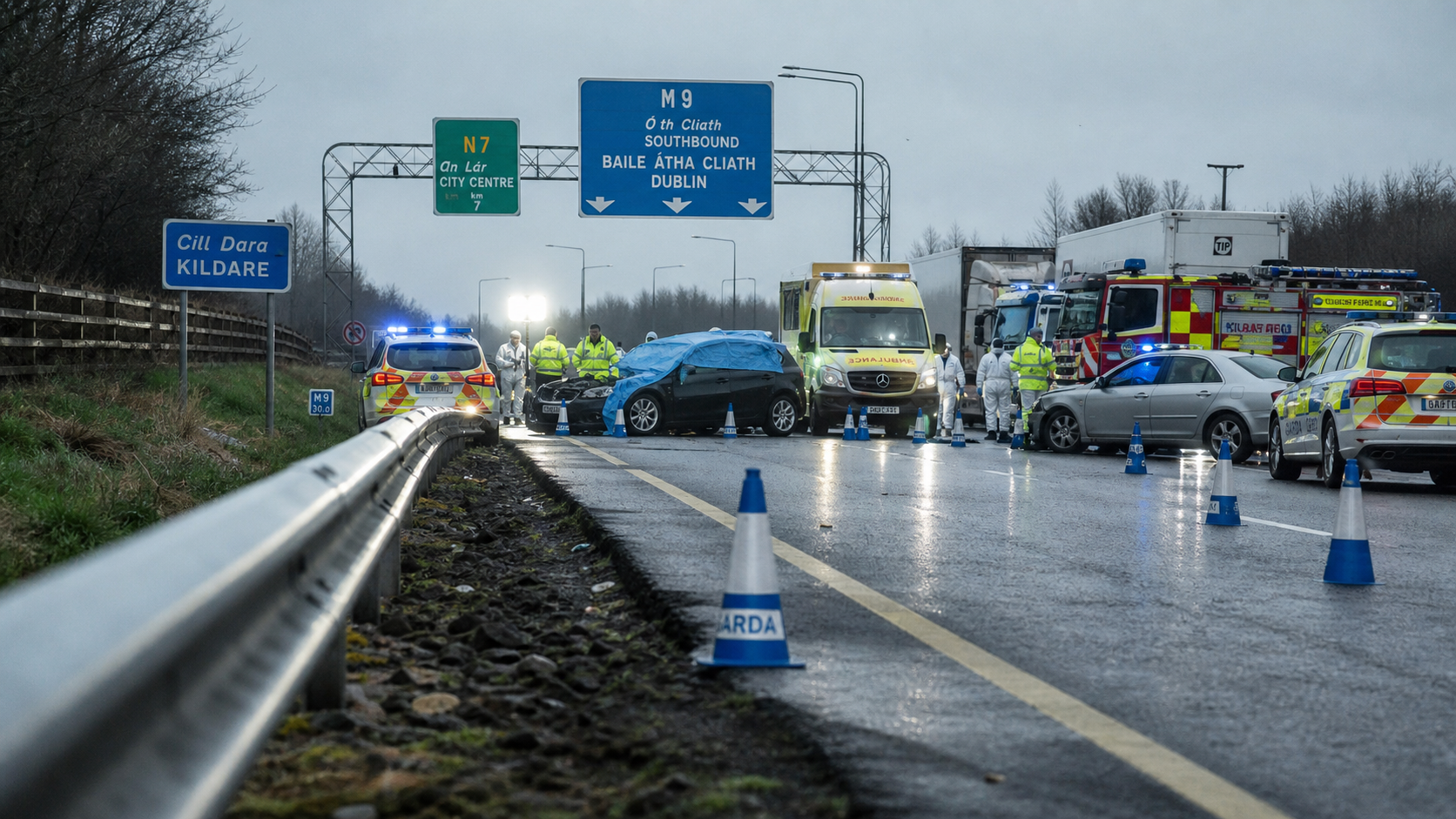
Five Teenagers Killed as Car Drives Wrong Way Down M9 Motorway in Kildare Horror Crash
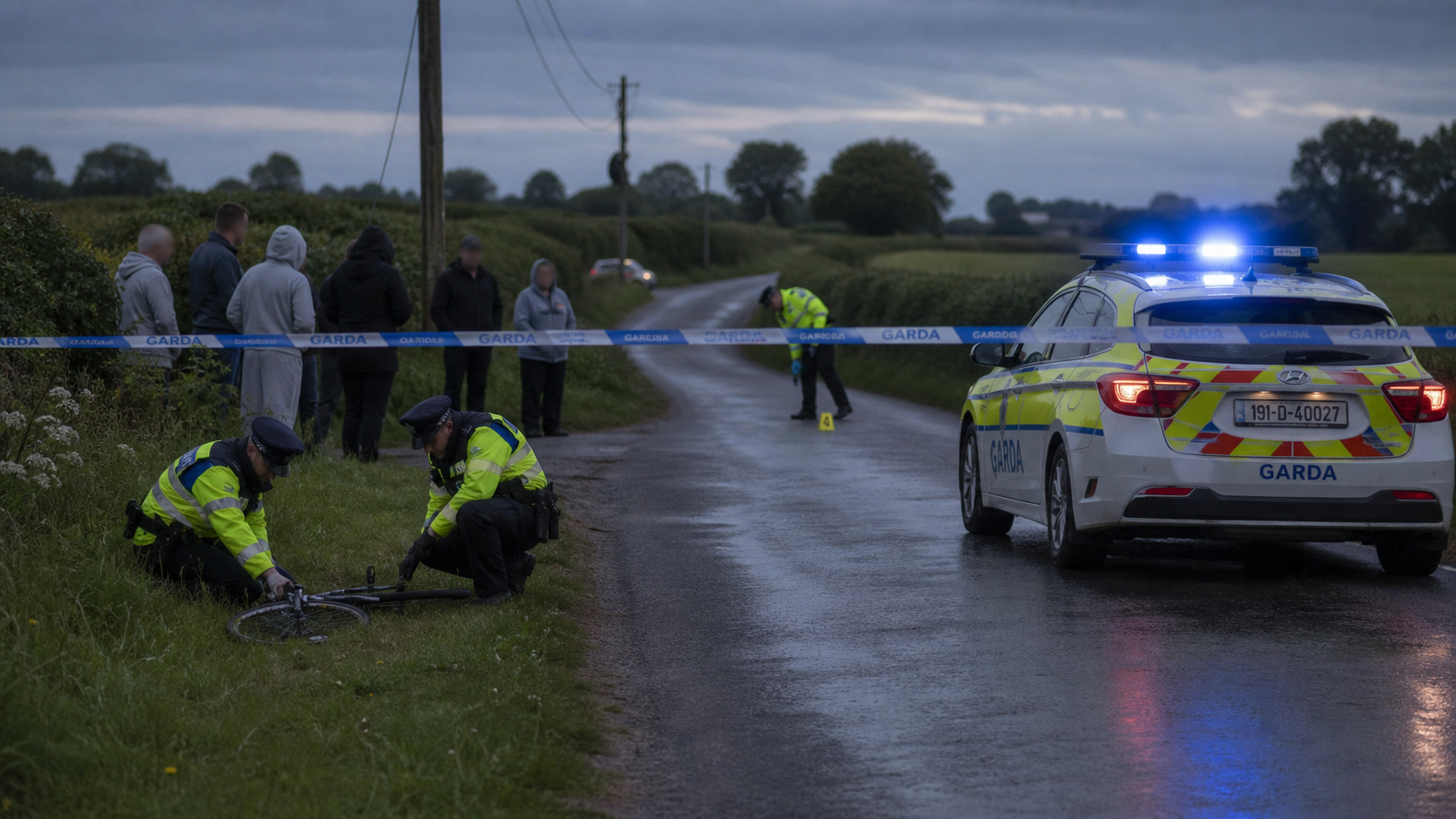
Five teenage males have been killed after the car they were travelling in was driven southbound on the northbound carriageway of the M9 motorway near Moone in County Kildare at approximately 3am on Sunday morning, colliding head-on with a family car carrying three women and a seven-year-old child who were travelling to Dublin Airport for a wedding.
Background
The M9 motorway, which connects Dublin to Waterford through the counties of Kildare, Carlow, and Kilkenny, is one of the busiest inter-urban routes in Ireland. The stretch near Moone, close to Junction 3, is a dual carriageway with a central reservation designed to prevent exactly the kind of wrong-way driving that caused Sunday's tragedy. The fact that a vehicle was able to travel a significant distance in the wrong direction before the collision raises serious questions about how such incidents can be prevented.
Wrong-way driving on Irish motorways has become an increasingly visible phenomenon in recent years, with a number of incidents — some fatal, some narrowly avoided — attracting media attention and prompting calls for improved detection and response systems. The Garda Commissioner has previously spoken about the challenge of responding to wrong-way driving incidents, noting that the speed at which such situations develop makes intervention extremely difficult. Sunday's crash occurred only eight days after another serious collision on the M50 in Dublin involving a stolen vehicle and multiple teenagers, a coincidence that has intensified public concern about the pattern of behaviour involved.
Reports have suggested that the five teenagers in the BMW were wearing balaclavas at the time of the crash and were suspected of involvement in a local crime spree in the days before the incident. The vehicle is believed to have been stolen. These details, while not yet confirmed by Gardaí, have added a layer of complexity to the public response to the tragedy — one that has prompted difficult conversations about the circumstances that lead young people into dangerous and criminal behaviour.
Key Developments
All five male teenagers in the BMW were killed in the collision. Their bodies were transported to Naas General Hospital, where post-mortem examinations are being carried out. The occupants of the second vehicle — a family from County Carlow — included three women and a seven-year-old child. Two women in their 30s were left in critical condition, while a woman in her 20s and the child were hospitalised with serious injuries.
Garda Commissioner Justin Kelly condemned the incident in the strongest terms, describing the behaviour as "reckless" and "irresponsible" and noting that such dangerous motorway driving is sometimes performed for "social media likes." The Commissioner expressed his thoughts and sympathies to those injured in the second car and to the families of all those who died.
The incident has been referred to Fiosrú, the independent police watchdog, as Gardaí were aware of the vehicle's presence on the motorway prior to the crash. While it has been confirmed that no active pursuit was underway at the exact time of the collision, investigators are examining whether any acts or omissions by Gardaí contributed to the incident. This referral is standard procedure in such circumstances and does not imply wrongdoing by any individual officer.
Why It Matters
The M9 crash is the deadliest single road traffic incident in Ireland in several years, and it has prompted a national conversation about road safety, the policing of stolen vehicles, and the social conditions that produce young people willing to engage in behaviour that puts their own lives and the lives of others at risk. The Garda Commissioner's reference to social media is significant — there is growing evidence that some dangerous driving incidents are motivated, at least in part, by the desire to generate content for online platforms, a phenomenon that presents law enforcement with a challenge that goes beyond traditional road safety measures.
The involvement of a family travelling to Dublin Airport for a wedding adds a particular dimension of tragedy to the incident. The seven-year-old child who was hospitalised, and the women who remain in critical condition, are entirely innocent victims of behaviour over which they had no control and no warning. Their suffering is a reminder that the consequences of reckless driving are never confined to those who choose to engage in it.
Local Impact
In County Kildare, the crash has had a profound impact on communities along the M9 corridor. The area around Moone, a small village in south Kildare, is a quiet rural community that has been shaken by the scale of the tragedy. Local GAA clubs and community organisations have expressed their condolences to the families of all those involved. In Carlow, where the family in the second car are from, the community has rallied around them with offers of support and practical assistance. The Road Safety Authority has called for an urgent review of wrong-way driving detection systems on Irish motorways, and Transport Infrastructure Ireland has been asked to report on what additional measures can be implemented to prevent similar incidents.
What's Next
Fiosrú's investigation into the Garda response is expected to take several months. The Garda investigation into the circumstances of the crash, including the identity of the driver of the BMW and the question of how the vehicle came to be travelling in the wrong direction, is ongoing. The families of the five teenagers who died are being supported by family liaison officers. The Road Safety Authority is expected to publish a report on wrong-way driving incidents on Irish motorways before the end of the year, with recommendations for improved detection and response systems. The Dáil's transport committee has indicated it will hold hearings on the issue in September.