Five NI Party Leaders Issue Rare Joint Appeal for Calm After North Belfast Knife Attack Sparks Civil Disorder
The leaders of Northern Ireland's five largest political parties have issued a rare joint statement condemning a violent knife attack in North Belfast and appealing for calm, in an unusual display of cross-party unity during a period of heightened community tensions that has seen vehicles burned and a bus hijacked in the aftermath of the incident.
Background
Northern Ireland has experienced a period of significant community tension in the summer of 2026, following a series of incidents that have tested the resilience of the peace process and the capacity of political leaders to manage public disorder. The context includes the ongoing fallout from the Jeffrey Donaldson conviction, which has damaged the DUP's moral authority and created internal pressures within unionism, as well as a broader pattern of anti-immigration protests that have, in some instances, tipped over into violence.
The knife attack in North Belfast on 8 July, which left a man with serious injuries, occurred against this backdrop of heightened tension. The circumstances of the attack — and the identity of the suspect, a Sudanese national who was subsequently charged with attempted murder — triggered a rapid escalation of disorder in the area, with vehicles set alight and a bus hijacked in scenes that recalled the worst periods of civil unrest in the city's recent history.
The speed with which the disorder escalated, and the role of social media in amplifying and spreading inflammatory content, has been a particular concern for the PSNI and for political leaders. The pattern — a violent incident, rapid dissemination of often inaccurate information on social media platforms, and a swift mobilisation of people intent on disorder — has been observed in other parts of the United Kingdom and Ireland in recent years, and it poses a significant challenge for law enforcement and community relations.
Key Developments
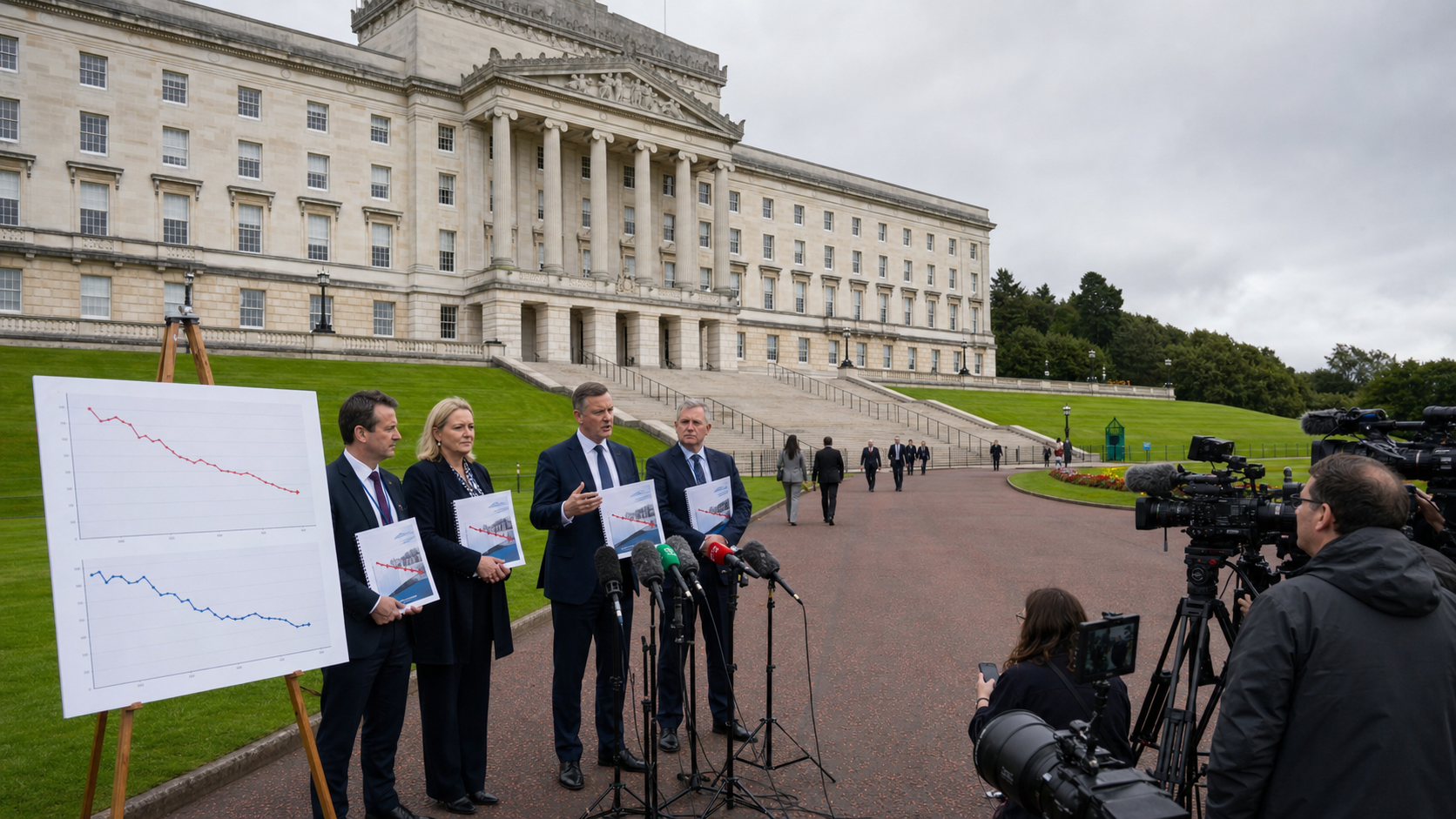
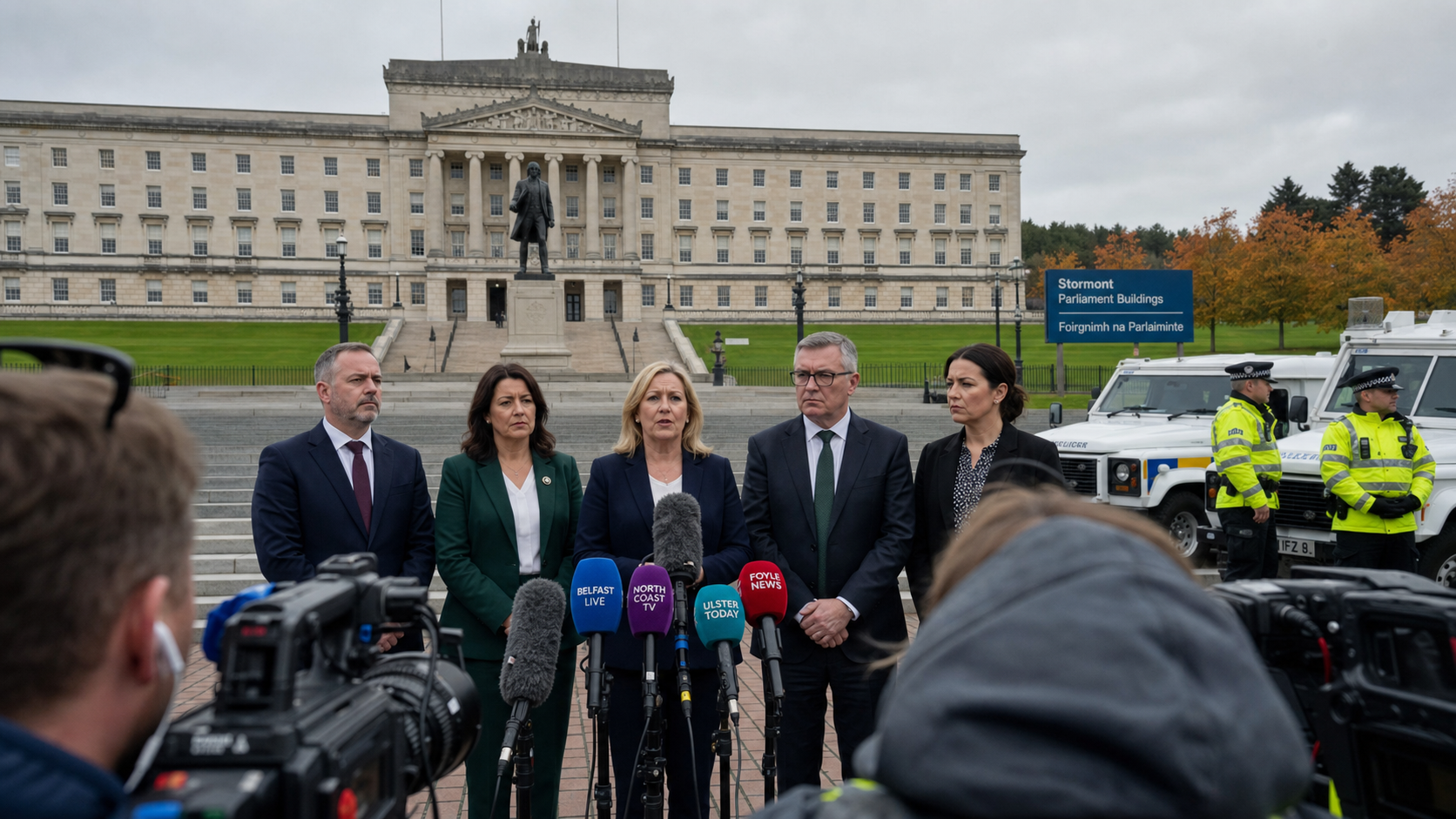
The joint statement issued by the five party leaders — First Minister Michelle O'Neill of Sinn Féin, DUP leader Gavin Robinson, Alliance leader Naomi Long, UUP leader Jon Burrows, and SDLP leader Claire Hanna — was a deliberate and significant act of political solidarity. Joint statements of this kind are rare in Northern Ireland's divided political landscape, and the decision to issue one reflects the seriousness with which the leaders view the current situation.
The statement condemned the knife attack in unequivocal terms and called on all communities to remain calm and to allow the PSNI to conduct its investigation without interference. It also explicitly rejected the use of violence as a response to any incident, regardless of the circumstances, and called on community leaders and influencers to use their platforms to promote calm rather than to inflame tensions.
PSNI Chief Constable Jon Boutcher issued a separate statement warning about the role of social media in stoking tensions and disorder. Boutcher noted that much of the content circulating on social media in the aftermath of the attack was inaccurate or deliberately misleading, and he called on the public to rely on official sources of information rather than on unverified social media posts. He also confirmed that the PSNI was working with social media companies to have inflammatory content removed.
The suspect in the knife attack, a Sudanese national, was charged with attempted murder and appeared before Belfast Magistrates' Court. The case is proceeding through the courts, and the PSNI has emphasised that the judicial process must be allowed to take its course without interference or prejudgment.
Why It Matters
The joint statement from the five party leaders matters because it represents a conscious choice to prioritise community stability over political point-scoring at a moment when the temptation to exploit the situation for electoral advantage must have been significant. In a political environment where the parties are already positioning themselves for the 2027 Assembly election, the decision to stand together and deliver a unified message is a meaningful act of political leadership.
The incident also highlights the fragility of community relations in Belfast and the speed with which tensions can escalate. The city has come an enormous distance since the worst years of the Troubles, and the vast majority of its residents — from all communities — want to live in peace and to see the city continue to develop and prosper. But the events of recent weeks are a reminder that the progress made is not irreversible and that it requires constant attention and active maintenance.
The role of social media in the disorder is a challenge that goes well beyond Northern Ireland. The platforms that allow inflammatory content to spread rapidly and to reach large audiences in a matter of minutes are a feature of the modern information environment that law enforcement and political leaders across the democratic world are struggling to manage. The PSNI's engagement with social media companies on content removal is a necessary but insufficient response to a problem that requires a much more fundamental rethinking of how these platforms operate.
Local Impact
In North Belfast, the aftermath of the disorder has left a community that is already under significant pressure feeling more anxious and uncertain. The area has a complex history of sectarian tension and has been the site of some of the most difficult interface disputes in the city. The events of recent days have reinforced those tensions and have made the work of community relations organisations — who operate in the area on a daily basis — significantly more difficult.
The PSNI has maintained a heightened presence in North Belfast since the disorder, and community leaders have been working to de-escalate tensions through dialogue and engagement. The joint statement from the party leaders has been welcomed by community organisations as a positive signal, but they have also emphasised that words need to be followed by action — including investment in the community infrastructure and services that underpin social cohesion.
What's Next
The PSNI investigation into the disorder — including the burning of vehicles and the hijacking of the bus — is ongoing, and a number of arrests have been made. The case against the suspect in the knife attack will proceed through the courts over the coming months. The party leaders have indicated that they will continue to monitor the situation and to engage with community leaders in North Belfast. A cross-party working group on community tensions and social media is expected to be established in the coming weeks.