DUP Faces Deepening Scrutiny as Donaldson Scandal Triggers Internal Investigation and Moral Authority Crisis
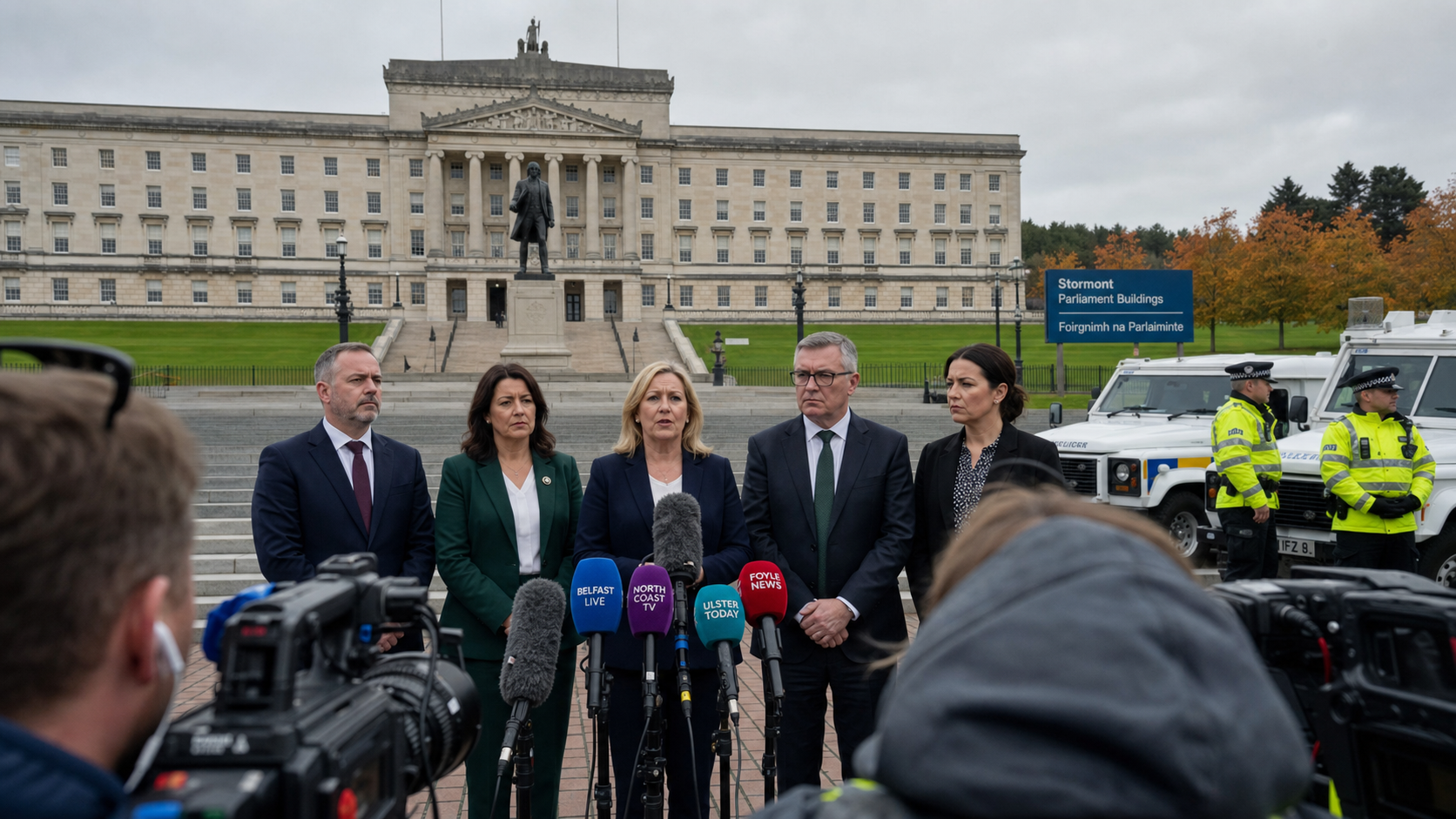
The political fallout from the conviction of former DUP leader Sir Jeffrey Donaldson for 18 historical child sex offences continues to deepen, with fresh allegations of sexual assault against a woman in DUP Westminster offices triggering an internal party investigation and raising urgent questions about what senior figures in the party knew about his behaviour and when.
Background
Jeffrey Donaldson was, until his arrest in 2024, one of the most prominent figures in Northern Ireland politics. As leader of the Democratic Unionist Party from 2021, he led the party through the turbulent period of the Northern Ireland Protocol dispute, orchestrating the DUP's withdrawal from the Stormont Executive in February 2022 and the subsequent two-year collapse of the institutions. His political career spanned more than three decades, during which he served as a Westminster MP, a member of the Stormont Assembly, and a key figure in the negotiations that produced the Windsor Framework.
His arrest in March 2024, on charges of historical child sex offences, was a seismic event in Northern Ireland politics. The charges — which related to offences committed over a period of many years — were of the most serious kind, and the shock of the arrest was compounded by the fact that Donaldson had been, until that moment, regarded as one of the most respected figures in unionist politics. He resigned as DUP leader immediately upon his arrest and was replaced by Gavin Robinson.
Donaldson was convicted in 2025 of 18 charges, including rape, and was sentenced to a substantial term of imprisonment. He subsequently renounced his knighthood and requested to be removed from the Privy Council — a body of senior advisers to the Crown of which he had been a member. The conviction has been described as one of the most damaging events in the DUP's history, raising profound questions about the party's culture and its systems for identifying and addressing misconduct.
Key Developments
The emergence of fresh allegations — of sexual assault against a woman in DUP Westminster offices — has added a new dimension to the scandal. The allegations, which relate to a separate incident from those for which Donaldson was convicted, have triggered an internal party investigation. The DUP has confirmed that the investigation is underway and has stated that it is being conducted independently, though critics have questioned whether a truly independent process is possible given the party's institutional interest in the outcome.
The central question being asked — both within the party and by external observers — is what senior DUP figures knew about Donaldson's behaviour and when they knew it. The historical nature of the offences for which he was convicted means that they were committed over a period during which he was a prominent and well-connected figure in the party. The question of whether any concerns were raised, and if so how they were handled, is one that the party has not yet answered to the satisfaction of its critics.
The political consequences for the DUP have been severe. The party's moral authority — which has always been central to its identity as a party rooted in Protestant Christian values — has been profoundly damaged. The conviction of its former leader for offences of this kind is not something that can be easily compartmentalised or moved on from, and the party's opponents have not been slow to exploit the situation.
Gavin Robinson, who has led the party since Donaldson's arrest, has sought to draw a line under the scandal and to focus on the party's political agenda. But the emergence of fresh allegations has made that task significantly more difficult, and the internal investigation is likely to keep the issue in the public eye for months to come.
Why It Matters
The Donaldson scandal matters for Northern Ireland politics in ways that go beyond the fate of a single party. The DUP is one of the two parties that must share power at Stormont under the mandatory coalition model, and its ability to function effectively as a governing party is a matter of public interest. A party that is consumed by internal crisis and reputational damage is less able to focus on the business of government, and the people of Northern Ireland — who depend on the Executive to deliver on health, education, and housing — pay the price.
The scandal also raises broader questions about the culture of political parties in Northern Ireland and the adequacy of the systems they have in place to identify and address misconduct. The Donaldson case is an extreme example, but it is not the only instance of serious misconduct by a senior political figure in recent years, and the pattern suggests that the parties need to do more to create environments in which concerns can be raised and addressed without fear of retaliation.
Local Impact
For DUP voters and supporters across Northern Ireland — in constituencies from East Belfast to North Antrim, from Strangford to Lagan Valley — the scandal has been a source of profound distress. Many of those who voted for Donaldson and supported his leadership did so in good faith, and the revelation of his crimes has been a deeply personal as well as a political shock. The party's ability to retain the loyalty of its traditional base while also attracting new voters will be tested at the 2027 Assembly election.
For the victims of Donaldson's offences, the ongoing public discussion of the case is a reminder of the harm that was done to them and of the importance of ensuring that the justice system responds appropriately to crimes of this kind. Victim support organisations have called for the DUP's internal investigation to be genuinely independent and for its findings to be made public.
What's Next
The DUP's internal investigation is expected to conclude within the next few months, with a report to be presented to the party's governing body. The party has indicated that it will publish the findings, though the level of detail that will be made public has not been specified. The PSNI is also understood to be reviewing the fresh allegations, and it is possible that further criminal proceedings could follow. The 2027 Assembly election will be the ultimate test of whether the DUP can recover from the reputational damage of the Donaldson scandal.