Families Condemn 'Hateful' Vandalism of Sean Graham Bookmakers Memorial on Ormeau Road
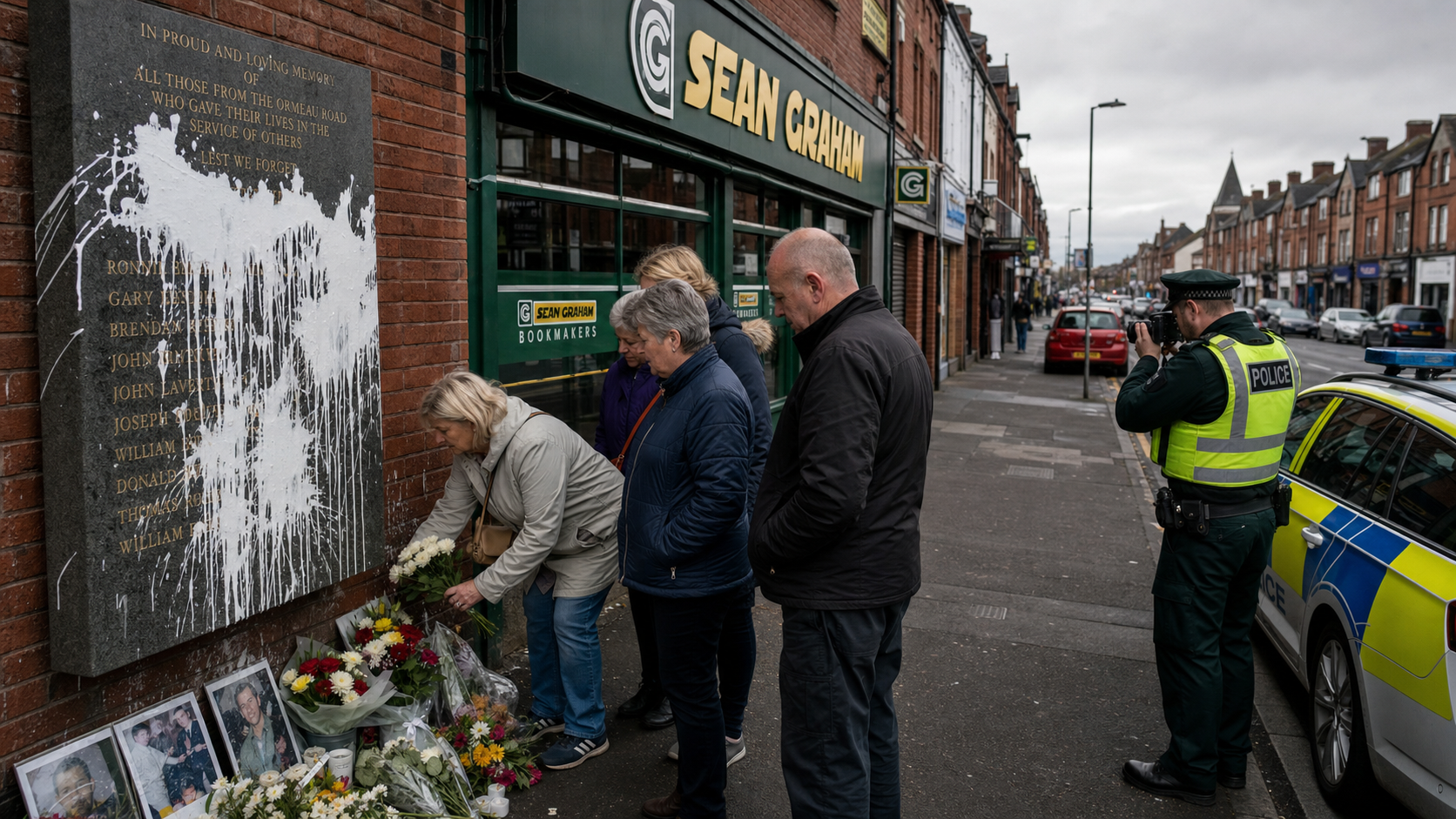
The families of five Catholic civilians killed in the 1992 Sean Graham bookmakers massacre on Belfast's Ormeau Road have condemned the vandalism of a memorial plaque at the site as a deliberate and pre-planned act of sectarian hatred, after the plaque was defaced with white paint in the early hours of Wednesday, 3 September. The Police Service of Northern Ireland has launched an investigation, treating the incident as a sectarian-motivated hate crime, and is appealing for information about two individuals seen fleeing the scene on bicycles toward the Ormeau Bridge at approximately 5am.
Background
The Sean Graham bookmakers attack took place on 5 February 1992, when gunmen from the Ulster Defence Association entered the betting shop on the lower Ormeau Road and opened fire on customers watching a horse race. Five men were killed: James Kennedy, aged 15; Christy Doherty, 51; William McManus, 54; Jack Duffin, 66; and Peter Magee, 18. Seven others were wounded. The attack was one of the most devastating single incidents of the Troubles on the Ormeau Road, a predominantly nationalist area of south Belfast that had already suffered significant violence during the conflict.
The memorial plaque on Hatfield Street was erected by the families and the community to ensure that the victims are not forgotten. For the families, the plaque is not merely a marker of grief but a statement that the lives of their loved ones mattered and that the community will not allow their memory to be erased. Mark Sykes, who survived the 1992 shooting, has been one of the most prominent voices in keeping the memory of the victims alive, and has spoken publicly about the lasting trauma that the attack inflicted on the Ormeau Road community.
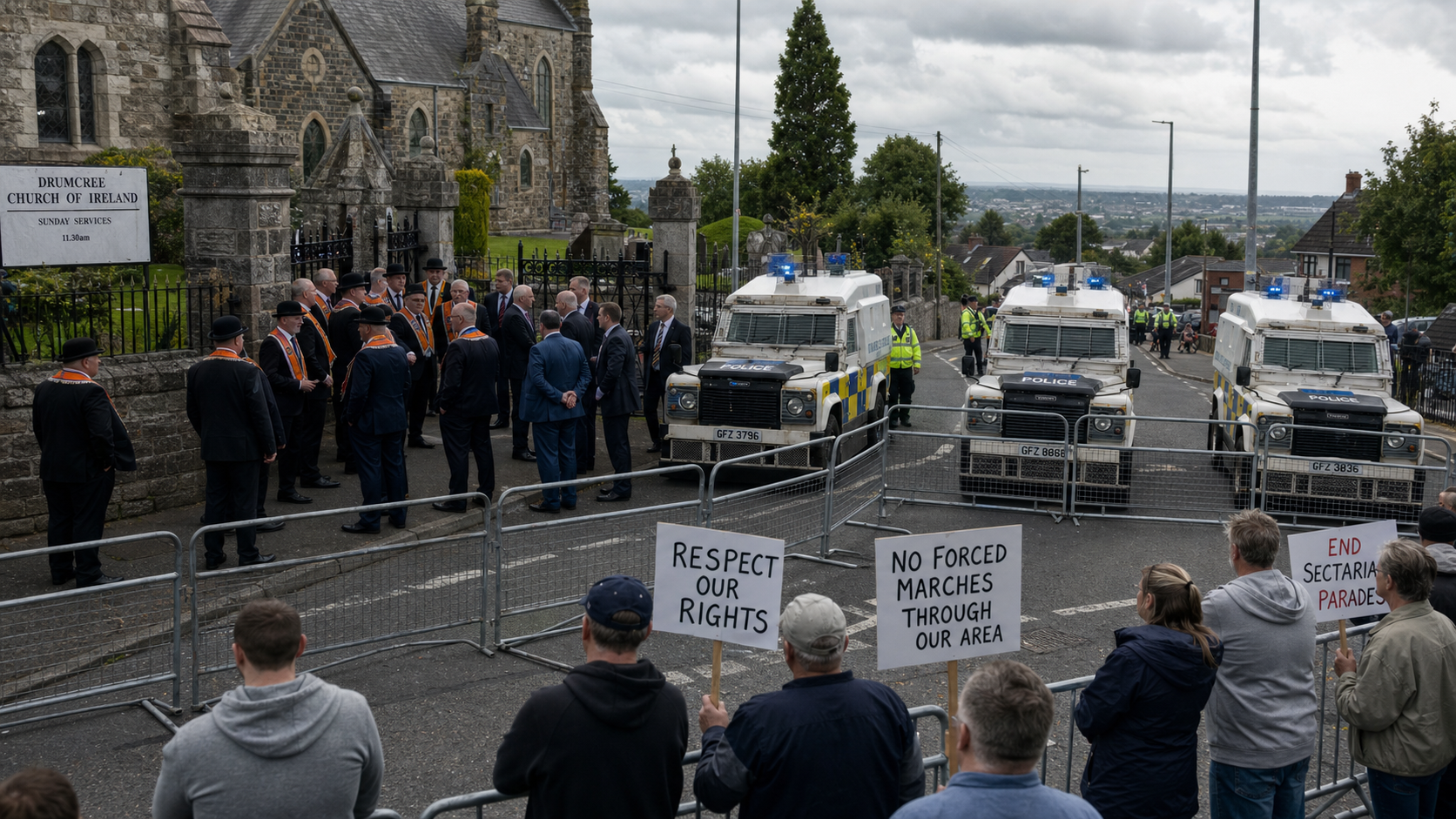
The vandalism has been linked by those affected to the heightened tensions surrounding the Drumcree parade dispute, which has dominated political discourse in Northern Ireland in recent weeks following a High Court ruling that quashed a Parades Commission determination restricting the Orange Order's annual march. Community leaders on the Ormeau Road have noted that the rhetoric surrounding parading disputes has a history of reawakening historical trauma for nationalist communities, and that the timing of the attack on the memorial is unlikely to be coincidental.
Key Developments
The vandalism was discovered in the early morning of 3 September, when residents noticed that the memorial plaque had been covered in white paint. CCTV footage reviewed by the PSNI shows two individuals approaching the memorial at approximately 5am and fleeing toward the Ormeau Bridge on bicycles after defacing the plaque. The PSNI has appealed for anyone with information about the individuals or the incident to come forward.
Mark Sykes and Mark Thompson of Relatives for Justice described the attack as deliberate and pre-planned, noting that the individuals had clearly come prepared with paint and had targeted the memorial specifically. Sinn Féin MLA Deirdre Hargey condemned the act as callous, saying that memorials to victims of violence should be considered sacrosanct regardless of political or community background. Kenny Donaldson, Director of the South East Fermanagh Foundation, also condemned the vandalism, describing it as an example of the persistent sectarian and ethnic hatred that continues to scar Northern Ireland.
The incident has prompted renewed calls for a cross-community statement from political leaders condemning attacks on memorials and places of remembrance. The Ormeau Road community has a history of such attacks, and residents have expressed frustration that the PSNI has not yet made any arrests in connection with previous incidents of memorial vandalism in the area.
Why It Matters
The vandalism of the Sean Graham memorial is not an isolated incident. Across Northern Ireland, memorials to victims of the Troubles — from both communities — have been targeted by those who wish to erase or contest the memory of the conflict. The pattern reflects a broader failure to reach a shared understanding of the past, and the absence of a functioning legacy framework that could provide truth, acknowledgement, and some measure of justice for victims and survivors.
The timing of this attack, against the backdrop of the Drumcree dispute and the heightened political tensions it has generated, is a reminder that the past is never entirely past in Northern Ireland. The families of the Sean Graham victims have spent more than three decades seeking acknowledgement of what happened to their loved ones; to have a memorial defaced in this way is an act of cruelty that compounds their grief. For the Ormeau Road community, it is also a reminder of the vulnerability of shared spaces and the ease with which sectarian actors can inflict harm with minimal effort.
Local Impact
The lower Ormeau Road, which runs through a predominantly nationalist area of south Belfast between the city centre and the Ravenhill Road, has been the site of significant community development in recent years. New housing, community facilities, and local businesses have transformed parts of the area, and there is a genuine sense of civic pride among residents. The vandalism of the Sean Graham memorial is a blow to that sense of community, and a reminder that the legacy of the Troubles continues to cast a shadow over everyday life in Belfast's inner-city neighbourhoods.
The PSNI's Hate Crime Unit is leading the investigation, and officers have been conducting door-to-door enquiries in the Hatfield Street area. The memorial has since been cleaned by community volunteers, who gathered on the morning of 3 September to restore the plaque to its original condition.
What's Next
The PSNI has appealed for anyone with information about the two individuals seen on CCTV to contact detectives at Musgrave Police Station or the Crimestoppers anonymous line. The families of the victims have indicated that they will seek a meeting with the PSNI's district commander to discuss the investigation and to press for a more proactive approach to protecting memorials in the area. Relatives for Justice has also called on the Northern Ireland Executive to introduce specific legislation protecting memorials and places of remembrance from vandalism, a measure that has been discussed but not enacted in previous Assembly terms.