Enoch Burke Removed from Courtroom as Dismissal Appeal Ends in Chaos
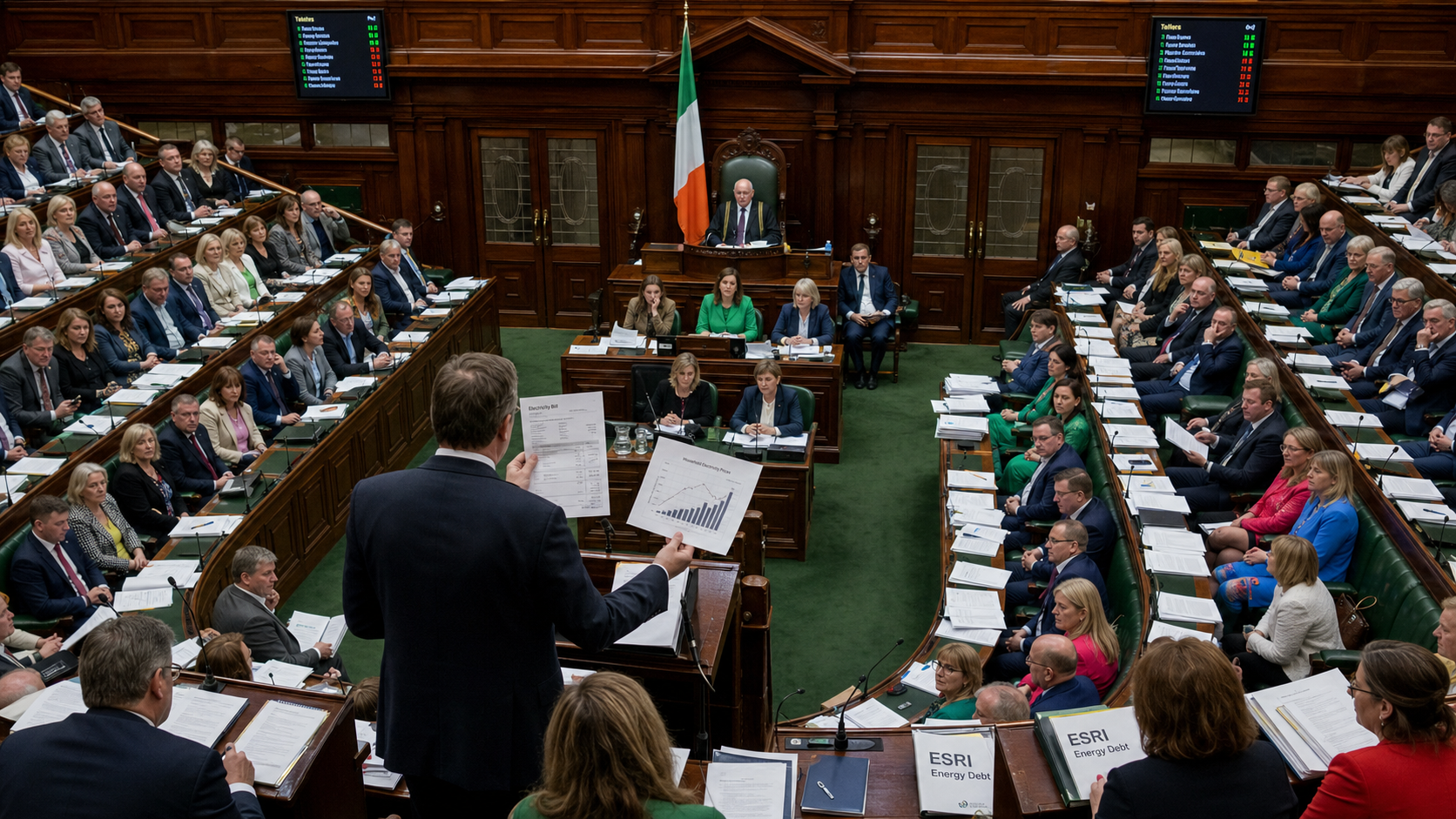
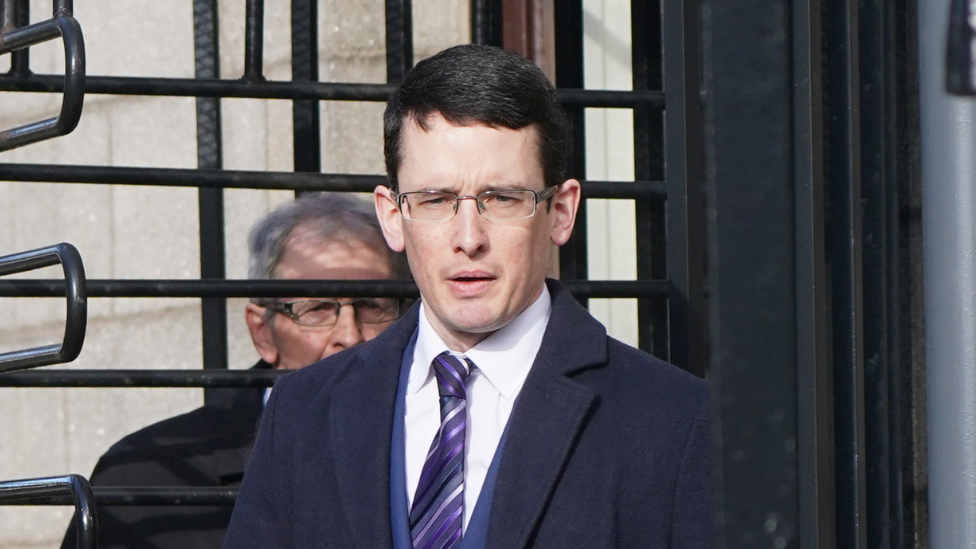
The long-running legal saga of Enoch Burke took another dramatic turn on Friday when the jailed teacher was physically removed from his own dismissal appeal hearing after repeatedly interrupting proceedings — bringing the third attempt at a Disciplinary Appeal Panel to an abrupt and chaotic end in Athlone.
Burke, who has spent more than 650 days in prison for contempt of court, was transported from Castlerea Prison to the Department of Education offices on 24 April 2026 for what was meant to be a pivotal hearing into his dismissal from Wilson's Hospital School in County Westmeath. Instead, the session collapsed within hours, leaving the future of his employment appeal deeply uncertain.
Background
The dispute that has consumed Irish courts for nearly four years began in 2022, when the principal of Wilson's Hospital School requested staff to address a transitioning student by a new name and the pronoun "they." Burke, an evangelical Christian and teacher of history and German, publicly confronted the principal, citing his religious belief that gender is determined by biological sex. He refused to comply, was suspended, and subsequently dismissed for gross misconduct in 2023.
What followed was an extraordinary sequence of legal battles. Burke repeatedly returned to the school grounds in defiance of High Court injunctions ordering him to stay away, resulting in multiple imprisonments for contempt of court. Irish courts have consistently emphasised that Burke is imprisoned not for his religious beliefs, but for his refusal to obey lawful court orders. The Court of Appeal explicitly stated the case "is not about transgender rights" — it is about the rule of law.
Throughout his incarceration, Burke has continued to receive his full salary from the Department of Education, as is standard procedure until all appeal processes are exhausted. He has pursued an extensive series of legal challenges, including an unsuccessful Supreme Court bid in April 2026, and two previous Disciplinary Appeal Panels were dissolved following his High Court applications alleging bias and procedural errors.
Key Developments
The April 24 hearing was chaired by solicitor Claire Callanan and constituted a three-member panel — the third such body convened to hear Burke's appeal. From the outset, Burke objected strenuously to Wilson's Hospital School being represented by a solicitor and barrister from Mason Hayes and Curran. He argued that Department of Education circulars mandate an "informal" process and that the presence of legal counsel was "totally contrary to settled law in this area." His brother Isaac Burke described the events as "scandalous" in a video posted on social media.
After repeated interruptions, chair Callanan requested Burke's removal. Prison officers escorted him from the room. His mother Martina Burke and brother Isaac Burke, who were also present, were subsequently escorted out by Gardaí. The school's legal team proceeded to present its case to the panel in Burke's absence. Burke was later offered the opportunity to return on the condition that he respect the proceedings, but upon his return reportedly became disruptive again and was removed a second time.
An examination of the relevant Department of Education circular indicates that while the process is intended to be informal, it does not explicitly prohibit legal representation for the school — a point that may prove significant if Burke mounts a further legal challenge to the panel's conduct.
Why It Matters
The Burke case has become one of the most high-profile and protracted employment disputes in Irish legal history, raising fundamental questions about the boundaries of religious conscience, the rights of transgender students, and the authority of the courts. For those who support Burke, his imprisonment represents a troubling precedent — a man of faith jailed for refusing to endorse what he regards as an ideological position. For the judiciary and many legal observers, the case is a straightforward matter of contempt: no individual, regardless of their beliefs, is above the law.
The Evangelical Alliance in Ireland has itself distanced the broader evangelical community from Burke's conduct, suggesting his "disruptive" behaviour — rather than his beliefs — lies at the heart of his legal difficulties. A High Court judge previously characterised his actions as an "abuse of process" aimed at furthering a political campaign rather than a genuine legal defence. The case continues to expose deep tensions in Irish society over how institutions balance competing rights in an era of rapid social change.
Local Impact
While the Burke case is centred in the Republic, it resonates strongly in Northern Ireland, where debates over transgender rights, religious freedom, and the limits of conscientious objection in public employment are equally live and contested. The case is closely watched by faith communities, trade unions, and equality advocates on both sides of the border. For teachers and school staff in Northern Ireland navigating similar questions around gender identity policies, the outcome of Burke's appeal — and any further litigation — will carry significant implications for how schools and employers balance their legal obligations with the sincerely held beliefs of their staff.
What's Next
The Disciplinary Appeal Panel must now decide whether to issue a ruling based solely on the school's submission, or to offer Burke a further opportunity to present his case. Given his history of legal challenges, it is widely anticipated that Burke will contest the conduct of the April 24 hearing in the High Court, potentially prolonging the dispute for months or years to come. His release from Castlerea Prison remains contingent on his agreement to purge his contempt by complying with the court order to stay away from Wilson's Hospital School — a step he has shown no indication of taking. Full report: The Irish Times. Further coverage: Irish Examiner.