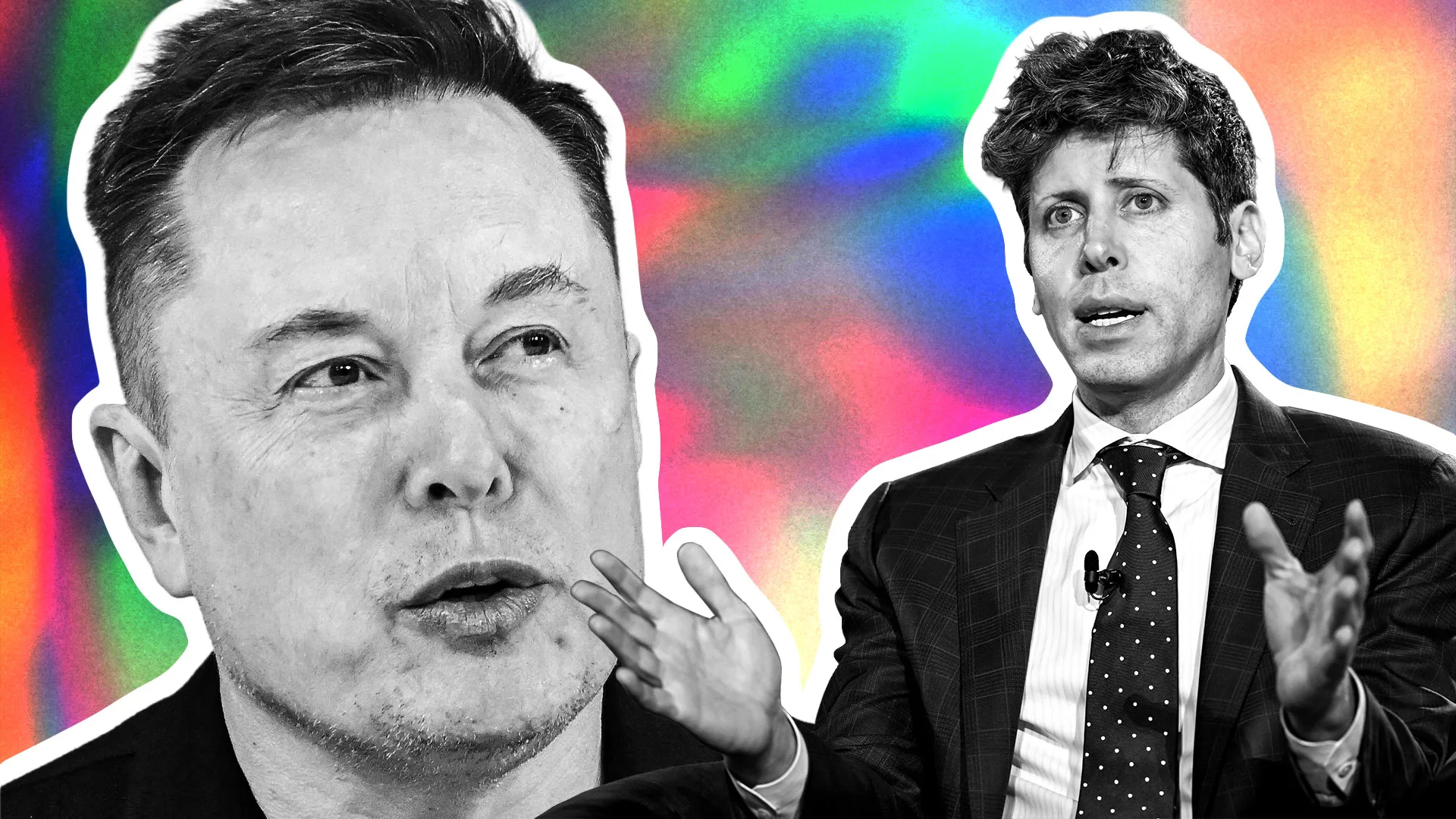
Elon Musk and Sam Altman Face Off in Court as OpenAI Trial Begins
Two of the most powerful figures in the global technology industry — Elon Musk and Sam Altman — appeared in court this week for the start of a trial that could fundamentally reshape the future of artificial intelligence, as Musk's legal challenge to OpenAI's controversial transition from a non-profit to a for-profit entity enters its decisive phase.Background
OpenAI was founded in 2015 as a non-profit research organisation with a stated mission to develop artificial intelligence for the benefit of humanity. Musk was one of its co-founders and early backers, contributing significant funding and lending his public profile to the organisation's credibility. He departed from the board in 2018, citing concerns about conflicts of interest with his other ventures, but maintained a public interest in the organisation's direction.
The dispute between Musk and Altman has its roots in OpenAI's decision to restructure itself as a "capped profit" entity in 2019, a move that allowed it to raise commercial investment while nominally maintaining its non-profit mission. Musk has argued that this restructuring represented a fundamental betrayal of the organisation's founding principles — that OpenAI was created to be a public good, not a commercial enterprise, and that its transition to a for-profit model has corrupted that mission.
Altman, who has led OpenAI since 2019 and oversaw the development of ChatGPT and the GPT series of language models, has argued that the restructuring was necessary to raise the capital required to develop frontier AI systems — and that without commercial investment, OpenAI would have been unable to compete with well-funded rivals. The dispute has become one of the defining conflicts in the technology industry, touching on fundamental questions about who should control the development of transformative technologies and in whose interests.
Key Developments
Musk and Altman appeared in court this week for the start of the trial, which is expected to last several weeks. Musk's legal team is arguing that OpenAI's transition to a for-profit entity violated the terms of the charitable trust under which it was established, and that the organisation's assets — including its intellectual property and the value created by its research — should be returned to public benefit. Altman's defence is that the restructuring was legally sound and that OpenAI's mission remains intact.
The trial has attracted enormous attention from the technology industry, investors, and policymakers. The outcome could have significant implications for how AI companies are structured and governed — and for the broader question of whether the development of transformative AI technologies can be left to commercial entities without stronger public oversight. The UK's Competition and Markets Authority, which has been actively using its new powers under the Digital Markets Act, is watching the proceedings closely.
Why It Matters
The Musk-Altman trial is not merely a corporate dispute — it is a proxy battle for the soul of the artificial intelligence industry. The question of whether AI development should be driven by commercial incentives or by a broader public interest mandate is one of the most consequential policy questions of our time. OpenAI's ChatGPT has already transformed how millions of people interact with technology, and the next generation of AI systems will be even more powerful. Who controls those systems, and in whose interests they are developed, matters enormously.
For the UK and Ireland, the trial has particular relevance given the government's ambitions in the AI sector. The UK's AI Opportunities Action Plan, which includes a Sovereign AI Unit backed by $675 million, is premised on the assumption that AI development can be shaped by public policy. If the trial establishes that commercial AI companies can operate without meaningful accountability to their founding missions, it will complicate that assumption significantly.
Local Impact
For technology workers and businesses across the UK and Ireland, the OpenAI trial is a reminder that the AI industry is still in the process of establishing the governance frameworks that will shape its development for decades to come. Dublin's significant concentration of AI-related businesses — including the European headquarters of Google, Meta, and Microsoft — means that the outcome of the trial will be felt in Ireland as much as anywhere. UK regulators, including the CMA and Ofcom, will be watching closely for any precedents that could inform their own approach to AI governance.
What's Next
The trial is expected to last several weeks, with a verdict not anticipated before the summer. Both Musk and Altman are expected to testify in person. The outcome will be closely watched by AI companies, investors, and regulators around the world. In the UK, the government's AI Opportunities Action Plan is due for its first progress review in the summer, and the trial's outcome could influence the direction of that review.
Sources: The Irish Times | Fast Company

)

