Dungarvan Man Airlifted to Cork Hospital After Blue Shark Bite Off Waterford Coast
A 27-year-old angler from Dungarvan has been airlifted to Cork University Hospital after suffering a severe bite from a blue shark while on a pleasure fishing trip off the Waterford coast, in what the Ballycotton RNLI coxswain described as the first shark bite incident he had encountered in three decades of sea rescue work.
Background
Blue sharks are a regular presence in Irish coastal waters between June and October, drawn by the warming sea temperatures and the abundance of fish that characterise the summer months along the south and west coasts. The species, which can grow to three metres in length, is not typically regarded as aggressive toward humans and is far more commonly encountered by recreational anglers than by swimmers. Blue shark angling has become an increasingly popular activity off the Waterford, Cork, and Kerry coasts, with charter boats operating regular trips for anglers seeking the thrill of catching one of the ocean's most elegant predators.
The standard practice in blue shark angling involves catching the fish on a line, bringing it alongside or onto the boat for a brief period, and then releasing it back into the water. The sharks are generally handled with care, and experienced anglers are well aware of the risks involved in working with a large, powerful fish at close quarters. The incident on Tuesday afternoon, however, demonstrates that even experienced anglers can be caught off guard by the speed and unpredictability of a shark's movements.
Sebastian Achim, a resident of Dungarvan, was on a pleasure fishing trip with four companions approximately 6.5 kilometres from Ram Head, Ardmore, when the incident occurred. The group had been successfully catching blue sharks throughout the day and were in the process of releasing a shark that Achim had just landed when the animal lunged at him, biting into his calf and tearing away a portion of muscle and bone in a wound estimated at approximately 10 centimetres in length.
Key Developments
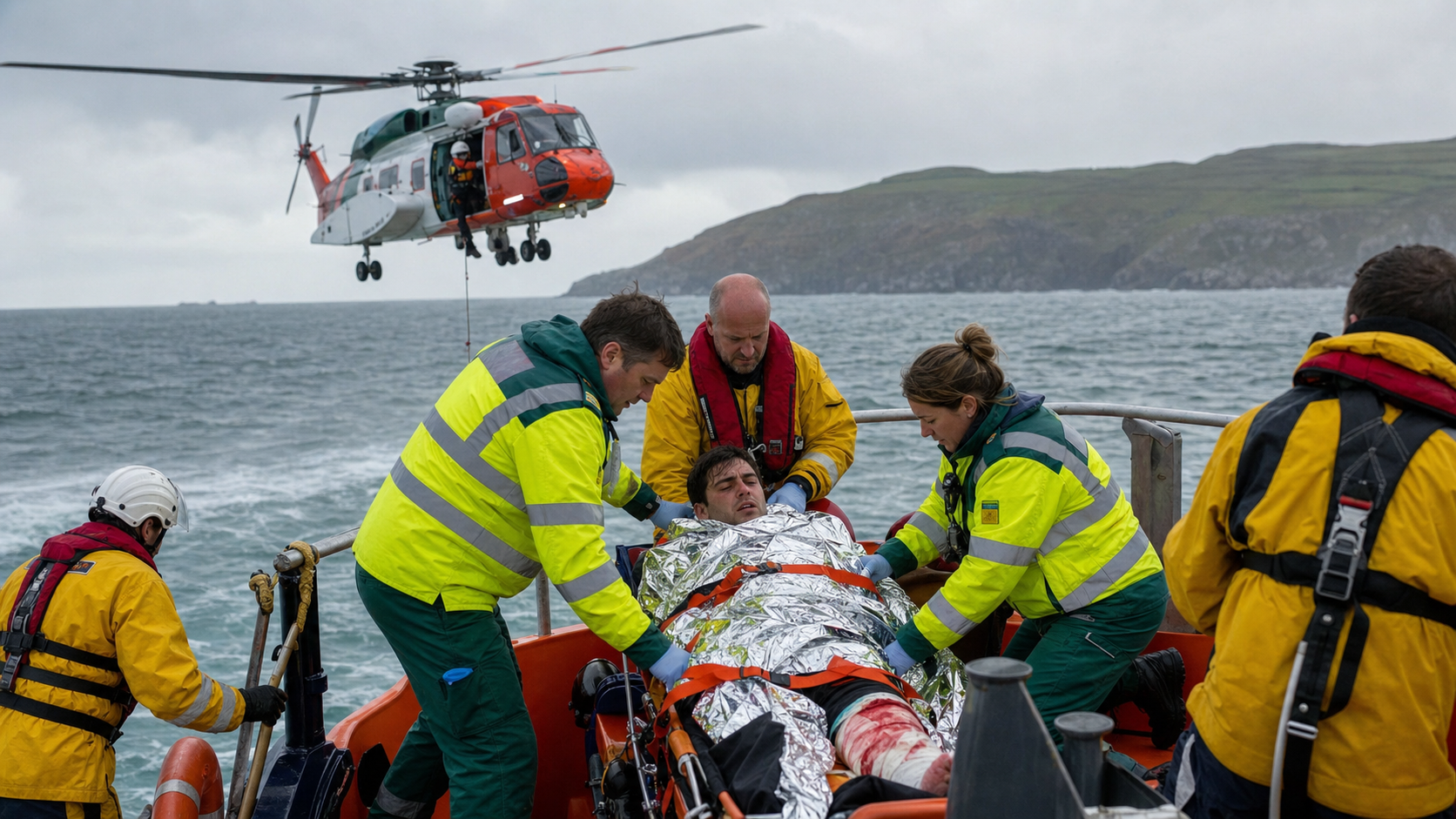
The Dublin Coast Guard was alerted to the situation at 4:16pm on Tuesday 11 August. A multi-agency rescue operation was coordinated, involving the Irish Coast Guard helicopter Rescue 117, the Ballycotton RNLI all-weather lifeboat The Austin Lidbury, and the Youghal RNLI inshore lifeboat. The lifeboats arrived on the scene at approximately 5:10pm and remained on standby while Rescue 117 winched Achim from the vessel. He was then transported to Cork University Hospital for emergency treatment.
Achim described the immediate aftermath of the bite as terrifying, with blood covering the deck of the boat. He attempted to control the bleeding by applying a makeshift tourniquet and a wrap to the wound before the rescue services arrived. His condition was stabilised at Cork University Hospital, where he required surgery and a multi-day stay. Despite the severity of the injury, Achim expressed no ill will toward the shark, acknowledging that the incident was an occupational hazard of the activity he had chosen to pursue, though he indicated he would not be fishing for blue sharks again in the future.
Eolan Walsh, the coxswain for the Ballycotton RNLI, noted that the incident was the first shark bite he had encountered in 30 years of sea rescue work. He emphasised that the attack occurred on a boat rather than in the water and urged those heading offshore to prioritise safety and ensure they have reliable communication methods. The Irish Coast Guard used the incident to remind anglers of the importance of carrying a working VHF radio and a personal locator beacon when fishing offshore.
Why It Matters
The incident is a reminder of the inherent risks of offshore angling, particularly when handling large predatory fish. Blue sharks are not considered a significant threat to swimmers in Irish waters — the species is pelagic, preferring open water to coastal shallows — but the risks of handling them on a boat are real and should not be underestimated. The Irish Coast Guard and RNLI have used the incident to reinforce safety messaging for recreational anglers, emphasising the importance of proper equipment, communication devices, and knowledge of how to handle large fish safely. The incident also highlights the quality of Ireland's maritime rescue services, which responded rapidly and effectively to a complex offshore emergency.
Local Impact
For the Dungarvan and Ardmore communities, the incident has generated significant local interest and concern. Blue shark angling is a popular activity along the Waterford coast, and the incident will prompt many local anglers to review their safety procedures. The Ballycotton and Youghal RNLI stations, which responded to the emergency, are volunteer-operated services that depend on community support for their funding and staffing. The incident has generated renewed appreciation for the work of these volunteers, who are available around the clock to respond to maritime emergencies along one of Ireland's most active stretches of coastline. Cork University Hospital's emergency and surgical teams have also been praised for their rapid and effective treatment of Achim's injuries.
What's Next
Sebastian Achim is expected to make a full recovery, though the extent of the muscle and bone damage sustained in the bite means that his rehabilitation will take several months. The Irish Coast Guard is expected to issue updated safety guidance for blue shark anglers in the coming weeks, drawing on the lessons of the Waterford incident. The Marine Institute, which monitors shark populations in Irish waters, has noted that blue shark numbers off the south coast have been particularly high this summer, consistent with the warm sea temperatures recorded during the July heatwave, and has advised anglers to exercise additional caution when handling the species.