Dublin's Future Takes Shape with €7.3bn MetroLink Tender as Political Tensions Simmer
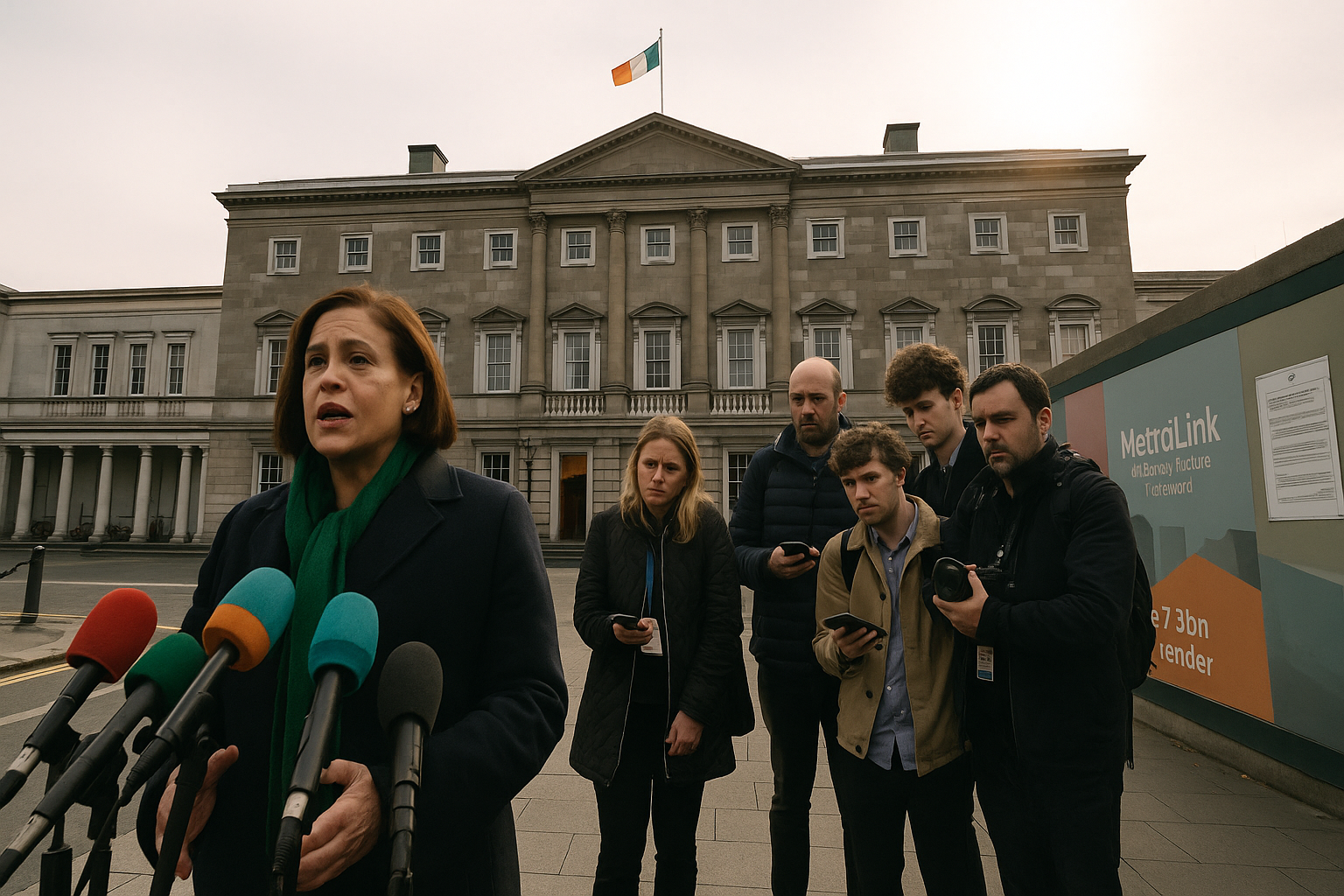
The government has fired the starting gun on one of the largest infrastructure projects in the history of the state, issuing a €7.3 billion invitation to bid for the core MetroLink contract in Dublin. The landmark move for the capital's future occurred against a backdrop of rising political tension, as Sinn Féin leader Mary Lou McDonald used her party's Ard Fheis to challenge the government, while a UK political apology over a Bloody Sunday video reopened old wounds.
Background
The MetroLink project has been a long-held dream for Dublin's city planners. For decades, the concept of a high-capacity, high-frequency underground rail line connecting the airport, the city centre, and the south side has been discussed and debated. The project aims to alleviate the city's chronic traffic congestion, reduce carbon emissions, and support future economic and population growth. Previous iterations of the plan have been proposed and shelved due to economic downturns and political indecision, making this latest step a truly significant milestone in its development.
The announcement comes at a politically charged moment. The main opposition party, Sinn Féin, held its annual conference, the Ard Fheis, over the weekend. With the party consistently leading in opinion polls, the event was closely watched as a preview of the next general election campaign. Simultaneously, Anglo-Irish relations were once again put under strain by a controversy related to the legacy of the Troubles. The historical pain of Bloody Sunday, when British soldiers shot 26 unarmed civilians in Derry in 1972, remains incredibly raw, and any modern reference to it is fraught with sensitivity.
Key Developments
The most significant development was the formal issuing of the invitation to bid for the main works of the MetroLink project. This multi-billion euro contract will cover the tunnelling, station construction, and systems for the transformative transport line. It signals that, after years of planning, the government is now fully committed to building the project, which will create thousands of jobs during its construction and aims to be operational in the early 2030s. The news, reported in The Irish Times, has been hailed as a game-changer for Dublin.
On the political front, Sinn Féin leader Mary Lou McDonald delivered a keynote address at her party's Ard Fheis, where she dismissed recent speculation about her leadership and sought to project an image of strength and readiness for government. She used the platform to challenge the government to back a by-election, aiming to increase pressure on the ruling coalition. Her speech set out Sinn Féin's alternative vision on housing and the cost of living, framing the next election as a choice between two fundamentally different futures for Ireland.
Meanwhile, a significant diplomatic incident was narrowly averted after UK Business Secretary Kemi Badenoch and the Conservative Party issued a formal apology. The apology was for a social media video promoting the British army which had, according to the Irish Mirror, inappropriately included clips related to the Bloody Sunday massacre. Victims' families and nationalist politicians had reacted with fury, describing the video as grossly insensitive. The swift apology from a senior UK cabinet minister was a clear attempt to contain the damage to Anglo-Irish relations.
Why It Matters
This confluence of events provides a fascinating snapshot of contemporary Ireland: a nation investing heavily in a modern, European future while still navigating a complex political landscape and the long shadow of its past. The MetroLink project is a tangible symbol of ambition and progress, a bet on Dublin's future as a major international city. Its success or failure will have ramifications for generations. At the same time, the political theatre of the Sinn Féin Ard Fheis highlights the deep ideological divides in Irish politics and sets the stage for a highly contentious general election.
The Kemi Badenoch apology is a crucial reminder that the peace process is fragile and that historical wounds require constant care and respect. It demonstrates that the legacy of the Troubles is not a distant memory but a living issue that continues to shape relationships on and between these islands. The fact that a senior British minister felt compelled to apologise so quickly shows an understanding in London of the deep offence caused, but the incident itself reveals a worrying lack of awareness within parts of the British establishment.
Local Impact
The MetroLink project will have the most profound local impact, utterly transforming Dublin. For residents, it promises faster commutes and a greener city, but it will also bring years of major construction disruption. The political manoeuvring between the government and Sinn Féin directly affects all citizens, as the outcome of their battle will determine national policy on everything from housing to healthcare. The Bloody Sunday video apology has its most acute impact in Derry and among the nationalist community in Northern Ireland, for whom the massacre is a defining historical trauma. For the UK, it is a moment of political embarrassment and a lesson in the sensitivities of Anglo-Irish history.
What's Next
The deadline for construction consortia to submit their bids for the main MetroLink contract will close in late 2026. The preferred bidder for the MetroLink project is expected to be announced in early 2027, marking the next major step towards construction. Political analysts will be watching for any potential by-elections that could test the government's stability ahead of a general election. Further responses from Bloody Sunday victims' groups are expected, and the incident may be raised in diplomatic channels between Dublin and London.