Dublin Residents Have Until Monday to Submit Views on Bin Bag Ban as Council Plans October Rollout for Dublin 7
Thousands of Dublin residents in the Stoneybatter, Phibsborough, Smithfield, and Broadstone areas of Dublin 7 have until midnight on Monday, August 31, to submit their views to Dublin City Council on a proposed ban on plastic refuse sacks that is scheduled to take effect on October 17, 2026, with fines of €250 for non-compliance — a deadline that has prompted a surge in submissions from residents who say the council has failed to adequately consult them about a change that will fundamentally alter how they manage their household waste.
Background
Dublin City Council's campaign to eliminate plastic bin bags from the city's streets has been one of the most contentious local government initiatives of recent years. The council argues that plastic refuse sacks left on footpaths attract vermin, are torn open by birds, and contribute to the litter problem that has long blighted parts of the inner city. The evidence from areas where the ban has already been implemented — including Temple Bar, Grafton Street, and the north inner city from Amiens Street to Church Street — suggests that the measure does reduce illegal dumping, with the council reporting a reduction of approximately twenty tonnes of waste per month in the south inner city.
The ban was originally planned for July 2026 in the Dublin 7 areas, but was postponed following significant pushback from residents, particularly those living in older terraced housing that lacks the space to store wheelie bins. The council initiated a public consultation process to address these concerns, with the deadline for submissions set for August 31. The October 17 implementation date was announced alongside the consultation, a sequencing that critics argued undermined the genuine nature of the consultation process.
The Dublin 7 area presents particular challenges for the bin bag ban. Unlike the city centre commercial areas where the ban has already been implemented, Dublin 7 is a densely populated residential neighbourhood with a mix of Victorian terraced houses, apartment blocks, and social housing. Many properties in Stoneybatter and Phibsborough were built before the era of wheelie bins and have no side passage or garden where a bin could be stored. The council's proposed solution — 120-litre wheelie bins for most properties, with 80-litre bins and 45-litre caddies for those with limited space — has not satisfied residents who say there is simply nowhere to put a bin outside of collection hours.
Key Developments
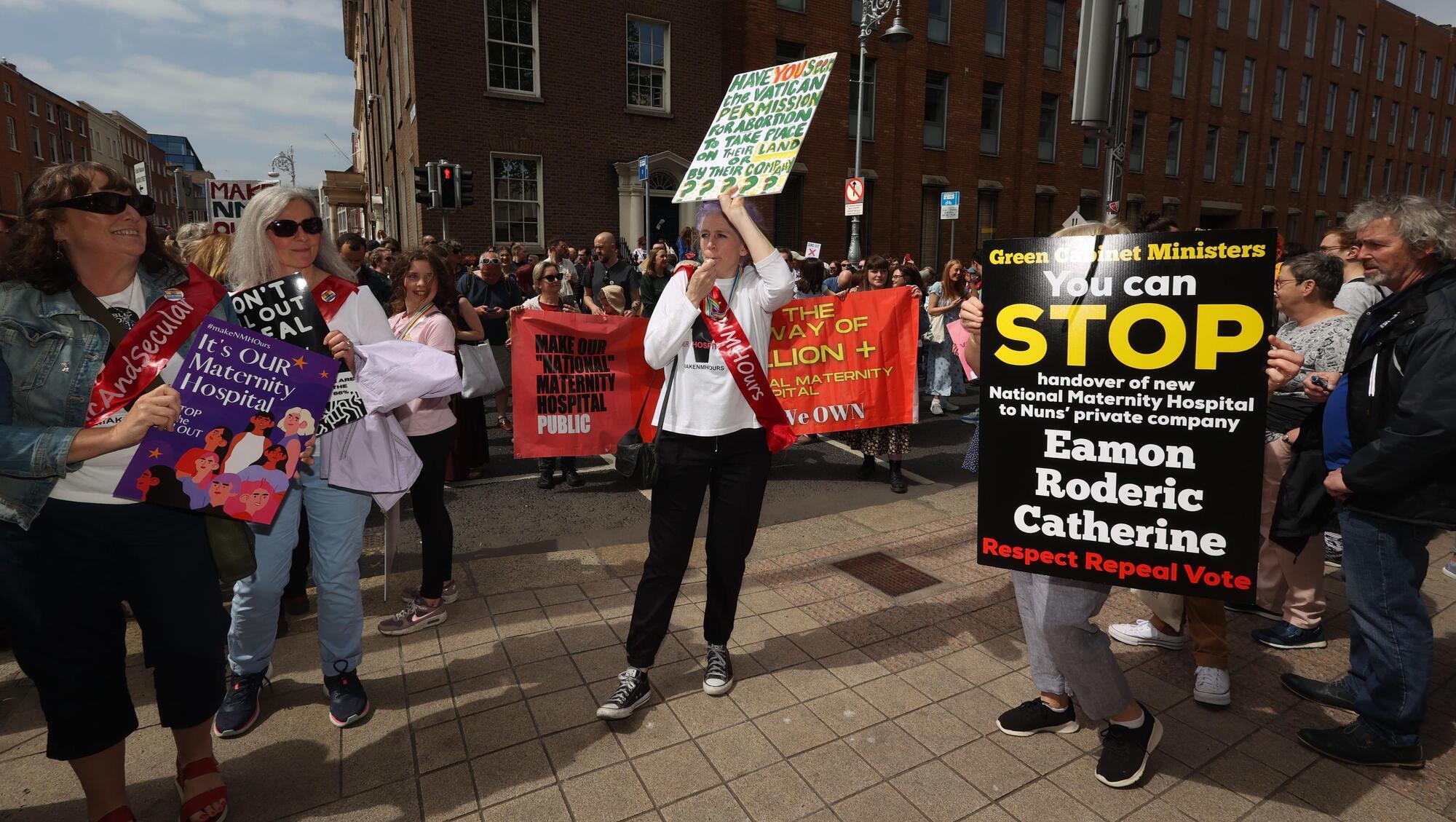
The consultation process has generated a significant response, with the Irish Times reporting that thousands of residents have engaged with the process. A public meeting attended by approximately 300 people was held in the area, and a protest outside Dublin City Hall drew further attention to the concerns of residents. Labour TD Marie Sherlock has been among the most vocal critics of the council's approach, arguing that the lack of prior consultation and the reliance on private waste companies to dictate solutions represents a failure of democratic accountability.
The council has maintained that the ban is necessary to address the litter and vermin problems that have been documented in the Dublin 7 area, and that the consultation process is genuine. Officials have pointed to the success of the ban in other parts of the city as evidence that the measure works, and have committed to working with residents and waste companies to find practical solutions for properties where storage is genuinely problematic.
The broader context is the council's ambition to eliminate plastic bin bags across the entire city by mid-2027, with further extensions planned for parts of Dublin 8 and Dublin 6 early next year. The Dublin 7 rollout is therefore a critical test case — if it proceeds smoothly, it will provide the template for the city-wide implementation; if it generates significant non-compliance or community conflict, it could delay the broader programme.
Why It Matters
The bin bag ban debate touches on fundamental questions about the relationship between local government and the communities it serves. Dublin City Council's approach — announcing a policy, conducting a consultation, and then proceeding with implementation on a pre-determined timeline — has been criticised as a form of consultation theatre that gives the appearance of engagement without genuinely incorporating community feedback into decision-making.
For residents of Dublin 7, many of whom are long-established community members who have watched their neighbourhood change rapidly over the past decade, the bin bag ban is one of a series of changes that feel imposed from above rather than developed in partnership with the community. The area has seen significant gentrification, rising rents, and the displacement of lower-income residents, and the bin bag ban — with its fines and its requirement to purchase new waste receptacles — is seen by some as another measure that disproportionately affects those with less financial flexibility.
The environmental case for the ban is, however, genuine. Plastic refuse sacks are a significant source of litter and vermin in urban areas, and the evidence from other cities that have implemented similar measures suggests that the transition, while disruptive, does produce lasting improvements in street cleanliness. The question is not whether the ban is a good idea in principle, but whether the council has done enough to support residents through the transition.
Local Impact
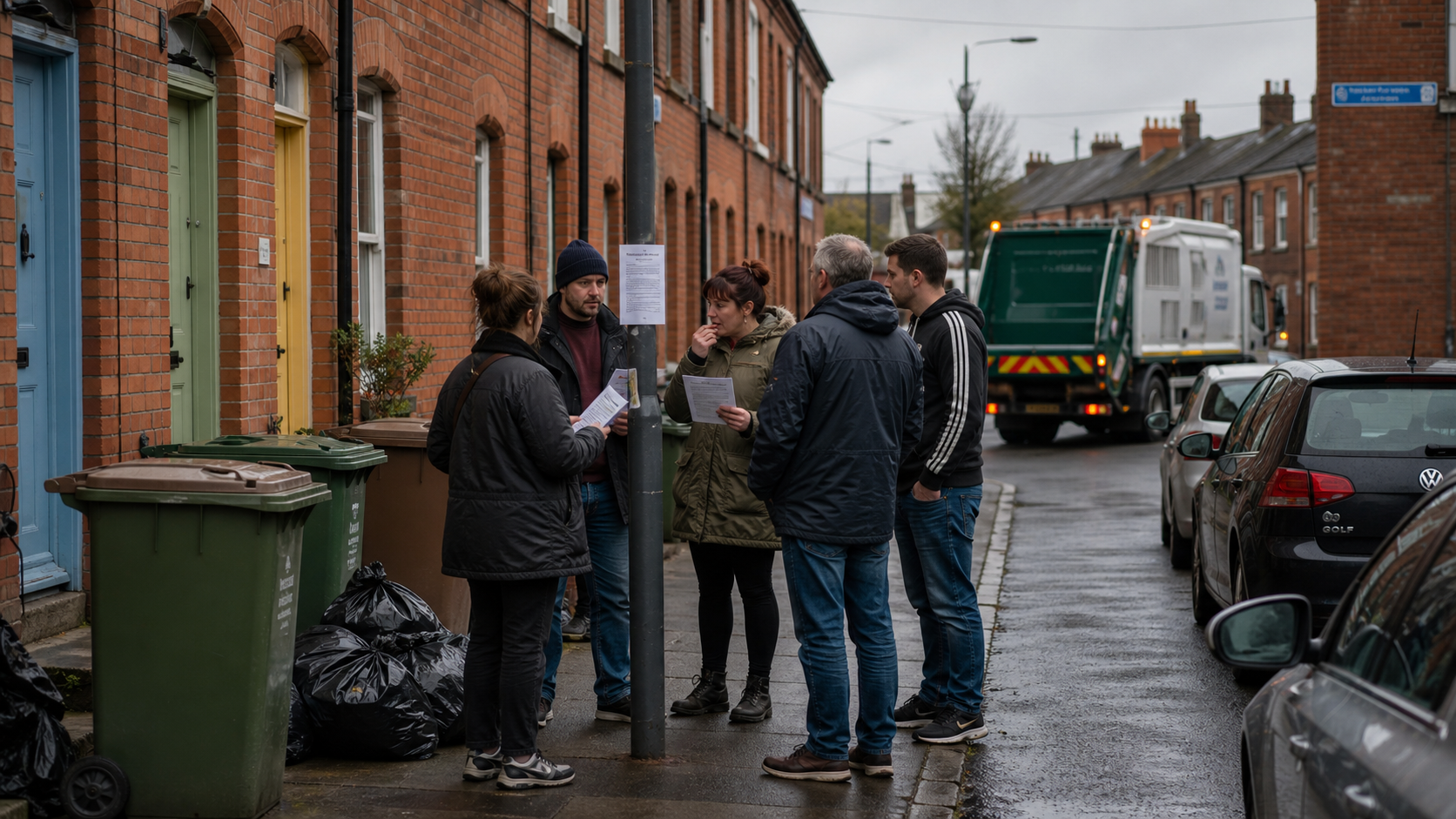
In Stoneybatter, one of Dublin's most characterful inner-city neighbourhoods, the ban has generated intense discussion in local Facebook groups, community WhatsApp chats, and at the counter of the area's independent shops. Residents who live in the area's distinctive red-brick terraces — many of which have front doors that open directly onto the footpath — are particularly concerned about where they will store wheelie bins during the week. The council's suggestion that bins can be stored inside the house has been met with scepticism by residents who point out that a 120-litre wheelie bin is not a practical piece of indoor furniture.
In Phibsborough, where a mix of older housing and newer apartment developments creates a more varied picture, the concerns are similar but the solutions may be more varied. Apartment blocks with communal bin stores are better placed to accommodate the transition, but residents of older houses face the same storage challenges as their Stoneybatter neighbours.
What's Next
The consultation closes at midnight on Monday, August 31. Dublin City Council will review the submissions received and is expected to publish a response in September. The October 17 implementation date remains in place, though councillors from several parties have indicated that they will seek to delay the rollout if the council's response to the consultation is deemed inadequate. The council's waste management committee is expected to discuss the issue at its September meeting, and the matter may be referred to the full council for a vote if opposition councillors table a motion.