Dublin City Fleadh Brings Free Traditional Music to Five City Hubs This Weekend
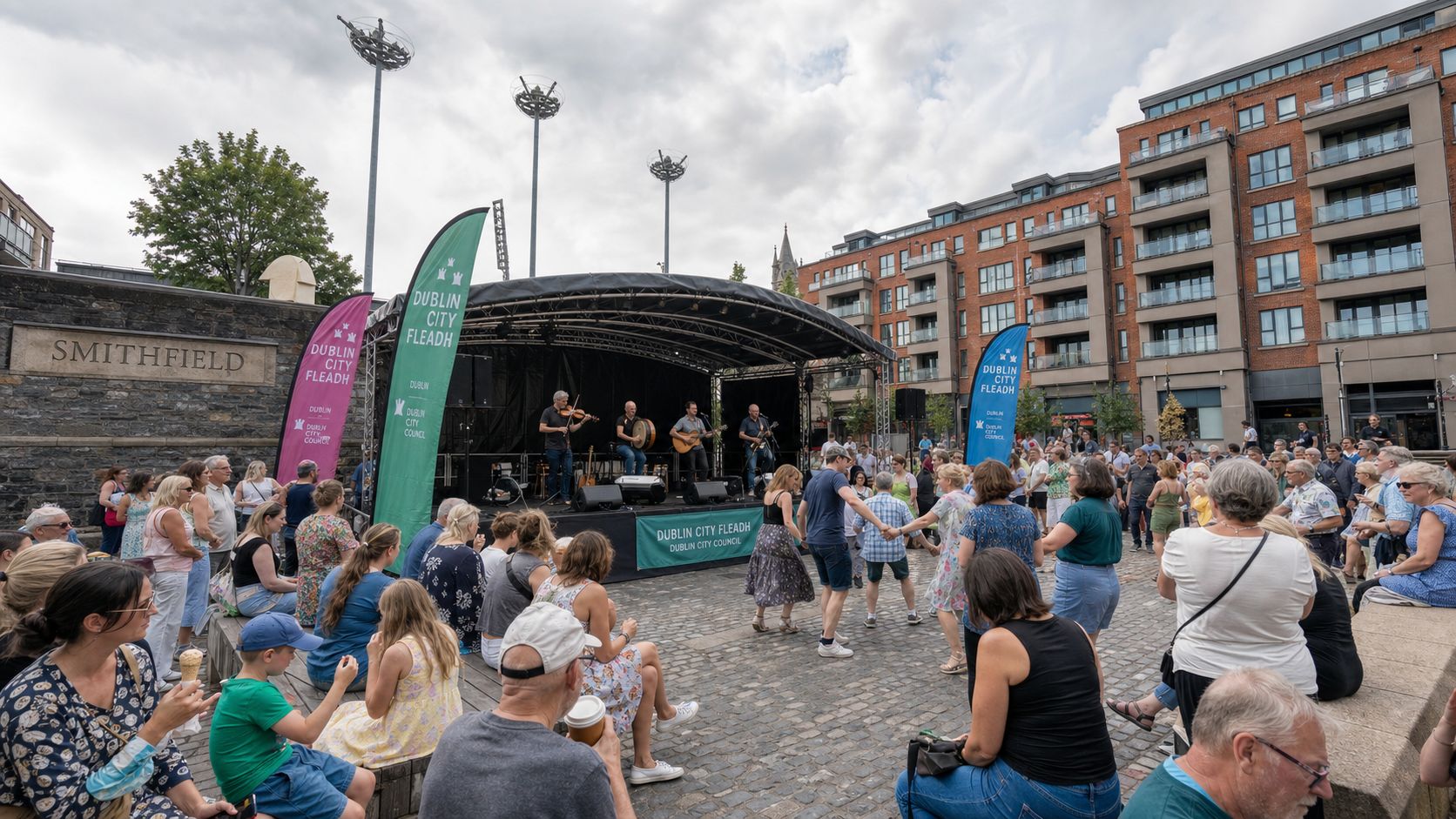
The Dublin City Council Dublin City Fleadh is bringing free traditional Irish music to the heart of the capital this weekend, with performances across five city hubs drawing thousands of Dubliners and visitors to Smithfield Square, Meeting House Square, Wolfe Tone Square, Parliament Street, and Capel Street for a celebration of the living tradition that has never been more vibrant or more popular.
Background
The Dublin City Fleadh was established by Dublin City Council as a free, unticketed celebration of traditional Irish music and culture, building on the success of the national Fleadh Cheoil — the world's largest traditional music festival — which has been held in various Irish towns and cities over the decades. The Dublin event is designed to bring the spirit of the Fleadh to the capital city, making traditional music accessible to the widest possible audience without the cost barriers that can sometimes limit participation in cultural events.
Traditional music has experienced a remarkable global renaissance in recent years, with Irish musicians performing to audiences across the world and the tradition attracting new generations of players who are drawn to its combination of technical complexity, communal spirit, and deep cultural roots. In Dublin, the tradition has always had a strong presence — the city's pubs and session venues have been central to the development of the modern traditional music scene — but the Fleadh format brings it out of the pub and into the public square, making it visible and accessible to people who might never otherwise encounter it.
The 2026 Dublin City Fleadh builds on the success of the inaugural 2025 event, which drew tens of thousands of people to the city centre over its two-day programme. Organisers have expanded the number of performance locations and the range of programming for 2026, with a particular emphasis on showcasing the diversity of the tradition — from the high-energy performances of contemporary acts like The Scratch and Kíla to the more contemplative world of uilleann piping and slow airs.
Key Developments
Sunday's programme at Smithfield Square features The Scratch, the innovative Dublin-based group that has become one of the most exciting acts in contemporary Irish music, blending traditional elements with electronic production and hip-hop influences. Also performing at Smithfield are Madra Salach and Kíla, the veteran Dublin group whose eclectic fusion of traditional music with world music influences has made them one of the most beloved acts in Irish music for over three decades.
At Meeting House Square in Temple Bar, the programme includes performances by Andy Irvine, the legendary singer and multi-instrumentalist whose career spans six decades and who remains one of the most respected figures in Irish and international folk music. The Máirtín O'Connor Trio and Quilty are also featured at this venue. Wolfe Tone Square hosts piping recitals and céilís, with Na Píobairí Uilleann — the organisation dedicated to the preservation and promotion of uilleann piping — presenting performances by some of the finest pipers in the country.
Saturday's programme at Smithfield featured the Sharon Shannon Big Band, Altan, and Dervish — three acts that between them represent the full breadth of the contemporary traditional music scene, from the accordion-driven exuberance of Sharon Shannon to the Donegal fiddle tradition of Altan and the Sligo-Roscommon sound of Dervish. The response from audiences was enthusiastic, with Smithfield Square packed throughout the afternoon.
Why It Matters
The Dublin City Fleadh matters because it makes traditional music genuinely public — not confined to pubs, concert halls, or ticketed events, but present in the streets and squares of the city, available to anyone who happens to be passing. This accessibility is central to the health of the tradition, which has always depended on transmission — on young people hearing music played live, being inspired to pick up an instrument, and joining the community of players and listeners that sustains the tradition from generation to generation.
The Fleadh also matters as an economic and cultural event for Dublin city centre. The two-day festival draws significant footfall to the areas around Smithfield, Temple Bar, and the north inner city, benefiting local businesses and demonstrating the economic value of free cultural programming. Dublin City Council's investment in the event reflects a recognition that culture is not a luxury but a core component of a thriving urban environment.
Local Impact
In the communities around Smithfield, Capel Street, and the north inner city, the Fleadh has been welcomed as a positive and inclusive event that brings people together across age, background, and musical experience. The spontaneous street sessions that break out around the formal performance venues are a particular highlight, with musicians of all levels joining in impromptu gatherings that capture the communal spirit at the heart of the tradition. Local businesses in the Smithfield and Temple Bar areas have reported strong trading over the Fleadh weekend, with the influx of visitors providing a welcome boost to cafés, restaurants, and shops.
What's Next
The Dublin City Fleadh concludes on Sunday evening, 23 August, with the final performances at Smithfield Square expected to draw large crowds. Dublin City Council has indicated that the event will return in 2027, with plans already under way to expand the programme further. The success of the Dublin City Fleadh has also prompted discussions about establishing similar events in other Irish cities, with Cork and Galway both expressing interest in developing their own city fleadh formats.