Dublin City Council Destroys Over 200 Airbnb Lockboxes in Escalating War on Illegal Short-Term Lets
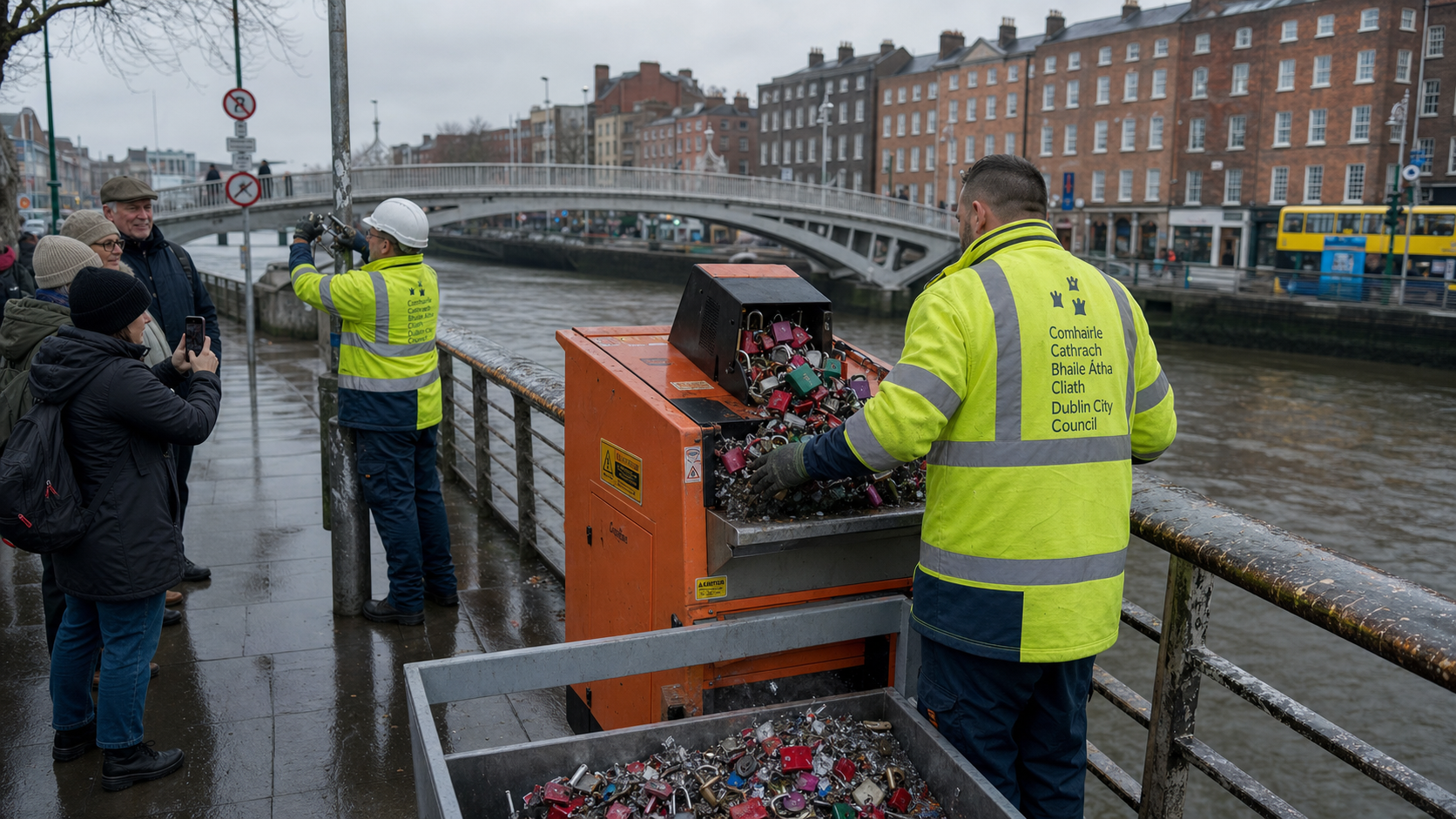
Dublin City Council has shredded more than 200 Airbnb-style key lockboxes that had been attached without authorisation to bicycle racks, lamp posts, and street signage across the city, in an escalating crackdown on the short-term letting market that has intensified since new national registration requirements came into force in May 2026.
Background
The proliferation of key lockboxes on Dublin's streets has been a visible symptom of the city's short-term letting boom. As Airbnb and similar platforms transformed the economics of property letting in the capital, hosts increasingly attached small metal boxes containing keys to public infrastructure, allowing guests to check in without the need for a physical handover. The practice, while convenient for hosts and guests, was never authorised by the council and created a range of problems that went well beyond mere aesthetics.
Dublin City Council identified the lockboxes as a public safety hazard — a trip hazard when attached at low levels, a potential source of contamination if left on the ground, and, in some cases, a tool for illicit activities. Local officials raised concerns that some boxes were being used for drug and money drops, a claim that added a criminal dimension to what might otherwise have seemed a minor regulatory issue.
The council endorsed a policy to remove and destroy the lockboxes in February 2025, implementing a six-week grace period before enforcement began in mid-April 2025. The campaign has continued since then, with council staff cutting and removing boxes from public property and shredding all removed items. The scale of the operation — more than 200 boxes destroyed — reflects the extent to which the practice had taken hold across the city.
Key Developments
The lockbox removal campaign has taken on new significance since May 2026, when new national registration requirements for short-term lets came into force under the Short-Term Letting and Tourism Bill. Under the new regime, all short-term lets must be registered with Fáilte Ireland, and digital platforms including Airbnb and Booking.com face penalties of up to 2% of their annual turnover for listing properties that fail to display a valid registration number.
The combination of the lockbox crackdown and the new registration requirements represents the most comprehensive regulatory intervention in the short-term letting market since the sector began to grow significantly in the mid-2010s. Dublin City Council has been among the most vocal advocates for stronger regulation, arguing that the unchecked growth of short-term letting has removed thousands of properties from the long-term rental market and contributed to the city's housing crisis.
Airbnb has stated that "self check-in" is a global feature intended to assist guests, while also noting its commitment to adhering to local regulations and investigating listings found to be in breach of such rules. The company has not publicly commented on the council's lockbox removal campaign.
Why It Matters
The lockbox issue is a microcosm of the broader tension between the short-term letting industry and the communities in which it operates. In Dublin, where the housing crisis has reached acute levels, the conversion of residential properties into de facto hotels has been a source of sustained community anger. Entire apartment blocks in areas such as Portobello, Rathmines, and the Docklands have been effectively removed from the long-term rental market, pushing rents higher and reducing the supply of homes available to workers and families.
The new registration requirements, which include a 90-day annual cap for short-term letting in towns and cities with populations exceeding 10,000 before planning permission becomes mandatory, represent a significant tightening of the regulatory framework. Whether enforcement will be sufficiently robust to change behaviour at scale remains to be seen, but the direction of travel is clear.
The council's willingness to physically destroy the lockboxes — rather than simply issuing notices or fines — sends a strong signal about the seriousness with which it views the issue. It is an approach that has been welcomed by housing campaigners and long-term residents who have watched their neighbourhoods change dramatically over the past decade.
Local Impact
In Dublin's inner city and inner suburbs, where short-term letting has been most concentrated, the crackdown has been welcomed by residents who have experienced the negative effects of high tourist footfall in residential areas. Neighbourhoods such as Temple Bar, the Liberties, and Stoneybatter have seen significant changes in their character as short-term lets have proliferated, and many long-term residents have expressed relief that the council is taking action.
For the estimated 10,000 to 15,000 properties currently operating as short-term lets in Dublin, the new registration requirements and the council's enforcement activity represent a significant change in the operating environment. Hosts who have been operating without authorisation face the prospect of fines and the removal of their listings from platforms, while those who comply with the new requirements will need to navigate a more complex regulatory landscape.
What's Next
Dublin City Council will continue its lockbox removal programme, with enforcement activity expected to intensify as the new registration requirements bed in. Fáilte Ireland is in the process of establishing the registration system and is expected to begin issuing registration numbers to compliant operators in the coming months. The council has indicated it will pursue legal action against persistent offenders, and the first prosecutions under the new regulatory framework are expected before the end of 2026.