Drumcree Standoff Enters Third Day as Garvaghy Residents Demand International Mediator
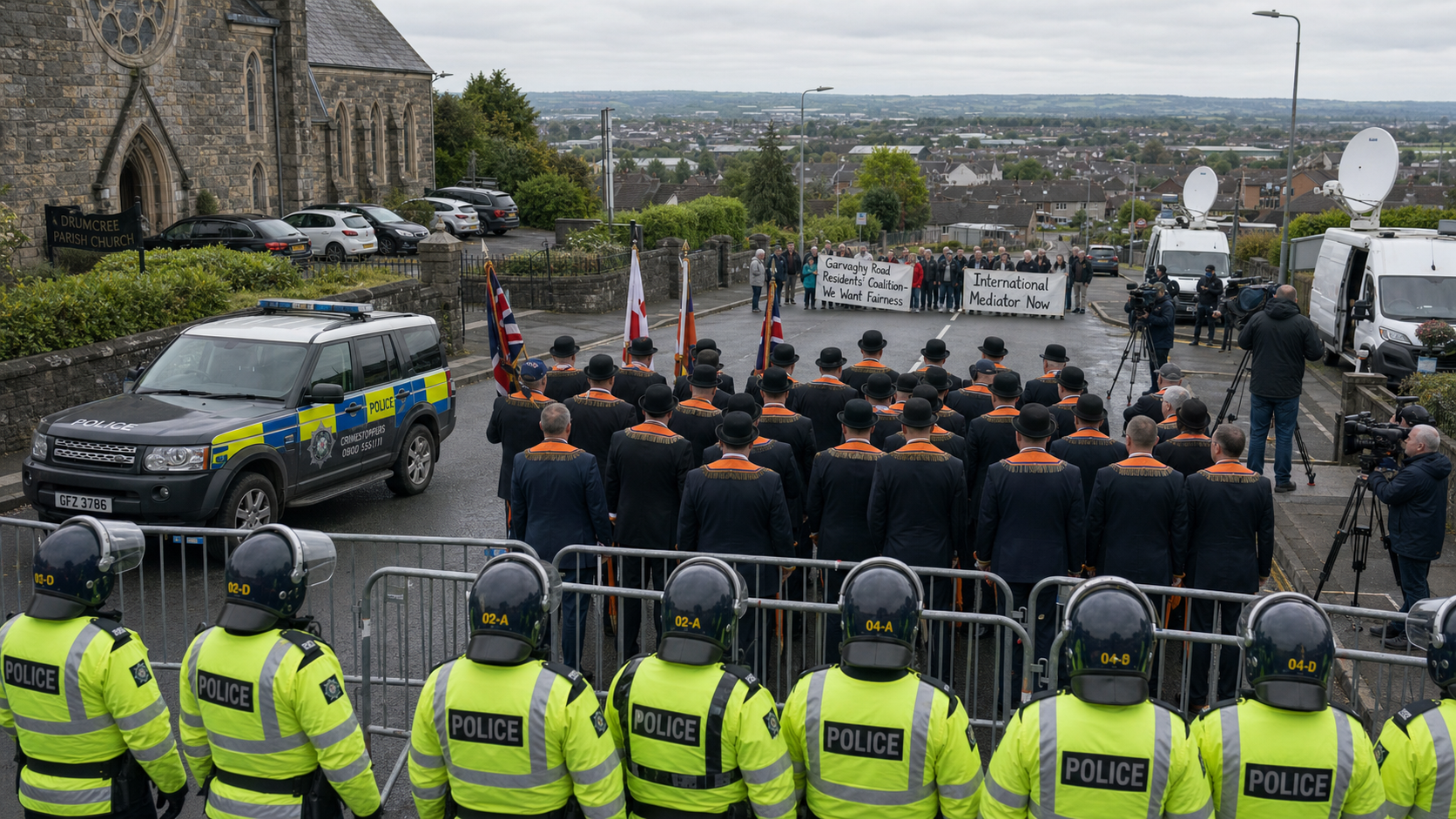
The Drumcree dispute entered its third consecutive day on Tuesday with no sign of resolution, as the Garvaghy Road Residents' Coalition agreed in principle to enter a formal mediation process but insisted that any mediator must be an experienced conflict resolution expert from outside Ireland and Britain — a condition that significantly narrows the field of potential candidates.
Background
The Drumcree dispute has its roots in the early 1990s, when the Orange Order's annual march from Drumcree Church to Portadown town centre via the Garvaghy Road became a flashpoint for some of the most serious disorder in Northern Ireland's post-ceasefire history. The Garvaghy Road is a predominantly nationalist residential area, and residents have long objected to what they describe as a triumphalist march through their community. The Parades Commission, established in 1998 specifically to adjudicate on contentious parades, had consistently refused to allow the march to proceed down the Garvaghy Road since that year — until a series of legal challenges this month overturned those restrictions.
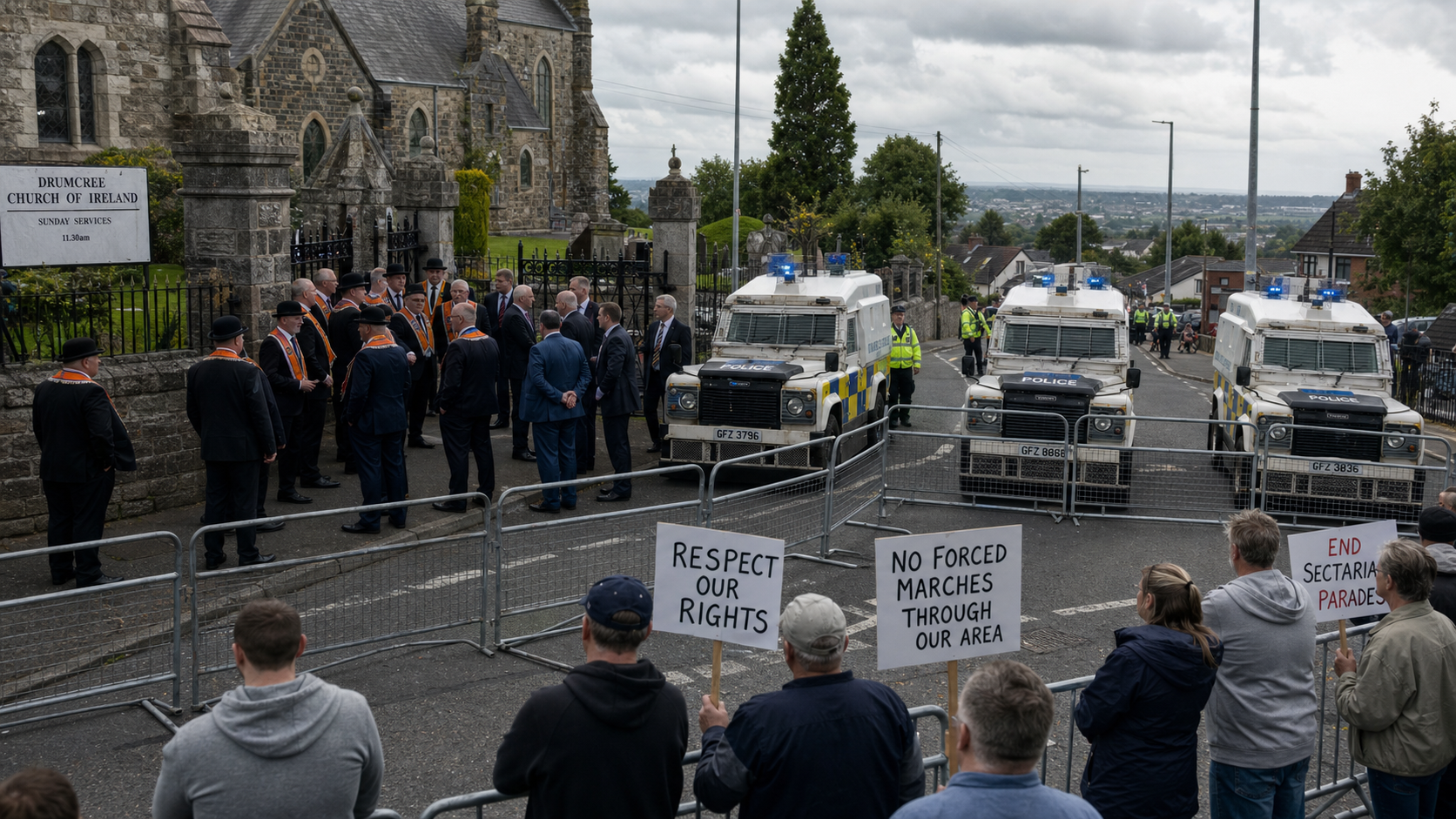
The Parades Commission's decision to grant conditional permission for a limited parade of 35 participants on Sunday, 27 September, triggered an immediate and large-scale blockade by residents and political figures, including First Minister Michelle O'Neill, who attended the protest in her capacity as Sinn Féin vice president. The parade was prevented from proceeding, and the 35 Orangemen have remained at Drumcree Church since Sunday, maintaining a vigil that has become a focal point for unionist and loyalist solidarity.
The standoff has reopened wounds that many in Northern Ireland had hoped were healing. The Drumcree disputes of the 1990s — which saw widespread rioting, road blockades across the province, and the deaths of three young brothers in an arson attack in Ballymoney — remain among the most traumatic episodes of the Troubles era. The return of the dispute, even in a different legal and political context, has generated profound anxiety among those who lived through that period.
Key Developments
Northern Ireland Secretary Sir Chris Bryant held talks with both the Orange Order and the Garvaghy Road Residents' Coalition on Tuesday, describing the discussions as "positive" and "constructive." Bryant, who returned from the Labour Party conference specifically to manage the crisis, has been attempting to broker a framework for dialogue that could lead to a sustainable resolution rather than a temporary de-escalation.
Breandán Mac Cionnaith, the long-standing leader of the Garvaghy Road Residents' Coalition, confirmed that residents were willing to enter a formal mediation process but set out a clear condition: the mediator must be an experienced conflict resolution expert from outside Ireland and Britain. Mac Cionnaith told reporters that the residents had no confidence in any mediator who might be perceived as having a stake in the outcome, and that the international dimension was essential to the credibility of any process.
The PSNI has faced criticism from both sides of the dispute. The Orange Order called for the resignation of Chief Constable Jon Boutcher and Assistant Chief Constable Ryan Henderson, arguing that the police failed to enforce the Parades Commission's determination. The Police Federation defended the force's restraint, noting that removing the large crowd of protesters would have required a level of force that would have jeopardised public safety and potentially inflamed the situation further.
Why It Matters
The Drumcree dispute is not simply a local planning disagreement about a parade route. It is a test of whether the institutions of the Good Friday Agreement — the Parades Commission, the power-sharing Executive, the rule of law — can manage the most contentious aspects of Northern Ireland's divided society without recourse to the kind of communal confrontation that characterised the 1990s. The fact that the First Minister of Northern Ireland attended a protest against a legally authorised parade has raised fundamental questions about the relationship between political leadership and the rule of law that will not be easily resolved.
The DUP's response — complaints to the Assembly's Commissioner for Standards, motions of no confidence, and demands for O'Neill's resignation — reflects the depth of unionist anger but also the limits of the political tools available to them. The power-sharing arrangements at Stormont are designed to prevent any single party from dominating, but they also make it extremely difficult to hold individual ministers to account for actions taken in their party rather than their governmental capacity.
Local Impact
In Portadown itself, the standoff has divided a town that has spent nearly three decades trying to move beyond the Drumcree disputes. Residents of the Garvaghy Road have maintained a continuous presence on the road since Sunday, with music sessions and community gatherings sustaining the protest. In the town centre and in the surrounding loyalist areas, there is a palpable sense of grievance that the Parades Commission's determination has not been enforced. Local businesses have reported a significant drop in footfall as the dispute has dominated the news cycle and deterred visitors from the area.
What's Next
The immediate priority for Sir Chris Bryant is to identify a credible international mediator who meets the residents' conditions and is acceptable to the Orange Order. The search for such a figure is likely to take days rather than hours, and in the meantime the standoff continues. The Parades Commission has indicated that it will keep the situation under review, and legal challenges from both sides remain possible. The Stormont Assembly is expected to debate the crisis when it returns from recess, with the DUP's motions of no confidence against the First Minister likely to dominate proceedings.