Drumcree Standoff Enters Diplomatic Phase as Parade Permission Expires and NI Secretary Seeks Resolution
The Drumcree dispute has entered a new and uncertain phase after the legal permission granted to the Orange Order to march along the Garvaghy Road in Portadown expired at midnight on Sunday, with Northern Ireland Secretary Sir Chris Bryant holding separate meetings with the five main political parties, police, and community representatives on Monday morning in an effort to find a path forward that does not destabilise the power-sharing institutions at Stormont.
Background
The Drumcree dispute is one of the most toxic and enduring flashpoints in Northern Ireland's post-conflict landscape. For most of the 1990s, the annual attempt by the Orange Order to march along the Garvaghy Road — a predominantly nationalist residential area in Portadown — triggered some of the worst sectarian violence seen since the height of the Troubles. The dispute was associated with 21 deaths and years of sustained community tension before a de facto ban on the route took effect in 1998, following the Parades Commission's determination that the march could not proceed.
That ban held for 28 years. In August 2026, a High Court ruling overturned a Parades Commission determination that had blocked the march, and the commission subsequently issued a new determination permitting a restricted parade of 35 Orangemen — with no bands — to proceed along the Garvaghy Road. The decision was met with immediate and fierce opposition from nationalist and republican communities, and from the Irish government, with Taoiseach Micheál Martin describing it as "incomprehensible and wrong."
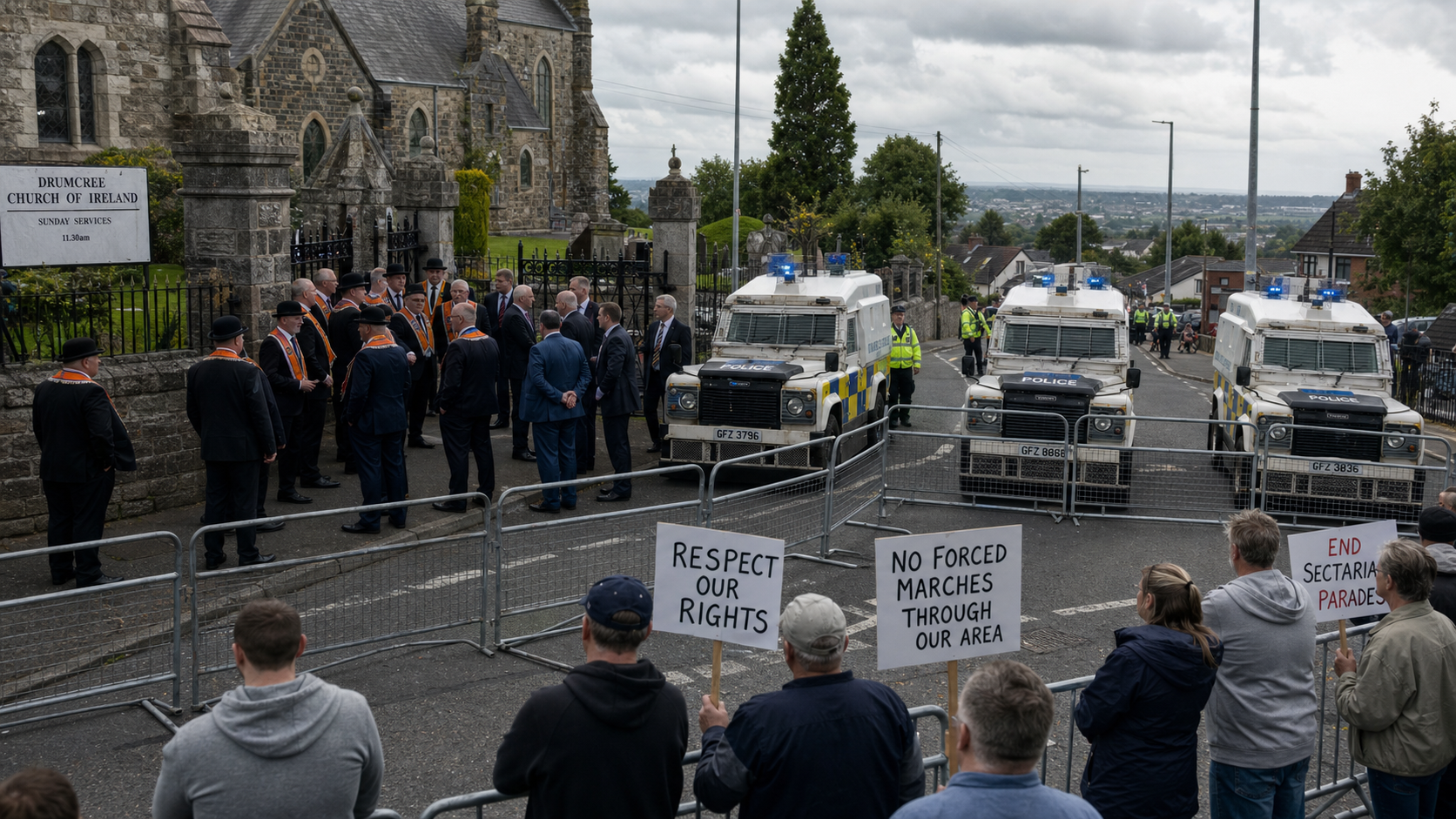
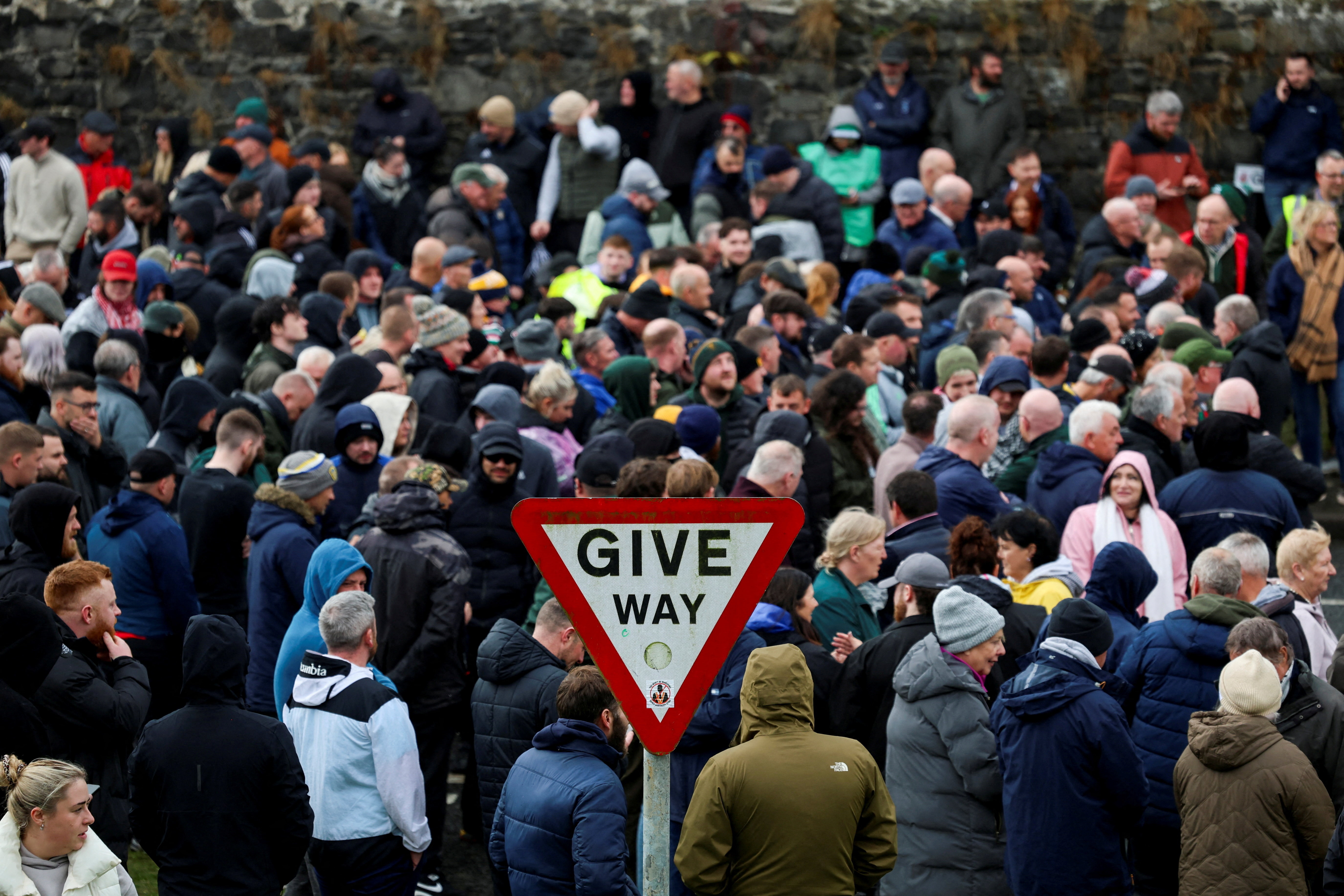
Over the weekend of 26-27 September, thousands of protesters — including First Minister Michelle O'Neill and Sinn Féin leader Mary Lou McDonald — gathered on the Garvaghy Road to physically block the parade. The PSNI deployed significant resources but was unable to guarantee the safety of the marchers, and the parade was effectively halted by the blockade. A series of emergency legal challenges in Belfast's High Court and Court of Appeal produced contradictory rulings before the Court of Appeal ultimately upheld the Parades Commission's determination.
Key Developments
By Sunday evening, the legal window for the parade had closed without the march proceeding. The Orange Order, which had attempted to move toward the route, was stopped by the PSNI on public safety grounds. Petrol bombs were thrown at police in Londonderry during the night, and schools in the Portadown area — including St John the Baptist's College and St John the Baptist PS Bunscoil Eoin Baiste — were closed on Monday due to safety concerns.
Sir Chris Bryant arrived in Belfast on Sunday and held talks with political leaders, police, and community representatives. He urged all sides to "double down on compromise" and warned against "relitigating" the past. The Orange Order must now submit a fresh application to the Parades Commission if it intends to attempt the parade again, a process that will take time and provide a window for political engagement.
The DUP's Gavin Robinson accused First Minister O'Neill of "breaking the law" by participating in the blockade, arguing that her presence at the protest was incompatible with her pledge of office. O'Neill rejected the characterisation, saying she had exercised her right as a citizen to stand with her community. British Prime Minister Andy Burnham called for calm, emphasising that Northern Ireland had made "big gains" that should not be jeopardised.
Why It Matters
The Drumcree crisis has exposed the fragility of Northern Ireland's political settlement in a way that few events in recent years have managed. The power-sharing executive at Stormont depends on a degree of mutual trust and respect between unionist and nationalist parties that the events of the past 72 hours have severely tested. The DUP's accusation that the First Minister broke the law, and Sinn Féin's counter-accusation that the Parades Commission's decision was itself illegitimate, represent a fundamental breakdown in the shared understanding of the rule of law that underpins the institutions.
The crisis also raises serious questions about the Parades Commission's capacity to manage contentious parades in the current political environment. The commission's determination was legally upheld, but it proved impossible to implement — a situation that undermines the authority of the regulatory framework that has managed parades disputes since the late 1990s. This is the third time in five years that a Parades Commission determination has been challenged in the courts, and the pattern suggests that the existing framework may require fundamental reform.
Local Impact
In Portadown itself, the events of the weekend have left deep wounds. Garvaghy Road residents described the experience of seeing thousands of people gather to defend their community as both empowering and deeply unsettling — a reminder of how quickly the ghosts of the 1990s can be summoned. Local businesses in the town centre reported significant disruption, and the closure of schools on Monday affected hundreds of families. The PSNI's deployment of 200 officers over the weekend placed considerable strain on policing resources across the wider Armagh and Portadown district.
What's Next
The Orange Order must submit a new application to the Parades Commission before any further attempt to march the Garvaghy Road can be made. Sir Chris Bryant has indicated that he will continue to engage with all parties in the coming days, and there is speculation that the British and Irish governments may jointly propose a mediation process similar to those used to resolve parades disputes in the 1990s. The Stormont Executive is expected to meet this week, and the question of whether the institutions can survive the political fallout from Drumcree will dominate the agenda.