Drumcree Dispute Reignites as Orange Order Vows to March Garvaghy Road After High Court Victory
The Drumcree parade dispute, one of the most bitterly contested flashpoints in Northern Ireland's recent history, has returned to the centre of political life after a High Court ruling quashed a Parades Commission decision restricting the Orange Order's annual march, with the Order now vowing to apply for a route along the Garvaghy Road for the first time in nearly three decades.
Background
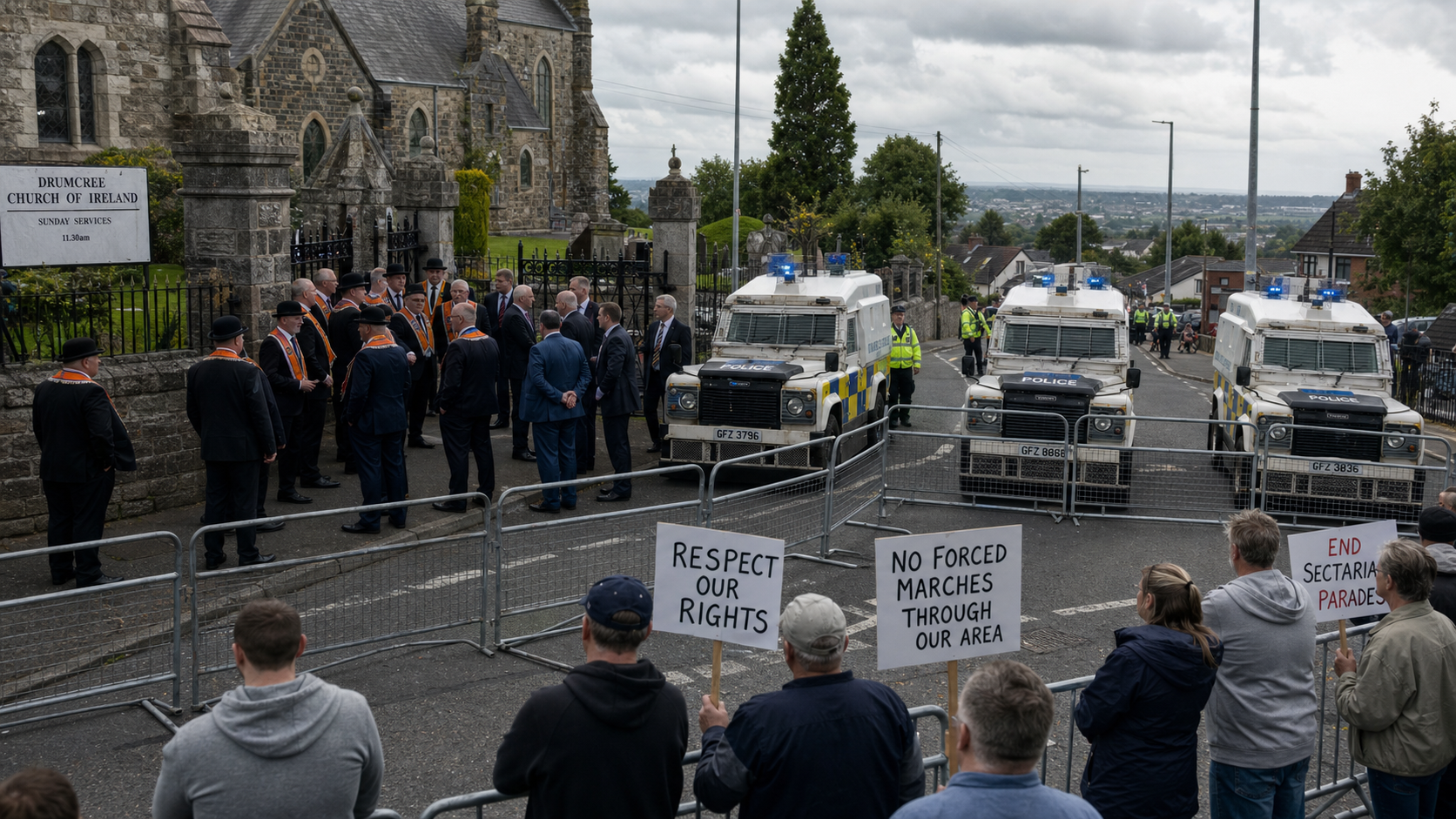
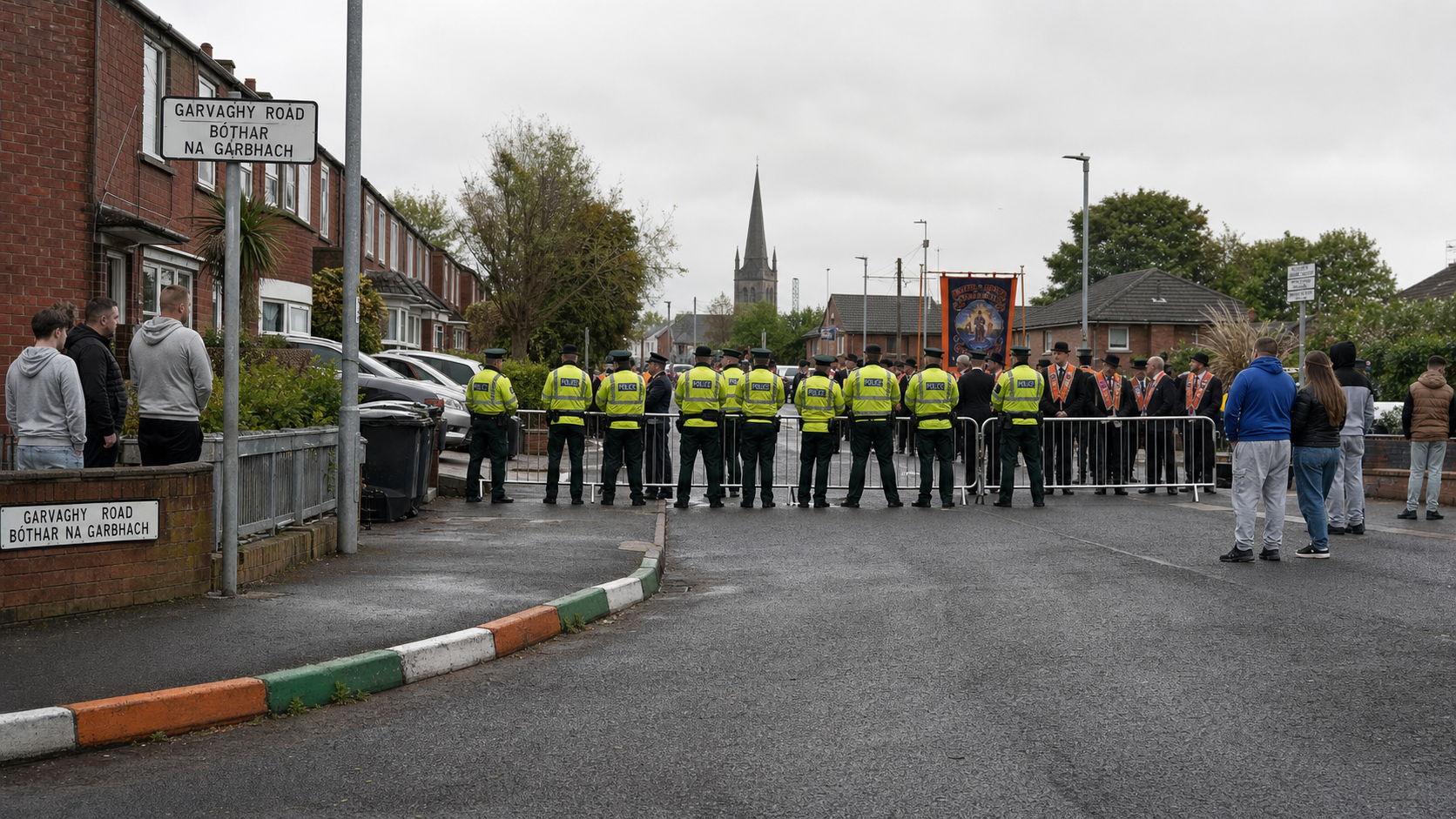
The Drumcree dispute has its roots in the Orange Order's insistence on marching its traditional route from Drumcree Church in Portadown through the predominantly Catholic Garvaghy Road. The conflict peaked in the 1990s, when annual standoffs between the Order and nationalist residents — backed by the Garvaghy Road Residents' Coalition — resulted in widespread rioting, road blockades, and multiple deaths. The most devastating incident occurred in 1998, when three young brothers — Richard, Mark, and Jason Quinn — were killed in an arson attack on their home in Ballymoney, an atrocity widely attributed to the sectarian atmosphere generated by the Drumcree standoff.
The Parades Commission was established in 1998 specifically to provide an independent mechanism for adjudicating on contentious parades. Since that year, it has consistently restricted the Orange Order from marching down the Garvaghy Road, a policy that has defined the dispute for nearly three decades. The Commission's decisions have been challenged in the courts on multiple occasions, but until now, those challenges have not succeeded in overturning the fundamental restriction.
The current legal challenge was brought by a member of the Orange Order who argued that the Commission had failed to follow proper procedures in issuing its most recent determination. Mr Justice McAlinden, presiding over the case, found that the final determination had not been signed off by all six members of the Commission before it was issued — a procedural error that he said "does not stand up to any scrutiny at all." The ruling quashed the Commission's decision, creating a legal vacuum around the regulation of the Drumcree parade.
Key Developments
In the wake of the High Court ruling, Portadown District Master Nigel Dawson confirmed that the Orange Order intends to apply for a future parade that would include the Garvaghy Road. Dawson stated that the Order believes it has a "legal right" to complete the route and will not enter into any deals or accept inducements to abandon this position. The Order's stance has been welcomed by unionist politicians, with DUP MP Carla Lockhart and TUV leader Jim Allister both describing the ruling as a "seismic victory."
Northern Ireland Secretary Sir Chris Bryant has responded by ordering an independent, judge-led review of the Parades Commission's decision-making procedures. The review, which is expected to commence this month and conclude by the end of November 2026, will focus on ensuring that future decisions are evidence-based, transparent, and procedurally robust. Bryant has maintained that the existing commissioners should remain in their posts during the review, rejecting unionist calls for their immediate resignation.
Residents of the Garvaghy Road have reacted with alarm and anger. Spokesperson Breandán Mac Cionnaith, who has been at the centre of the dispute since the 1990s, stated that the parade "finished" in 1998 and "will not be repeated." Sinn Féin councillor Catherine Nelson echoed this position, saying that a march along the Garvaghy Road is "off the table."
Why It Matters
The Drumcree dispute is not merely a local planning matter — it is a barometer of community relations in Northern Ireland more broadly. The events of the 1990s demonstrated with terrible clarity how a parade dispute can escalate into widespread violence and sectarian polarisation. The fact that the dispute has returned to the headlines nearly three decades after the worst of the violence is a reminder of how fragile the peace process remains in certain communities.
The procedural failure that led to the High Court ruling is particularly troubling because it suggests institutional weakness at the heart of the body charged with managing contentious parades. If the Parades Commission cannot ensure that its own determinations are procedurally sound, its authority to adjudicate on future disputes is inevitably called into question. The judge-led review ordered by the Secretary of State is a necessary response, but it will take time — and the Orange Order's stated intention to apply for a Garvaghy Road route means that the dispute will remain live throughout that period.
For nationalist and republican communities in Portadown, the prospect of the march returning to the Garvaghy Road is deeply distressing. The Garvaghy Road Residents' Coalition has consistently argued that the parade is experienced as an act of intimidation by the Catholic community living along the route, and that the trauma of the 1990s standoffs has never fully healed.
Local Impact
In Portadown, the ruling has heightened community tensions that had been relatively contained in recent years. Community relations workers in the town have reported increased anxiety among residents of the Garvaghy Road area, and local politicians from both communities have called for calm. The PSNI has indicated it is monitoring the situation closely and is in contact with community representatives on both sides. The Parades Commission, despite the legal challenge to its authority, has confirmed it will continue to process applications for parades in the normal way while the review is ongoing. Armagh City, Banbridge and Craigavon Borough Council has been briefed on the situation and is expected to discuss community relations implications at its next full council meeting.
What's Next
The judge-led review of the Parades Commission is expected to report by the end of November 2026. The Orange Order is expected to submit a formal application for a Garvaghy Road parade in the coming weeks, which will trigger a new determination process by the Commission. Any new determination will almost certainly face legal challenge from one side or the other. The Secretary of State has indicated he will consider the review's recommendations carefully before deciding on any structural changes to the Commission's operating procedures.