Disability Centre Had Faecal Matter on Ceilings and Rotten Food, HIQA Inspection Finds
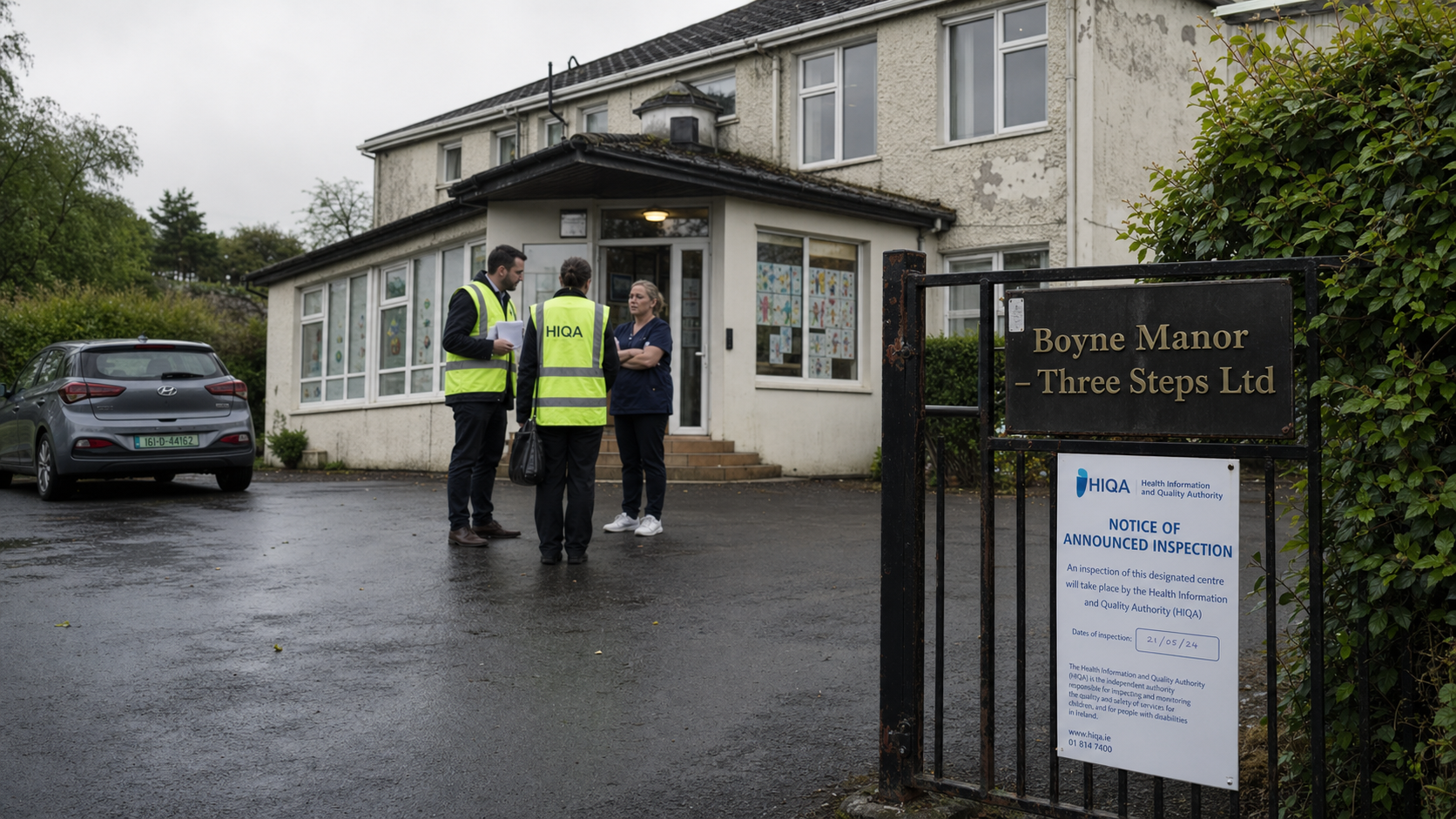
A designated centre for children and adults with disabilities in Ireland was found to have faecal matter on ceilings and furniture, rotten food, a lack of running water, and mould and insect infestations during a HIQA inspection, according to a report published on Tuesday. The inspection of Boyne Manor, operated by Three Steps Limited, identified 'significant concerns' regarding the quality and safety of care provided to residents, prompting the Health Information and Quality Authority's chief inspector to issue a notice of proposed decision to cancel the centre's registration. The findings represent some of the most serious failings identified by HIQA in a disability service in recent years.
Background
HIQA, the Health Information and Quality Authority, is the independent body responsible for monitoring and inspecting health and social care services in Ireland, including designated centres for people with disabilities. The authority conducts both announced and unannounced inspections of residential services, assessing them against the Health Act 2007 regulations and the National Standards for Residential Services for Children and Adults with Disabilities.
The inspection of Boyne Manor took place in late 2025, with the findings published as part of HIQA's ongoing programme of transparency around the quality of disability services. The centre is operated by Three Steps Limited, a private provider of residential services for people with disabilities. The nature and severity of the findings at Boyne Manor place it among the most serious cases of regulatory non-compliance identified by HIQA in recent years.
Ireland's disability services sector has been under sustained scrutiny in recent years, with a series of high-profile cases highlighting the gap between the standards that residents are entitled to expect and the reality of care in some settings. The HSE has been working to transition people with disabilities from congregated settings to community-based living, but the pace of that transition has been criticised as too slow, and the quality of care in some residential settings has remained a persistent concern.
Key Developments
The HIQA inspection of Boyne Manor found conditions that inspectors described as representing a fundamental failure of the duty of care owed to residents. The presence of faecal matter on ceilings and furniture, rotten food, a lack of running water, and mould and insect infestations indicated a breakdown in basic hygiene and maintenance standards that should never be present in any residential care setting, let alone one housing vulnerable people with disabilities.
Following the initial inspection, HIQA's chief inspector issued a notice of proposed decision to cancel the centre's registration — the most serious regulatory sanction available to the authority. A follow-up inspection conducted in March 2026 found that some progress had been made in areas including staffing and infection control, but identified that key actions relating to fire safety and governance remained non-compliant. The centre's registration status remains under review.
The findings at Boyne Manor are not isolated. HIQA's 2026 inspection programme has identified significant concerns at a number of other disability services, including issues of safeguarding, management failures, and inappropriate living arrangements. At a centre operated by St Michael's House, inspectors found that residents were not protected from abuse and that incompatibility issues between residents were negatively impacting their welfare.
Why It Matters
The conditions found at Boyne Manor represent a profound failure of the systems that are supposed to protect some of the most vulnerable people in Irish society. People with disabilities who live in residential care settings are entirely dependent on the providers of those services for their safety, dignity, and wellbeing. When those providers fail — as Three Steps Limited appears to have done at Boyne Manor — the consequences for residents can be severe and lasting.
The case also raises questions about the adequacy of oversight mechanisms. HIQA conducts inspections, but the frequency and depth of those inspections is constrained by resources, and the conditions found at Boyne Manor suggest that the deterioration in standards had been occurring over a significant period before inspectors identified it. The question of how such conditions were allowed to develop — and what systemic changes are needed to prevent similar failures in future — is one that the Department of Health and the HSE will need to address.
Ireland has made significant commitments to the rights of people with disabilities under the UN Convention on the Rights of Persons with Disabilities, which it ratified in 2018. The conditions found at Boyne Manor are a stark reminder of the gap between those commitments and the lived reality of some disabled people in residential care.
Local Impact
The residents of Boyne Manor and their families have been directly affected by the failures identified in the HIQA inspection. For families who entrust the care of their loved ones to residential services, the knowledge that conditions of this kind can exist in a regulated setting is deeply distressing. The HSE has been working with the centre's management to address the identified failings, and the welfare of current residents is being monitored closely. Disability advocacy organisations have called for a comprehensive review of oversight arrangements for private disability service providers.
What's Next
The notice of proposed decision to cancel Boyne Manor's registration will be subject to a formal process during which the provider has the opportunity to make representations to HIQA. If the cancellation proceeds, alternative arrangements will need to be made for the centre's residents. HIQA has indicated that it will continue to monitor the centre closely in the interim. The Department of Health is expected to be asked to respond to the findings in the Oireachtas when it returns from recess in September.