Denis Donaldson Murder: Man Charged After Extradition from Scotland
A man has appeared before the Special Criminal Court in Dublin charged with the 2006 murder of Denis Donaldson, a former IRA member and MI5 informant whose killing in a remote Donegal cottage shocked Ireland and raised profound questions about the peace process and the activities of state agents — nearly two decades after the shotgun attack that ended his life.
Antoin Duffy, a 49-year-old from County Donegal, was extradited from Scotland on 30 March 2026 and charged with six offences, including the murder of Donaldson between 3 and 4 April 2006, possession of a shotgun and ammunition with intent to endanger life, and the attempted murder of another individual in 2007. Duffy had just completed a prison sentence in Scotland for a conspiracy to murder members of the Ulster Defence Association (UDA).
Background
Denis Donaldson's story is one of the most dramatic episodes of infiltration and betrayal to emerge from the Northern Ireland conflict. Born in Belfast and raised in the nationalist enclave of Short Strand, Donaldson joined the republican movement in the mid-1960s and gained a reputation as a local hero for his role in the 1970 gun battle at St Matthew's Chapel. He was interned at Long Kesh in the 1970s, where he befriended future hunger striker Bobby Sands, and rose through the ranks of the Provisional IRA before becoming a key political operative for Sinn Féin.
By the early 2000s, Donaldson had been appointed administrator for Sinn Féin's group in the Northern Ireland Assembly at Stormont — the eyes and ears of the party leadership within the power-sharing institutions. Throughout this rise, however, he was leading a secret life. In his public confession in December 2005, he admitted he had been recruited by British intelligence in the 1980s "after compromising himself during a vulnerable time," and had been a paid agent for the RUC Special Branch and later MI5 for over two decades, receiving a regular monthly salary and incentive payments for valuable intelligence.
Key Developments
The "Stormontgate" affair was the political scandal that ultimately led to Donaldson's unmasking. In October 2002, the PSNI raided Sinn Féin's offices at Stormont, arresting Donaldson and others on charges of possessing documents useful to terrorists. The scandal shattered political trust and the British government suspended the Northern Ireland Assembly just ten days later, restoring direct rule from London. On 8 December 2005, all charges were dropped — the Public Prosecution Service stating a trial would not be "in the public interest" — and eight days later, Gerry Adams announced that Donaldson had confessed to being a British agent. Donaldson claimed the Stormontgate spy ring was "a scam and a fiction" concocted by Special Branch to destabilise the political institutions.
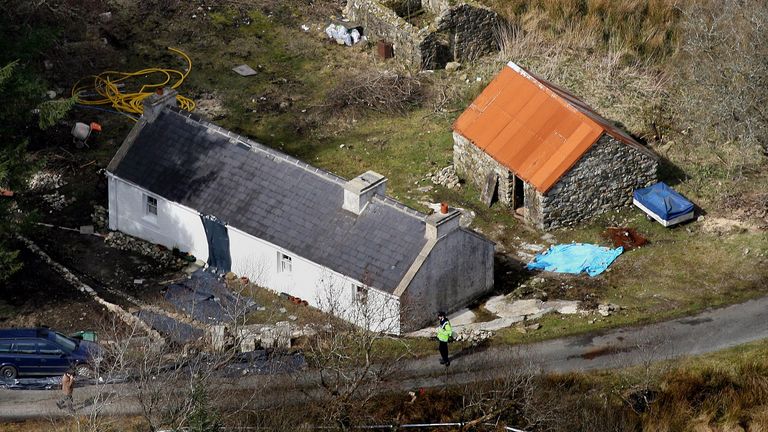
Following his exposure, Donaldson went into hiding at a remote, pre-Famine era cottage near Glenties, County Donegal, with no electricity or running water. Despite Garda warnings of threats against his life, he declined special protection. On 4 April 2006, he was found dead inside the cottage, killed by a shotgun blast. The Real IRA claimed responsibility in 2009, though Donaldson's family has consistently disputed this and campaigned for a full public inquiry. A diary found at the scene is held by police and is expected to be key evidence in any trial.
Why It Matters
The charging of a suspect nearly 20 years after the murder represents a significant development in a case that has cast a long shadow over Irish political life. The Donaldson affair sent shockwaves through the republican movement, raising profound questions about trust, security, and the extent of British intelligence penetration of Sinn Féin during the peace process. For Donaldson's family and for those who have followed the case, the prospect of a trial offers the possibility of answers about one of the most mysterious and consequential killings of the post-Good Friday Agreement era. The case will be heard before the non-jury Special Criminal Court in Dublin, reflecting the sensitivity and security dimensions of the proceedings.
The investigation has been complex and protracted. A 2016 BBC Spotlight programme featured claims that Gerry Adams had sanctioned the killing — allegations Adams vehemently denied and which he successfully challenged in a defamation case, being awarded €100,000 in 2025. The case has also raised broader questions about the use of informants by the British state during the Troubles and the extent to which state agents were involved in serious crimes.
Local Impact
For communities in the Republic of Ireland and Northern Ireland, the Donaldson case remains a deeply sensitive chapter in the legacy of the Troubles. The prospect of a trial will inevitably reopen questions about the extent of British intelligence operations within republican politics during the peace process — questions that many families of victims and survivors have long demanded answers to. The case is also significant for the Garda Síochána, whose two-decade investigation has now produced a murder charge, demonstrating the force's commitment to pursuing justice in even the most politically complex cases. Donaldson's family has consistently sought a full public inquiry into the circumstances surrounding his death, and the trial may not resolve all of the outstanding questions about who ordered the killing and why.
What's Next
The case is expected to proceed through the courts in the coming months. Further details are available at The Irish Times and The Guardian's coverage of the original Donaldson confession.