Defective Blocks Crisis: Up to 20,000 Irish Homes at Risk as New Research Expands Scale of Scandal
New research presented to the Oireachtas in June 2026 suggests that up to 20,000 Irish homes may be affected by defective concrete blocks — more than double the 9,500 previously estimated by the County and City Management Association — with counties Donegal, Clare, Limerick, and Mayo facing the greatest exposure, and homeowners in affected areas continuing to face the devastating prospect of having their homes demolished.
Background
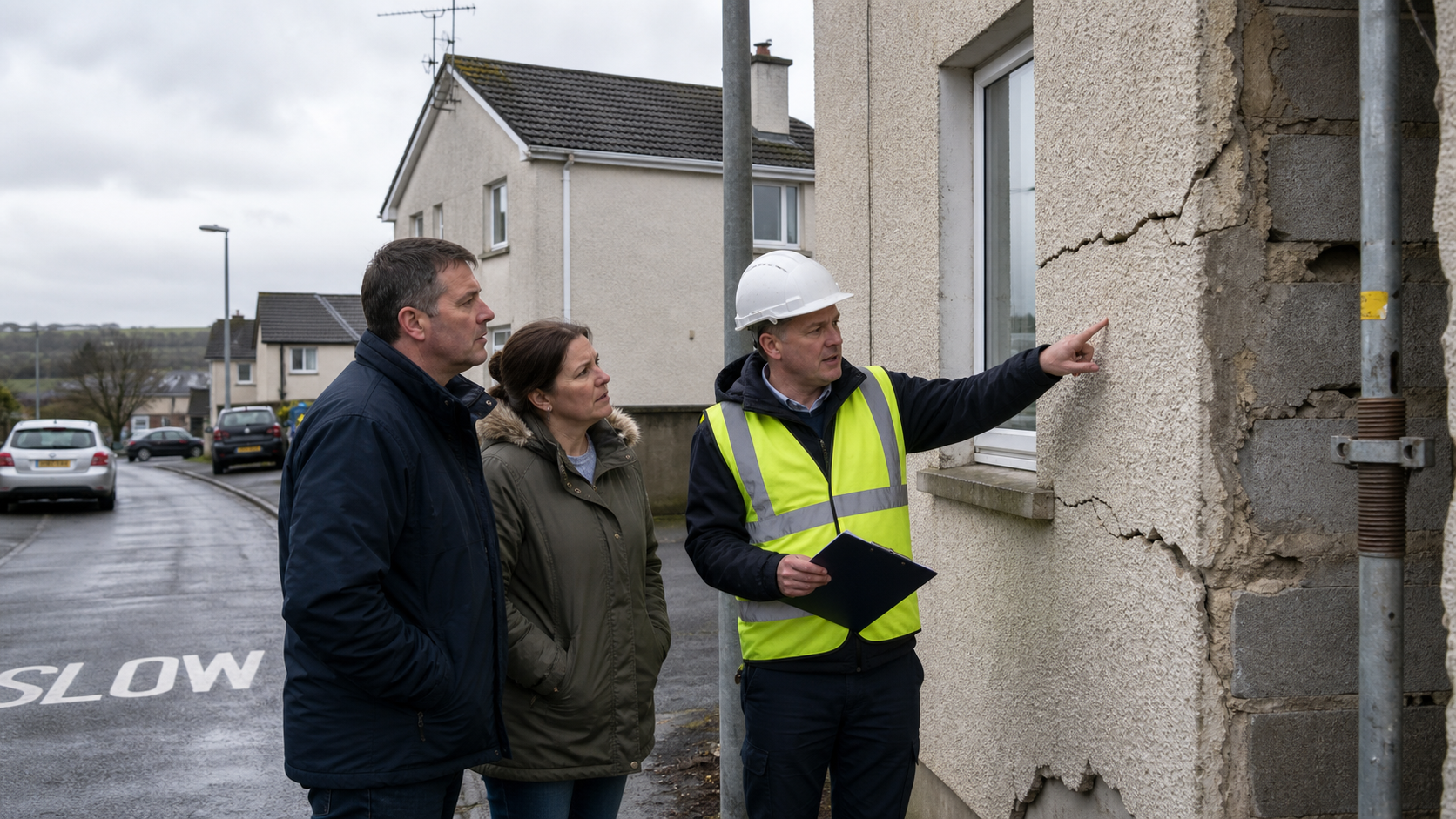
The defective concrete block crisis — often referred to as the mica scandal, after the mineral that is the primary cause of the problem in Donegal — is one of the most serious housing crises in the history of the Irish state. The problem arises from the use of concrete blocks containing excessive levels of deleterious materials, specifically mica and reactive sulphides such as pyrrhotite, which trigger internal chemical reactions that cause the blocks to expand, crack, and ultimately lose their structural integrity. Homes built with these blocks are literally crumbling from the inside out.
The crisis was first identified in County Donegal around 2011, where thousands of homes built in the 1990s and 2000s began showing signs of structural failure. The scale of the problem in Donegal — where the local quarrying industry had supplied defective blocks to builders across the county — was initially shocking, but it has since become clear that the issue extends far beyond Donegal. Counties Mayo, Clare, Limerick, and Sligo have all been identified as significantly affected, and more recent research suggests that homes in Carlow, Wexford, and Dublin may also be at risk.
The human cost of the crisis has been enormous. Families have been forced to watch their homes — often the most significant financial investment of their lives — deteriorate beyond repair. Many have been displaced from their homes for months or years while remediation work is carried out, and some have faced the additional trauma of discovering that their homes cannot be repaired and must be demolished entirely. The emotional and financial toll on affected families has been severe, and the pace of the government's response has been a source of intense frustration and anger.
Key Developments
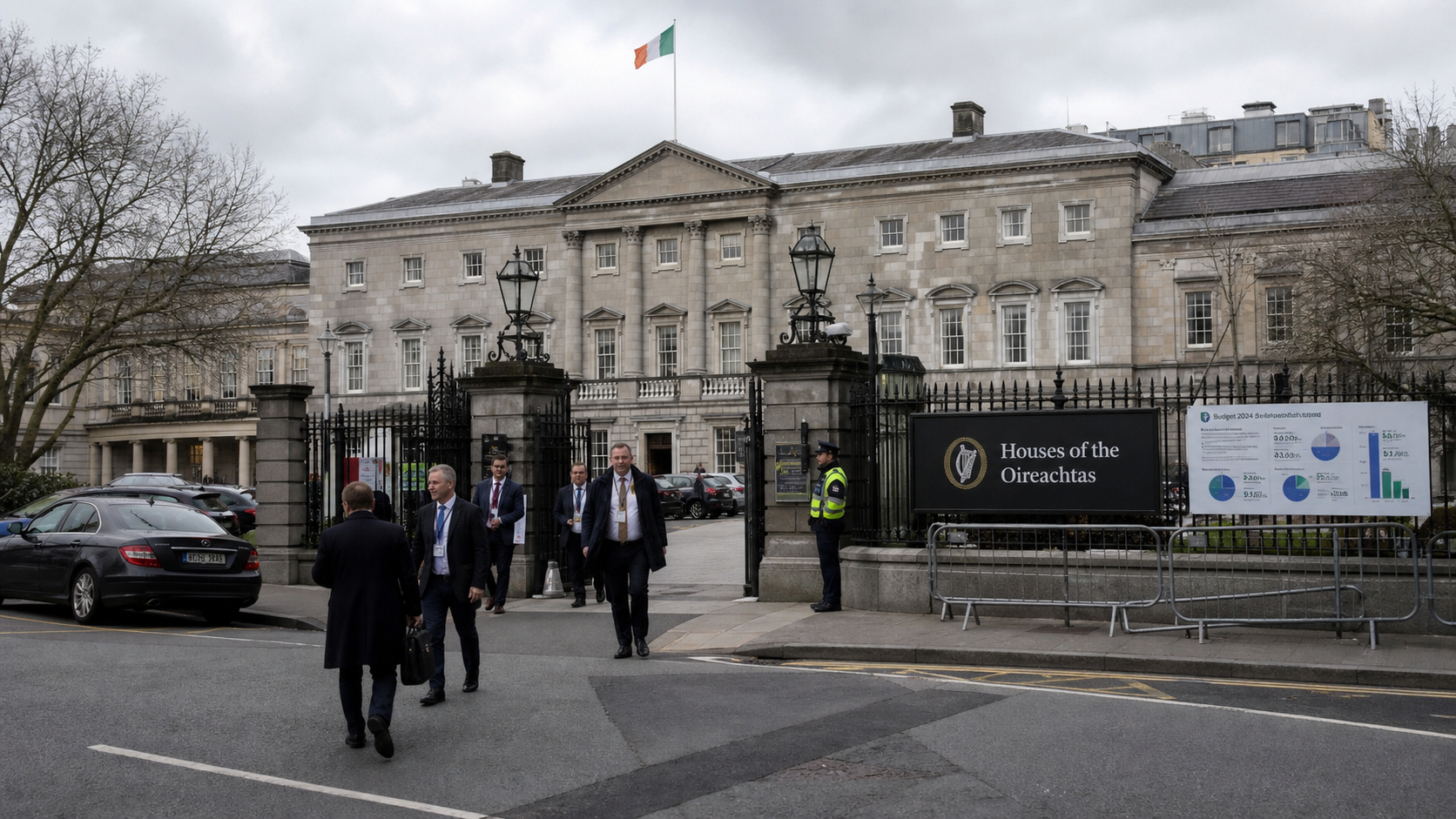
Research conducted by British-based consultancy Petrolab and presented to the Oireachtas in June 2026 suggests that the number of high-risk homes could reach 20,000 — significantly higher than the 9,500 estimated by the County and City Management Association in February 2026. The updated projections suggest up to 12,000 homes in Donegal, 4,500 in Clare, 2,500 in Limerick, and 1,000 in Mayo may be impacted, with the actual figures potentially higher as testing of additional properties continues.
The government's Enhanced Defective Concrete Blocks Grant Scheme, which provides financial support for the remediation or rebuilding of affected homes, has been expanded in recent months. The maximum grant cap was increased to €420,000 in October 2024, and the scheme is now available in counties Clare, Donegal, Limerick, Mayo, and Sligo. The National Standards Authority of Ireland published a revised testing standard, I.S. 465:2026, which is intended to provide a more comprehensive assessment of home conditions, and the Minister for Housing has commenced a statutory review of the 2022 Act to incorporate the impacts of this new standard.
However, advocates for affected homeowners argue that the pace of remediation remains far too slow. Many families have been waiting years for their applications to be processed, and the construction industry's capacity to carry out the necessary remediation work has been a persistent bottleneck. Calls for an independent international review of the science of retaining foundations in affected homes have been made in the Oireachtas, reflecting ongoing uncertainty about the best technical approach to remediation.
Why It Matters
The defective blocks crisis is a scandal in the truest sense of the word — a failure of regulation, oversight, and accountability that has caused enormous harm to thousands of Irish families. The blocks that are destroying these homes were produced by quarries that were operating under Irish regulatory frameworks, and the failure of those frameworks to prevent the use of defective materials represents a systemic failure of the state. The families affected are not responsible for the crisis; they bought homes in good faith, often with mortgages that they are still repaying, and they are now facing the prospect of losing those homes through no fault of their own.
The expansion of the estimated number of affected homes to 20,000 makes the crisis even more urgent. At the current pace of remediation, it will take many years to address all affected properties, and in the meantime, families are living in homes that are deteriorating around them. The government's commitment to the grant scheme is welcome, but the scale of the problem demands a more ambitious and accelerated response.
Local Impact
In County Donegal, where the crisis has been most acute and most visible, the human stories behind the statistics are deeply moving. Families in towns and villages across the county — from Letterkenny to Buncrana, from Dungloe to Donegal town — have had their lives upended by the discovery that their homes are structurally compromised. In Clare, the crisis has been particularly severe in the Ennis area, where a significant number of homes built in the 1990s and 2000s have been found to contain defective blocks. In Limerick, the affected areas include both urban and rural properties, with some families in the county facing the prospect of demolition and rebuilding.
What's Next
The Minister for Housing is expected to publish the outcome of the statutory review of the 2022 Act in the autumn, incorporating the new I.S. 465:2026 testing standard. Advocates are calling for the review to result in a significant expansion of the grant scheme's scope and a substantial increase in the resources available for remediation. The Oireachtas housing committee is expected to hold further hearings on the crisis in September, and opposition parties have indicated that they will continue to press the government for a more ambitious response.