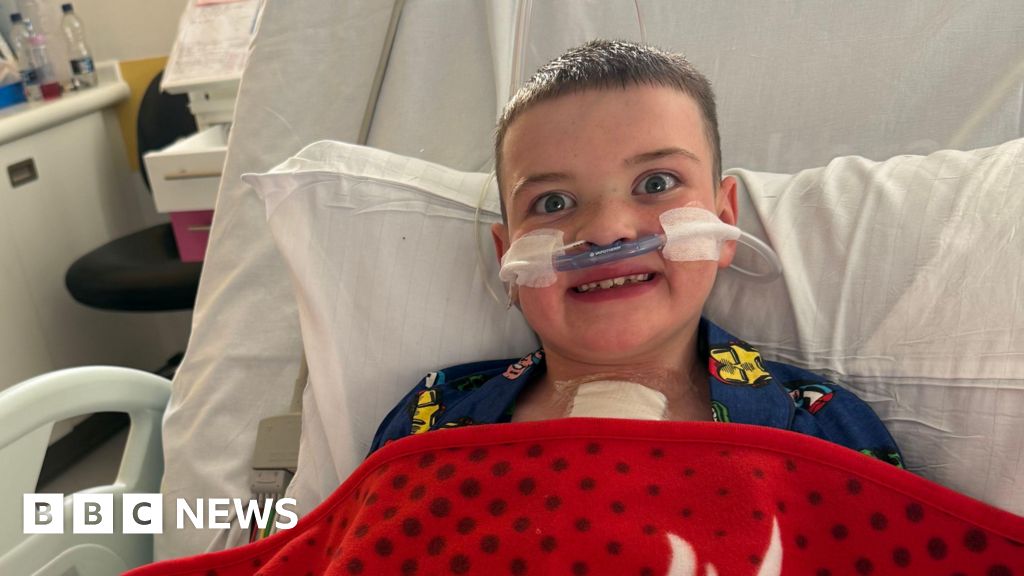
Dáithí Mac Gabhann Walks Out of Hospital to 'Eye of the Tiger' After Landmark Heart Transplant
Nine-year-old Dáithí Mac Gabhann, the West Belfast boy whose family's tireless campaign reshaped organ donation legislation across Northern Ireland, was discharged from the Freeman Hospital in Newcastle upon Tyne on Tuesday, August 4, walking out of Ward 23 to a corridor lined with applauding staff as the opening bars of 'Eye of the Tiger' rang through the building — a moment that brought tears to the eyes of everyone who has followed his extraordinary journey.
Background
Dáithí was born in 2016 with hypoplastic left heart syndrome, a severe congenital condition in which the left side of the heart fails to develop properly, leaving the organ unable to pump blood effectively around the body. From his earliest days, his parents Máirtín Mac Gabhann and Kellie Harkin faced the reality that their son would require a heart transplant to survive — and that the wait for a suitable donor could stretch for years.
What followed was one of the most remarkable advocacy campaigns in recent Irish history. Máirtín and Kellie, both from the Gaeltacht community in West Belfast, channelled their anguish into action, lobbying Stormont politicians with a persistence that ultimately bore fruit. In June 2023, the Northern Ireland Assembly passed Dáithí's Law, establishing a soft opt-out system for organ donation — meaning that adults are presumed to consent to donation unless they have registered an objection. The legislation was a direct consequence of the Mac Gabhann family's campaign, and it is expected to save dozens of lives annually.
The wait for a donor heart continued even after the law passed, stretching to eight years in total. Throughout that period, Dáithí remained a symbol of hope and resilience, his story shared across social media and in the corridors of Stormont and Leinster House alike. When the call finally came in July 2026, the relief felt across both communities on the island was palpable.
Key Developments
The transplant surgery was performed at the Freeman Hospital in Newcastle upon Tyne — the specialist centre that handles the most complex paediatric cardiac cases from across the United Kingdom and Ireland — in July 2026. The procedure was successful, and Dáithí's recovery, while described by his father as a "rollercoaster," progressed with remarkable speed.
On Tuesday, just two weeks after the operation, Dáithí was formally discharged from Ward 23. Hospital staff lined the corridor to applaud as he walked out, with the Rocky anthem 'Eye of the Tiger' providing a soundtrack that felt entirely appropriate for a boy who has fought so hard for so long. His father Máirtín noted that the physical transformation in his son had been striking — the return of natural pink colouring to his lips and skin, a visible sign that his new heart was doing its work.
The family expressed profound gratitude to the donor and their family, whose generosity in the most devastating of circumstances made Dáithí's recovery possible. They also paid tribute to the medical team at the Freeman, describing them as having given their son hope when hope was in short supply.
Why It Matters
Dáithí's discharge is not merely a personal milestone for one family in West Belfast — it is a moment of genuine national significance. His case has done more to shift public attitudes towards organ donation in Northern Ireland than any government campaign could have achieved. The soft opt-out system introduced by Dáithí's Law mirrors legislation already in place in the Republic of Ireland, Scotland, Wales, and England, and is projected to increase the pool of available donor organs substantially over the coming years.
The story also carries a deeper resonance in the context of cross-community relations. The Mac Gabhann family's campaign drew support from across the political and sectarian divide in Northern Ireland — a reminder that shared humanity can transcend the divisions that so often dominate public discourse. Politicians from the DUP, Sinn Féin, Alliance, the SDLP, and the UUP all backed the legislation, a degree of consensus that is rare at Stormont.
For the wider organ donation community, Dáithí's recovery will serve as a powerful reminder of what is at stake when families make the decision to donate. Every year, hundreds of people across Ireland and Northern Ireland die waiting for transplants that never come. His story, and the law that bears his name, may yet save many of them.
Local Impact
In West Belfast, where the Mac Gabhann family are rooted in the Irish-speaking community, the news of Dáithí's discharge was greeted with enormous joy. The family's journey has been followed closely by neighbours, friends, and the broader Gaeltacht community, many of whom have supported fundraising efforts and awareness campaigns over the years. The Belfast Health and Social Care Trust, which oversees paediatric services in the city, has pointed to Dáithí's case as an example of the life-saving potential of the new opt-out donation system. Families across the five health trust areas of Northern Ireland will be watching his continued recovery with hope.
What's Next
Dáithí and his family will remain in Newcastle for approximately three further weeks to allow for close monitoring and rehabilitation before returning to Belfast. The post-transplant period requires careful management of immunosuppressant medication and regular cardiac assessments to ensure the new heart is functioning well and that the body is not rejecting the organ. His medical team at the Freeman Hospital will remain closely involved in his care, with regular check-ups expected for the foreseeable future. The family has indicated they look forward to the day Dáithí can return to school and to the ordinary rhythms of childhood that his condition has so long denied him.