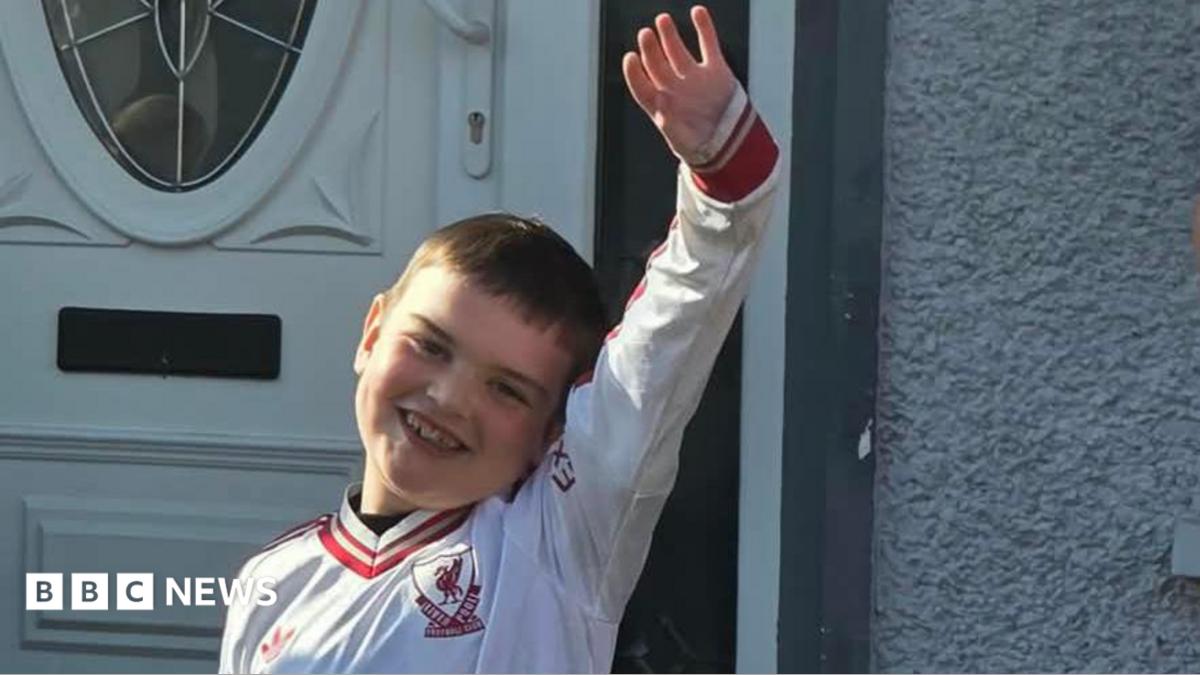
Dáithí Mac Gabhann Returns Home to West Belfast After Successful Heart Transplant
Dáithí Mac Gabhann, the nine-year-old boy from west Belfast whose family's extraordinary campaign for organ donation reform changed the law across Northern Ireland, has returned home to Glenalina following a successful heart transplant at the Freeman Hospital in Newcastle upon Tyne — ending an eight-year wait that captivated the entire island of Ireland and beyond.
Background
Dáithí was born in 2016 with hypoplastic left heart syndrome, a severe congenital condition in which the left side of the heart fails to develop properly. From infancy, his parents Máirtín and Seph Mac Gabhann were told that their son would require a heart transplant to survive. What followed was not merely a medical journey but a sustained, public campaign that would ultimately reshape how Northern Ireland approaches organ donation.
The Mac Gabhann family became one of the most recognisable in Irish public life, appearing at Stormont, at Croke Park, and on television screens across the country as they advocated for an opt-out system of organ donation. Their campaign, conducted with remarkable grace and determination, gathered cross-community and cross-party support in a jurisdiction not always known for political consensus. In June 2023, Dáithí's Law was enacted, establishing a soft opt-out system for organ donation in Northern Ireland — meaning that adults are presumed to have consented to donation unless they have registered an objection.
The law bore Dáithí's name, but its impact extends far beyond one family. Transplant specialists estimate that the change in the legal framework will, over time, significantly increase the pool of available donor organs in Northern Ireland, saving lives that would otherwise be lost to the waiting list. For the Mac Gabhann family, however, the personal campaign had a more immediate and urgent dimension: their son still needed a heart.
Key Developments
The transplant surgery took place in July 2026 at the Freeman Hospital in Newcastle upon Tyne, one of the United Kingdom's leading centres for paediatric cardiac surgery. The Freeman has performed more heart transplants than any other hospital in the UK and is regarded internationally for its expertise in complex congenital heart disease. Dáithí's procedure was successful, and his recovery in the weeks that followed was described by his family as remarkable.
On 4 August, Dáithí was discharged from Ward 23 of the Freeman to a standing ovation from nursing and medical staff, departing to the strains of "Eye of the Tiger" — a moment that was shared widely on social media and drew an outpouring of emotion from across Ireland and the Irish diaspora. The family remained in Newcastle for a further period of recovery before making the journey back to Belfast.
His return to Glenalina in west Belfast was met with the kind of welcome that the community reserves for its own. Neighbours lined the street, friends gathered, and the family expressed profound gratitude to the donor and the donor's family — a family who, in their own moment of grief, made the decision that gave Dáithí his future. Máirtín Mac Gabhann said the family would continue to advocate for organ donation, even as their personal campaign for a heart for their son had reached its conclusion.
Why It Matters
The return of Dáithí Mac Gabhann to his home is more than a personal milestone — it is a moment of genuine public significance for Northern Ireland. The campaign that bore his name demonstrated that civic advocacy, conducted with dignity and persistence, can change law and save lives. It is worth noting that Northern Ireland's opt-out system, introduced in 2023, followed similar legislation in Wales (2015), England (2020), and Scotland (2021), completing a UK-wide shift in the legal framework for organ donation.
The Mac Gabhann case also illustrates the particular challenges facing paediatric transplant patients. Children waiting for donor hearts face a smaller pool of compatible donors, longer average waiting times, and greater clinical complexity than adult recipients. Dáithí's eight-year wait, while agonising for his family, was not unusual in the context of paediatric cardiac transplantation. The opt-out system is expected to improve outcomes over time, but the benefits will take years to fully materialise in the statistics.
For the broader Irish public, the story carries a message about the power of community and the importance of registering organ donation wishes — or, under the new opt-out framework, of ensuring that family members are aware of one's intentions. Transplant Ireland has reported increased public engagement with organ donation since the Mac Gabhann campaign began.
Local Impact
In west Belfast, the return of Dáithí to Glenalina was felt as a community celebration. The area, which has a strong tradition of community solidarity, rallied around the Mac Gabhann family throughout the years of waiting. Local schools, GAA clubs, and community organisations had all played their part in raising awareness of Dáithí's story and the broader cause of organ donation reform. The Belfast Health and Social Care Trust, which covers the area, has noted that awareness of organ donation has increased significantly in the city in recent years, a trend that clinicians attribute in part to the public profile of the Mac Gabhann campaign.
For families across Northern Ireland who are currently waiting for transplants — whether heart, kidney, liver, or lung — Dáithí's homecoming offers something that is difficult to quantify but essential to sustain: hope.
What's Next
Dáithí will require ongoing monitoring and medical follow-up as part of his post-transplant care, a process that typically involves regular check-ups at the Freeman Hospital and with the Belfast Health and Social Care Trust's paediatric cardiology team. His family has indicated that they intend to continue their advocacy work around organ donation, with a particular focus on encouraging families to have conversations about their wishes. The first anniversary of Dáithí's Law will be marked in June 2027, and the Mac Gabhann family are expected to play a central role in events marking that milestone.