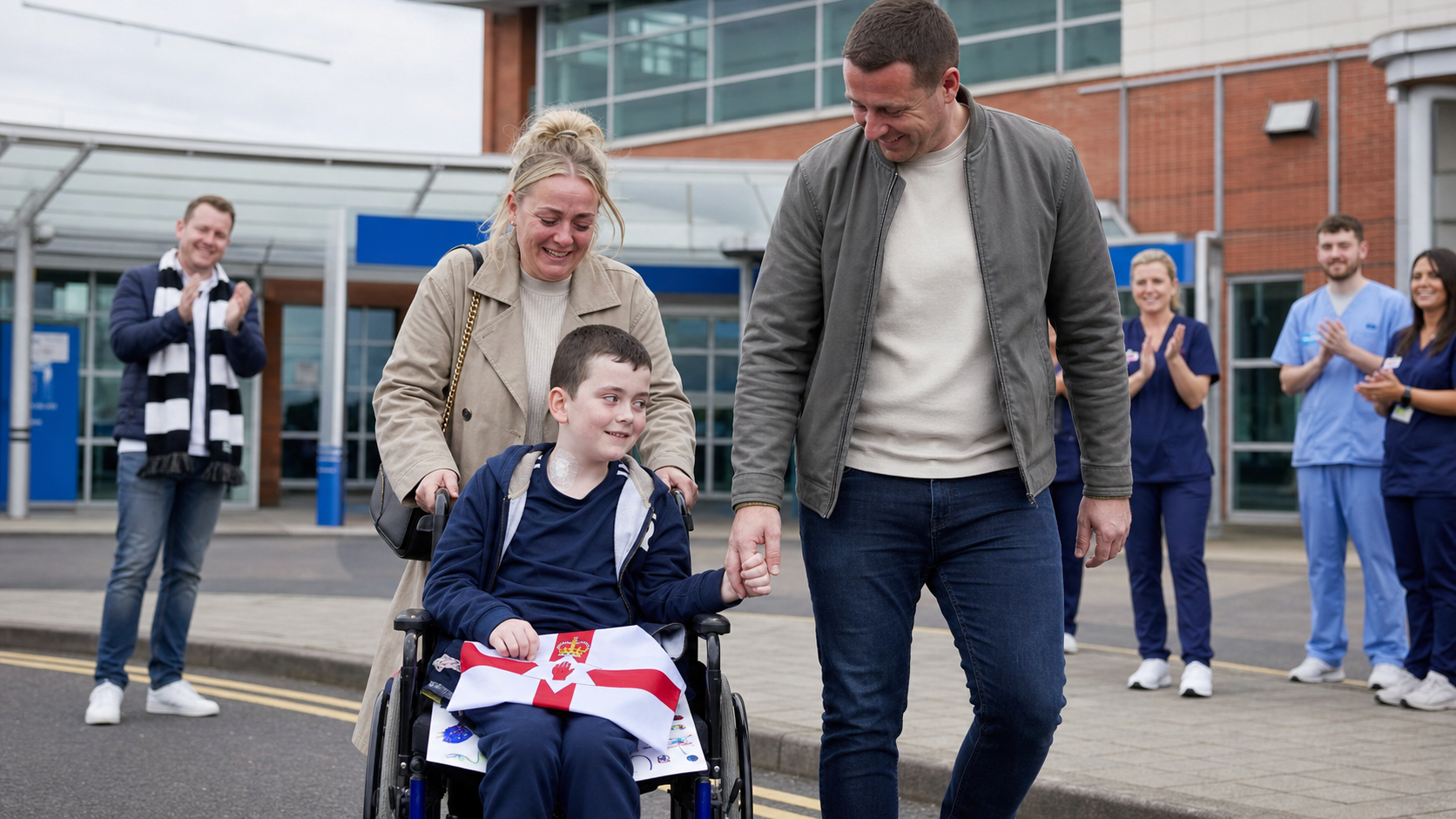
Dáithí Mac Gabhann Leaves Hospital After Successful Heart Transplant as Family Prepares to Return to Belfast
Dáithí Mac Gabhann, the nine-year-old Belfast boy whose family's years-long campaign for organ donation reform in Northern Ireland led directly to the introduction of an opt-out system, has been discharged from Ward 23 of the Freeman Hospital in Newcastle upon Tyne following a successful heart transplant — a moment his family described as nothing short of miraculous.
Background
Dáithí Mac Gabhann was born with hypoplastic left heart syndrome, a severe congenital condition in which the left side of the heart is critically underdeveloped. He has been on the heart transplant waiting list since 2018, when he was just two years old. In the years that followed, his parents Máirtín and Seph Mac Gabhann became tireless advocates for organ donation reform in Northern Ireland, arguing that the existing opt-in system was costing lives by limiting the pool of available donors.
Their campaign, which gathered enormous public support and cross-party political backing, ultimately succeeded in June 2023 when the Northern Ireland Assembly passed "Dáithí's Law" — legislation establishing an opt-out system for organ donation, meaning that adults in Northern Ireland are now presumed to have consented to donation unless they have registered an objection. The law was a landmark moment for healthcare policy in Northern Ireland and placed the region in line with similar legislation already in place in Wales, England, and Scotland.
Despite the passage of the law, Dáithí continued to wait for a suitable donor heart. The family's journey became a symbol of both the urgent need for organ donation and the power of community advocacy to change policy. Dáithí's story was followed closely across Ireland and beyond, with his family sharing updates that resonated with thousands of people who had been touched by organ donation in their own lives.
Key Developments
In July 2026, the call that the Mac Gabhann family had been waiting years for finally came: a donor heart had become available. Dáithí was swiftly transferred from Belfast to the Freeman Hospital in Newcastle upon Tyne, one of the UK's leading centres for paediatric cardiac surgery. The transplant operation was completed in five hours, and his father Máirtín described the immediate improvement in his son's condition as remarkable — noting that the colour returned to Dáithí's lips almost immediately after the procedure.
Dáithí spent two weeks in the Freeman Hospital following the surgery, monitored closely by the cardiac team as his body adjusted to the new heart. On August 4, he was discharged from Ward 23, a moment that his family marked with deep gratitude — both to the medical team who cared for him and to the family of the donor whose generosity made the transplant possible. The Mac Gabhann family have been careful to acknowledge the grief behind every organ donation, and their public statements have consistently honoured the donor family's loss.
Why It Matters
Dáithí's story matters on multiple levels. At the most personal level, it is the story of a child who has been given a chance at a fuller life after years of uncertainty and medical complexity. But it is also a story about what community advocacy can achieve. The passage of Dáithí's Law in 2023 has already had measurable effects on organ donation rates in Northern Ireland, with the opt-out system increasing the number of people registered as potential donors. Every transplant that takes place under the new system is, in a sense, a consequence of the Mac Gabhann family's determination to turn their private pain into public good.
The case also highlights the ongoing importance of paediatric cardiac services and the need for continued investment in transplant infrastructure across the island of Ireland. The Freeman Hospital in Newcastle remains the primary centre for paediatric heart transplants for patients from Northern Ireland, a cross-border dependency that reflects both the specialised nature of the procedure and the relatively small population base of the region.
Local Impact
For Belfast and the wider Northern Ireland community, Dáithí's discharge from hospital is a moment of collective joy. His family's campaign was rooted in the Falls Road area of west Belfast, and the community there has followed his journey with particular closeness. The passage of Dáithí's Law has prompted conversations about organ donation in households across Northern Ireland that might never otherwise have taken place, and the family's openness about their experience has encouraged many people to register their wishes and discuss them with loved ones. The Belfast Health and Social Care Trust has noted an increase in donor registrations since the law came into effect.
What's Next
The Mac Gabhann family will remain in Newcastle for approximately three weeks of post-operative care and monitoring before returning to their home in Belfast. Dáithí's recovery will continue under the supervision of the Freeman Hospital's cardiac team, with regular check-ups scheduled to monitor his progress. While the transplant is not considered a cure — Dáithí will require lifelong medication and monitoring — his family have expressed hope that he will now be able to enjoy activities and experiences that his condition previously made impossible. The family have also indicated they intend to continue advocating for organ donation awareness, ensuring that Dáithí's Law is as effective as possible in practice.