A Day of High Political Drama
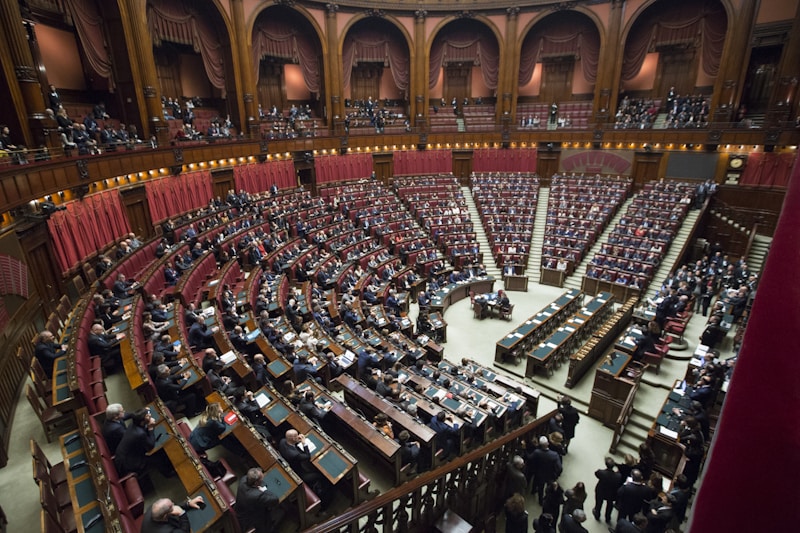
The Dáil witnessed one of its most politically charged debates in recent memory on Thursday, as TDs voted to defeat a Sinn Féin private member's bill that would have committed the government to holding a referendum on Irish unity within five years. The bill was defeated by 84 votes to 61, with the government parties — Fine Gael, Fianna Fáil, and the Green Party — voting against, joined by several independent TDs.
The defeat was expected — the government had signalled its opposition to the bill from the moment it was published — but the debate that preceded the vote was anything but routine. For more than six hours, TDs from across the political spectrum argued about the nature of Irish identity, the lessons of the peace process, the economic implications of unity, and the rights and concerns of the unionist community in Northern Ireland.
Sinn Féin's Case
Sinn Féin leader Mary Lou McDonald opened the debate with a passionate speech arguing that the time for a unity referendum was now, that the conditions set out in the Good Friday Agreement for calling a border poll had been met, and that the Irish government had a responsibility to plan for and facilitate the democratic expression of the Irish people's wishes on the constitutional question.
"The Good Friday Agreement is not just a peace agreement — it is a constitutional framework that provides a democratic pathway to Irish unity," McDonald said. "The Secretary of State for Northern Ireland has a legal obligation to call a border poll when it appears likely that a majority would vote for unity. The evidence suggests that moment is approaching. The Irish government should be preparing, not prevaricating."
Sinn Féin's bill proposed the establishment of a Citizens' Assembly on Irish Unity, the publication of a government Green Paper on the economic and social implications of unity, and a commitment to hold a referendum within five years if the Citizens' Assembly recommended it.
Fine Gael's Counter-Proposal
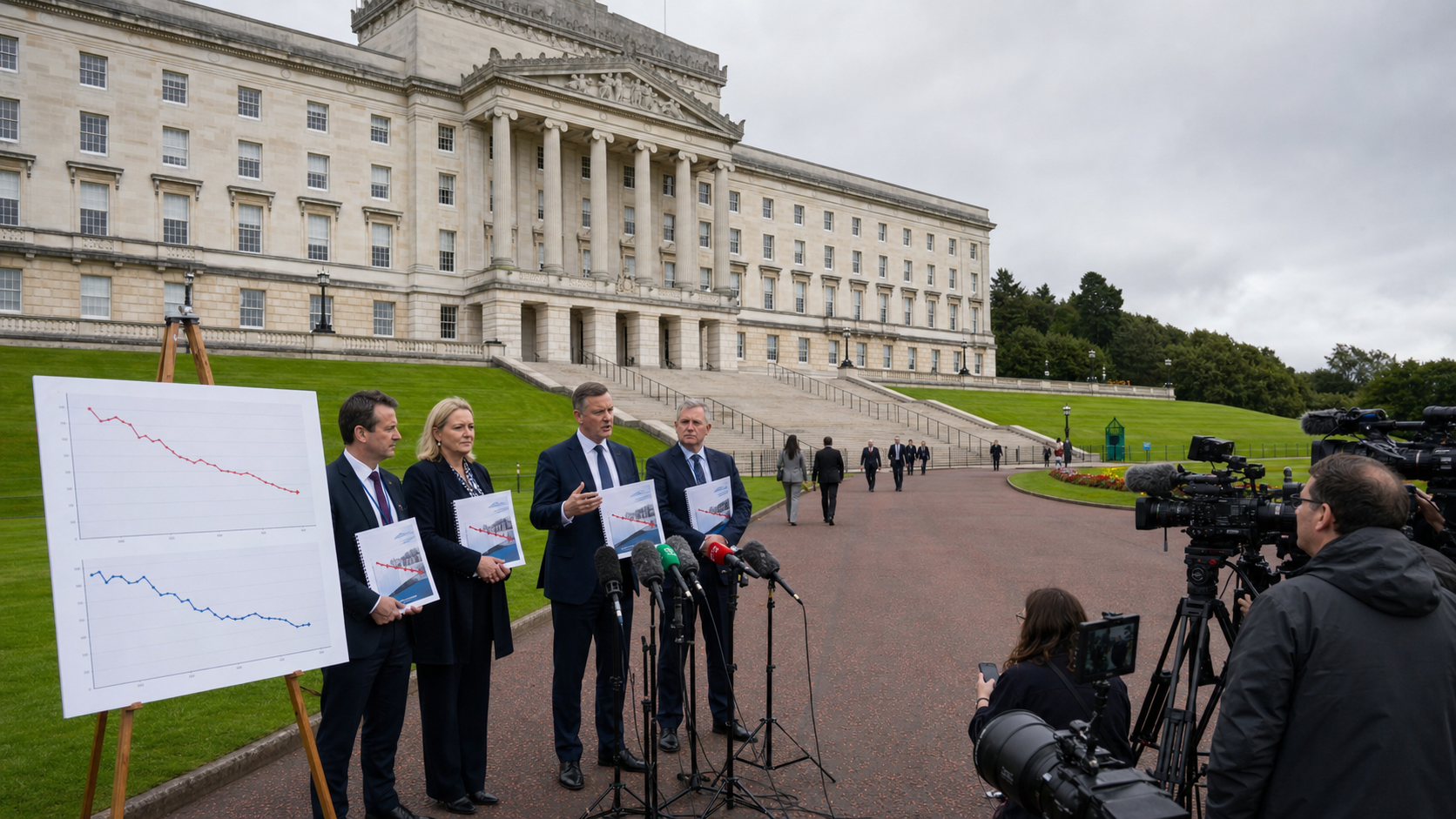
In a carefully choreographed political move, Fine Gael chose the same day to publish its own document on Irish unity — a 47-page blueprint that it described as a "responsible and realistic" approach to the question. The document, titled Towards a New Ireland: A Framework for Dialogue, proposes a series of all-island dialogue processes, economic studies, and civic engagement initiatives, but explicitly rejects a time-bound commitment to a referendum.
"Irish unity, if it comes, must be built on consent — the consent of people in both jurisdictions, freely given, without coercion or artificial deadlines," said Taoiseach Micheál Martin. "That is the lesson of the Good Friday Agreement. You cannot rush reconciliation. You cannot legislate for trust."
Fine Gael's blueprint was welcomed by some commentators as a serious engagement with the unity question, but criticised by others — including some within the party's own coalition — as a political manoeuvre designed to neutralise Sinn Féin's advantage on the issue without actually committing to anything concrete.
The Unionist Dimension
Several TDs, including some from Fianna Fáil, used the debate to emphasise the importance of engaging with unionist concerns before any referendum is called. "A united Ireland that unionists feel has been imposed on them against their will is not a united Ireland worth having," said one Fianna Fáil backbencher. "We need to do the hard work of building relationships and trust before we start talking about dates for referendums."
The debate also touched on the economic implications of unity, with government TDs citing studies suggesting that the costs of integration could be substantial in the short to medium term, and Sinn Féin TDs countering with their own analysis suggesting that the long-term economic benefits would outweigh the transition costs.
Where Does This Leave the Unity Question?
Thursday's Dáil vote does not resolve the unity question — nothing could. But it does clarify the political landscape. Sinn Féin will continue to push for a referendum, Fine Gael and Fianna Fáil will continue to resist a time-bound commitment, and the debate will continue to evolve as demographic and political changes in Northern Ireland make the constitutional question ever more live. The question is not whether Irish unity will be debated — it will be. The question is whether Ireland's political institutions are doing enough to prepare for the day when that debate becomes a decision.