Dáil Debates Constitutional Right to Housing as Landmark Bill Reaches Second Stage
Dáil Éireann has begun substantive debate on the Forty-first Amendment of the Constitution (Right to Housing) Bill 2026, a Private Member's Bill that would enshrine a constitutional right to housing in Ireland — a measure that its supporters argue is essential to force the state to treat housing as a fundamental human right rather than a commodity, and that its critics contend would create legal uncertainty without solving the underlying supply crisis.
Background
The idea of a constitutional right to housing in Ireland has been debated for decades, but it has gained significant momentum in recent years as the housing crisis has deepened and the human cost of homelessness, unaffordability, and insecurity of tenure has become impossible to ignore. Ireland's housing crisis is now one of the most severe in Europe by several measures: house prices relative to incomes, the number of people in emergency accommodation, and the proportion of income that renters spend on housing all place Ireland among the most stressed housing markets on the continent.
The Housing Commission, established by the government to examine the feasibility of a constitutional amendment, delivered its report in 2024, recommending that a right to housing be considered but noting significant legal and practical complexities. The government has been cautious about committing to a referendum, citing concerns about the legal implications of a justiciable right to housing — one that could be enforced through the courts — and the risk of creating expectations that the state cannot immediately fulfil.
The bill before the Dáil was initiated by TD Rory Hearne, a housing academic and politician who has been one of the most prominent advocates for a constitutional right to housing. It reached its Second Stage — where the general principles of the bill are debated — on 25 September 2026, with further debate scheduled for Thursday evening, 1 October.
Key Developments
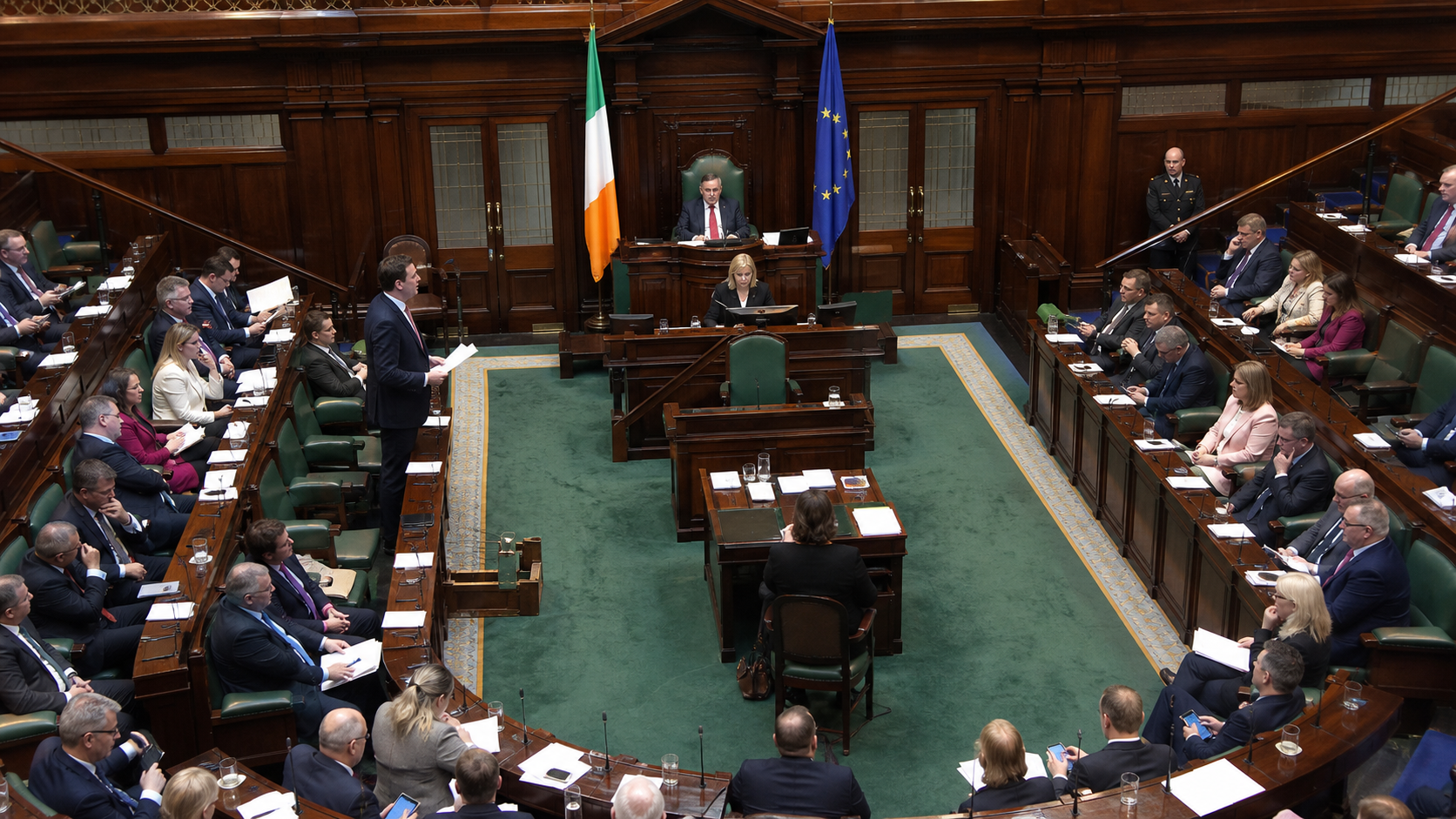
The Second Stage debate has attracted contributions from TDs across the political spectrum, reflecting the broad public interest in the housing crisis and the range of views on how best to address it. Supporters of the bill argue that a constitutional right to housing would fundamentally change the state's obligations, requiring it to take active steps to ensure that everyone has access to adequate housing rather than simply facilitating the market.
Critics — including some government TDs — have raised concerns about the legal implications of a justiciable right, arguing that it could lead to a flood of litigation and create obligations that the state cannot fulfil in the short term. They point to the experience of other countries where constitutional rights to housing have been interpreted by courts in ways that created significant financial and administrative burdens for governments.
The bill has not yet proceeded to Committee Stage, where the text would be examined section by section. Its passage through the Oireachtas will depend on whether the government decides to support, oppose, or amend it — a decision that is likely to be influenced by the political dynamics of the housing debate in the run-up to the next general election.
Why It Matters
The debate over a constitutional right to housing is not merely a legal or technical question — it is a debate about what kind of society Ireland wants to be and what obligations the state owes to its citizens. The current housing crisis has created a generation of people who cannot afford to buy a home, who spend a disproportionate share of their income on rent, and who face the constant threat of eviction or displacement. For these people, the question of whether housing is a right or a commodity is not abstract — it is a daily reality.
A constitutional right to housing would not, by itself, build a single house. But it would change the legal and political framework within which housing policy is made, creating a floor below which the state's obligations cannot fall and providing a basis for legal challenge when those obligations are not met. Whether that is a desirable outcome depends on one's view of the appropriate role of the courts in shaping social policy — a question on which reasonable people disagree.
Local Impact
The housing crisis affects communities across Ireland, but its impact is felt most acutely in Dublin, Cork, Galway, and Limerick, where house prices and rents are highest relative to local incomes. In Dublin, the average house price now exceeds €500,000, placing homeownership out of reach for most first-time buyers on average incomes. In Galway city, the rental market has been described by advocacy groups as "broken", with vacancy rates near zero and rents rising faster than wages. A constitutional right to housing would, in theory, give residents in these areas a legal basis to challenge the state's failure to provide adequate housing — though the practical implications of such challenges would depend heavily on how the courts interpreted the right.
What's Next
The Second Stage debate is expected to conclude in the coming weeks, after which the bill will either proceed to Committee Stage or be defeated. The government's position — which has not been definitively stated — will be crucial. If the government opposes the bill, it is unlikely to pass; if it supports or abstains, the bill has a realistic chance of progressing. The housing debate is expected to be a central issue in Budget 2027, due on 6 October, and the government's response to the right-to-housing bill will be seen as a signal of its broader approach to the crisis.