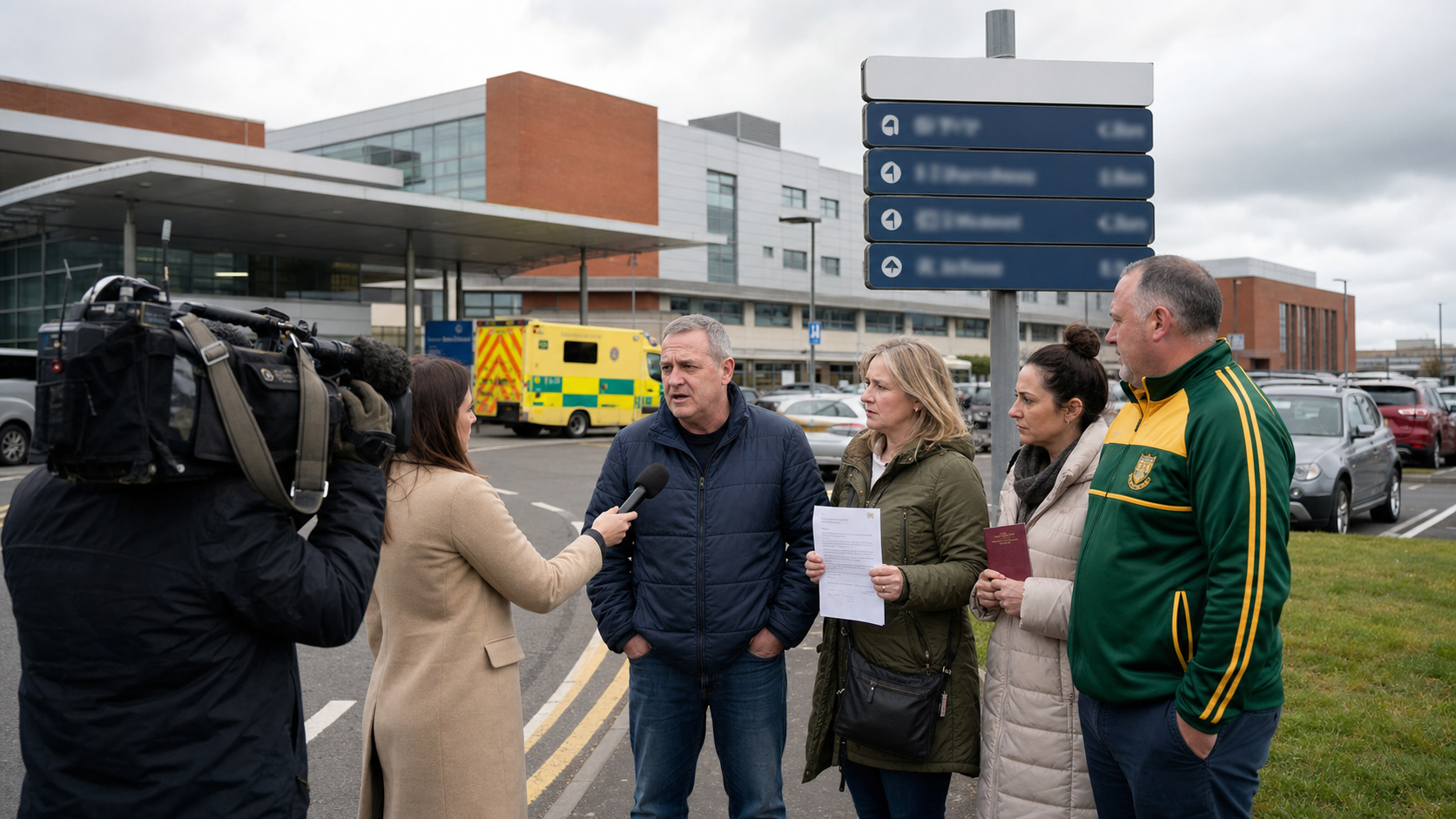
Cross-Border Healthcare Crisis Deepens as Patients Flee Both Systems and Ministers Seek Cooperation Deal
A growing cross-border patient exodus is exposing the shared nature of the healthcare crisis on both sides of the Irish border, with thousands of Republic of Ireland patients using the EU Cross-Border Directive to access care in Northern Ireland while Northern Ireland's Health Minister Mike Nesbitt urgently seeks to reinstate a reimbursement scheme allowing NI patients to receive treatment in the Republic — a situation that health advocates say demands a formal all-island healthcare cooperation framework.
Background
The healthcare systems of Northern Ireland and the Republic of Ireland have historically operated in parallel rather than in cooperation, reflecting the political division of the island and the different institutional frameworks — the NHS in the North, the HSE in the South — within which they function. Despite sharing a land border, a common language, and many of the same health challenges, the two systems have developed largely independently, with limited formal mechanisms for cross-border patient referral, workforce sharing, or joint service planning.
This separation has become increasingly difficult to justify as both systems face mounting capacity crises. Northern Ireland has the longest hospital waiting lists in the United Kingdom, with over 500,000 patients awaiting a first consultant-led outpatient appointment. The Republic of Ireland's waiting lists, while measured differently, are equally severe, with nearly one million patients awaiting inpatient, day-case, or outpatient appointments. Both systems face acute workforce shortages, particularly in specialist areas such as psychiatry, radiology, and surgery.
The EU Cross-Border Directive, which came into effect in 2013, provides a legal framework for patients from EU member states to access healthcare in other EU countries and have the cost reimbursed by their home health system. For patients in the Republic of Ireland, this has created an opportunity to access care in Northern Ireland — which, despite Brexit, continues to operate within a framework that allows for cross-border patient movement — and have the cost covered by the HSE.
Key Developments
The scale of the cross-border patient flow has grown dramatically in recent years. HSE reimbursement expenditure under the EU Cross-Border Directive has risen to over €12 million annually, covering nearly 4,000 patients in a single year — a figure that has grown so rapidly that the HSE has had to hire additional administrative staff simply to manage the volume of applications. The most common procedures accessed by Republic patients in Northern Ireland include cataract surgery, hip and knee replacements, and other elective procedures where waiting times in the Republic are particularly long.
Northern Ireland's Health Minister Mike Nesbitt has responded to this situation by expressing an urgent desire to reinstate a cross-border reimbursement scheme that would allow patients from Northern Ireland to access treatment in the Republic and have the cost covered by the Northern Ireland health system. Such a scheme previously existed but was closed in 2022 due to funding issues. Its revival is now seen as a crucial lever to alleviate pressure on the Northern system, particularly for procedures where capacity in the Republic is greater than in the North.
Health advocates on both sides of the border have welcomed the minister's initiative but have called for it to be embedded within a broader framework of all-island healthcare cooperation. They argue that the current situation — in which patients are effectively self-organising a cross-border healthcare system through the use of EU directives and informal referral networks — is inefficient and inequitable, benefiting those with the knowledge and resources to navigate complex administrative processes while leaving the most vulnerable patients behind.
Why It Matters
The cross-border healthcare situation matters because it illustrates both the potential and the limitations of all-island cooperation in a critical public service. The fact that thousands of patients are already crossing the border to access healthcare demonstrates that the practical barriers to cross-border service delivery are manageable — what is lacking is the political will and institutional framework to make this cooperation systematic, equitable, and sustainable. A formal all-island healthcare cooperation framework could deliver significant benefits for patients on both sides of the border, allowing the two systems to pool capacity, share specialist expertise, and develop joint approaches to workforce planning and service development. The potential savings from avoiding duplication and achieving economies of scale could be substantial, freeing up resources for investment in frontline services.
Local Impact
The cross-border patient flow is having a tangible impact on healthcare providers in border areas. Hospitals in Newry, Derry, and other towns close to the border are seeing increased demand from Republic patients accessing care under the EU directive, creating both opportunities and pressures for local health services. In some specialties, the additional demand from cross-border patients is helping to sustain services that might otherwise be at risk due to insufficient local demand. In others, it is adding to already stretched capacity and creating waiting time pressures for local patients. The management of this cross-border demand requires careful coordination between the two health systems, coordination that is currently happening on an ad hoc basis rather than within a formal framework.
What's Next
Discussions between the Northern Ireland Department of Health and the Irish Department of Health on the reinstatement of the cross-border reimbursement scheme are expected to intensify in the coming months. A formal proposal is expected to be considered by the North-South Ministerial Council before the end of 2026, with a view to having a new scheme in place by mid-2027. The broader question of all-island healthcare cooperation will be addressed in the context of the Shared Island initiative, with the Irish government expected to announce new cross-border health projects in the autumn. Health advocates have called for the establishment of a permanent all-island health forum, bringing together ministers, health service leaders, and patient representatives from both jurisdictions to develop a shared vision for healthcare on the island of Ireland.