Cork Social Housing Inspection Failure Exposed as Council Checks Just 1.6% of Stock Since 2024
Cork City Council has inspected just 1.6% of its social housing stock since 2024 — a figure that housing advocates have described as wholly inadequate and that raises serious questions about the condition of thousands of social housing units across the city, at a time when the government is seeking to strengthen housing standards enforcement and when tenants are increasingly vocal about the quality of the homes they are being asked to live in.
Background
Social housing inspection is one of the most basic responsibilities of local authorities in Ireland. The obligation to inspect social housing stock — to ensure that properties meet minimum standards of habitability, safety, and maintenance — is both a legal requirement and a fundamental duty of care to the tenants who depend on local authority housing as their primary accommodation. When inspection rates fall to the levels revealed in Cork, the practical consequence is that problems — damp, mould, structural defects, heating failures, and a range of other issues — can persist for years without being identified or addressed.
The inspection failure in Cork is not an isolated phenomenon. Local authorities across Ireland have struggled to maintain adequate inspection rates, citing resource constraints, staffing shortages, and the competing demands on their housing departments. The government's housing inspectorate has repeatedly flagged the gap between the inspection targets set in national policy and the rates actually achieved by local authorities, but the response has been slow and the gap has persisted.
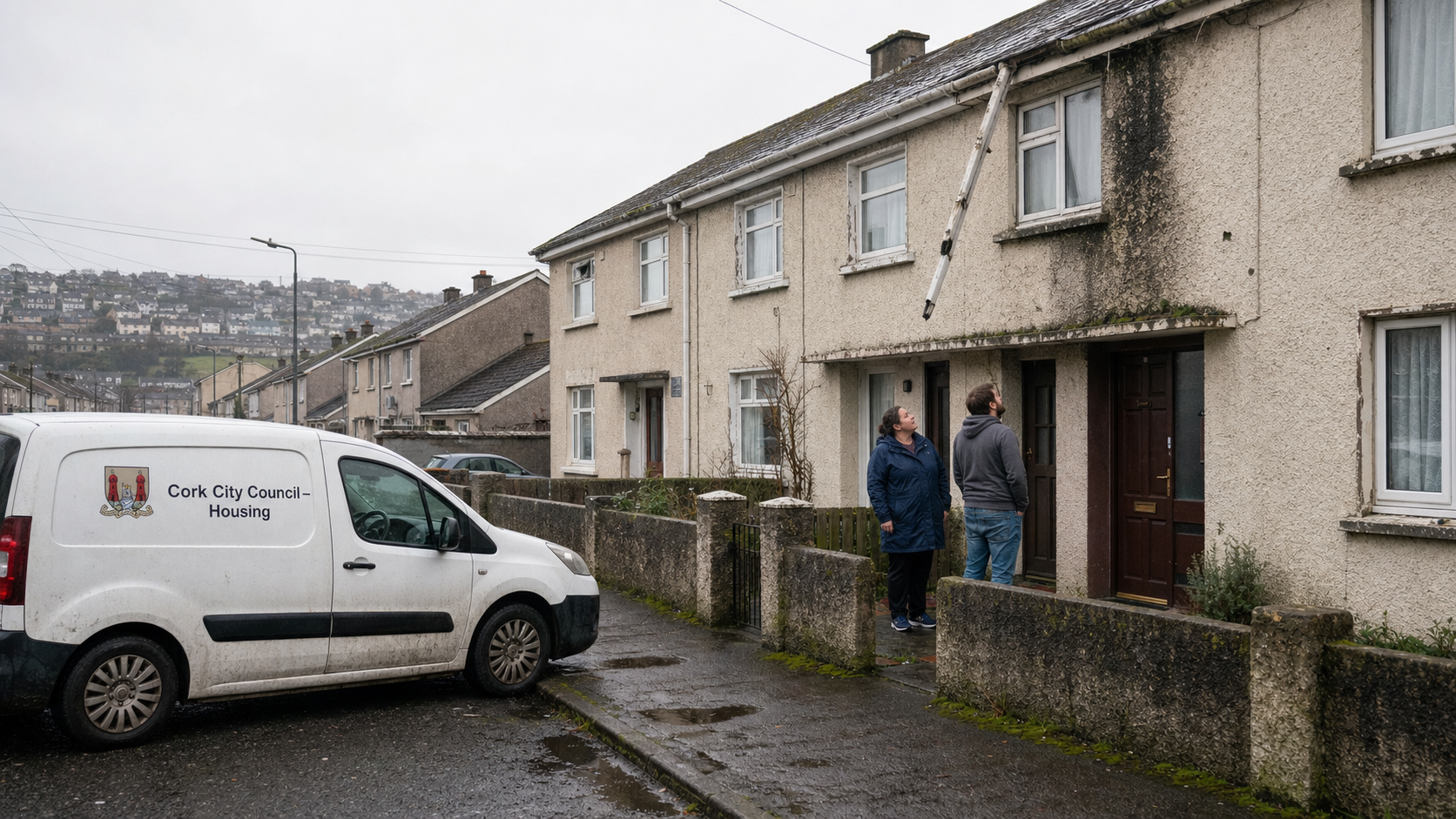
The context is one of significant pressure on social housing tenants. Many of the properties in Cork City Council's social housing stock are older buildings that require ongoing maintenance and investment to remain in good condition. The combination of ageing stock, limited maintenance budgets, and inadequate inspection creates conditions in which tenants can find themselves living in properties that do not meet basic standards — and in which they have limited recourse when they raise concerns.
Key Developments
The 1.6% inspection rate since 2024 means that the vast majority of Cork City Council's social housing stock has not been formally inspected in more than two years. Given that the standard inspection cycle for social housing is supposed to be every three to five years, this rate implies that many properties will go a decade or more without a formal inspection — a period during which significant problems can develop and worsen.
Housing advocates have described the figure as shocking, pointing out that it represents a fundamental failure of the council's duty of care to its tenants. The Cork Tenants' Federation has called for an emergency inspection programme, arguing that the council should prioritise the inspection of its oldest and most vulnerable stock — properties built before 1980 that are most likely to have significant maintenance issues.
The council has acknowledged the inadequacy of its inspection rate and has indicated that it is seeking additional resources from the Department of Housing to address the backlog. The department has indicated that it is reviewing the inspection capacity of local authorities across the country and that additional funding may be made available as part of the next round of housing investment.
Why It Matters
The Cork inspection failure matters because it has direct consequences for the health and wellbeing of the people who live in social housing. Damp and mould, which are among the most common problems in older social housing stock, are associated with respiratory conditions, particularly in children and elderly people. Heating failures in winter can have serious health consequences for vulnerable tenants. Structural defects, if left unaddressed, can create safety risks. The failure to inspect properties means that these problems are not being identified and addressed in a timely way — and that tenants who raise concerns may find that the council is unaware of the scale of the problem in its own stock. The inspection failure also matters because it undermines the credibility of the government's housing standards agenda. It is difficult to argue that housing standards are being taken seriously when the local authority responsible for a major city is inspecting less than 2% of its social housing stock in two years.
Local Impact
The impact of the inspection failure is felt most acutely by tenants in Cork City Council's social housing estates — in areas such as Knocknaheeny, Farranree, Togher, and Mahon, where older housing stock is concentrated and where maintenance issues are most likely to be present. Tenants in these areas have been vocal about the difficulties they face in getting maintenance issues addressed, and the inspection failure provides context for those difficulties. The Cork Tenants' Federation, which represents social housing tenants across the city, has been in contact with the council about the inspection issue and has indicated it will escalate its concerns to the Department of Housing if the council does not commit to a credible improvement plan. The federation has also indicated it will seek a meeting with the Minister for Housing to discuss the issue.
What's Next
Cork City Council is expected to publish an improvement plan for its social housing inspection programme within the next six weeks, setting out how it intends to increase its inspection rate and address the backlog. The Department of Housing has indicated it will review the plan and determine whether additional resources are needed. The government's housing inspectorate is expected to publish its annual report on local authority inspection rates before the end of June, which will provide a national picture of the inspection failure and allow comparison between local authorities. The Minister for Housing has indicated that inspection rates will be a key performance indicator for local authorities in the next round of housing investment agreements.