New Social Housing Residency Test Raises Human Rights Concerns as EU Temporary Protection Holders Excluded
New legislation requiring applicants for social housing in Ireland to demonstrate both legal and habitual residence has come into force, with a provision specifically excluding those living in Ireland under the EU Temporary Protection Directive drawing sharp criticism from housing advocates and human rights organisations who warn the measure risks creating a new category of 'hidden homelessness' among displaced people who have been living and working in the country for years.
Background
The EU Temporary Protection Directive was activated for the first time in March 2022 in response to Russia's full-scale invasion of Ukraine, providing a fast-track protection status for Ukrainian nationals and their family members fleeing the conflict. Ireland has been one of the most significant recipients of Ukrainian displaced persons under the directive, with approximately 100,000 Ukrainians having arrived in the country since the invasion began.
Those living in Ireland under the Temporary Protection Directive have access to a range of rights and services, including the right to work, access to education, and access to healthcare. However, their status is explicitly temporary — the directive was designed as a short-term emergency measure, not a permanent immigration pathway. The question of what happens to Temporary Protection holders as the directive approaches its expiry has been a source of considerable uncertainty and anxiety for the Ukrainian community in Ireland.
The social housing system in Ireland operates on the basis of a housing needs assessment, with applicants placed on a waiting list according to their assessed need and the availability of social housing in their area. The waiting lists are long — in some local authority areas, the wait for social housing can exceed ten years — and access to the list has historically been subject to a habitual residence condition, which requires applicants to demonstrate that Ireland is their primary place of residence.
Key Developments
The new legislation, which came into force in June 2026, introduces a more explicit and stringent residency test for social housing applicants, requiring them to demonstrate both legal residence — that is, the right to be in Ireland under immigration law — and habitual residence, meaning that Ireland is genuinely their primary place of residence. The legislation specifically excludes those whose legal basis for being in Ireland is the EU Temporary Protection Directive from accessing the social housing list.
The exclusion of Temporary Protection holders has been criticised by housing advocacy organisations including Threshold, the Irish Refugee Council, and the Mercy Law Resource Centre. These organisations argue that many Temporary Protection holders have been living in Ireland for three or four years, have children in Irish schools, are working and paying taxes, and have no realistic prospect of returning to Ukraine in the near future. Excluding them from the social housing list, the advocates argue, will push them into a precarious position in the private rental market — or, in the worst cases, into homelessness.
The Government has defended the exclusion on the grounds that the Temporary Protection Directive is, by definition, a temporary measure and that social housing is a long-term commitment that should be reserved for those with a permanent or long-term legal basis for remaining in Ireland. Ministers have pointed to the Transition Scheme announced earlier in 2026, which provides a pathway for Temporary Protection holders to regularise their status under the standard immigration system, as the appropriate mechanism for those who wish to remain in Ireland on a long-term basis.
Why It Matters
The social housing residency test raises fundamental questions about the relationship between immigration status and access to public services in Ireland. The principle that access to social housing should be linked to long-term legal status is not inherently unreasonable — most countries apply similar criteria. The concern, however, is that the specific exclusion of Temporary Protection holders creates a gap between the reality of people's lives and the legal categories available to them.
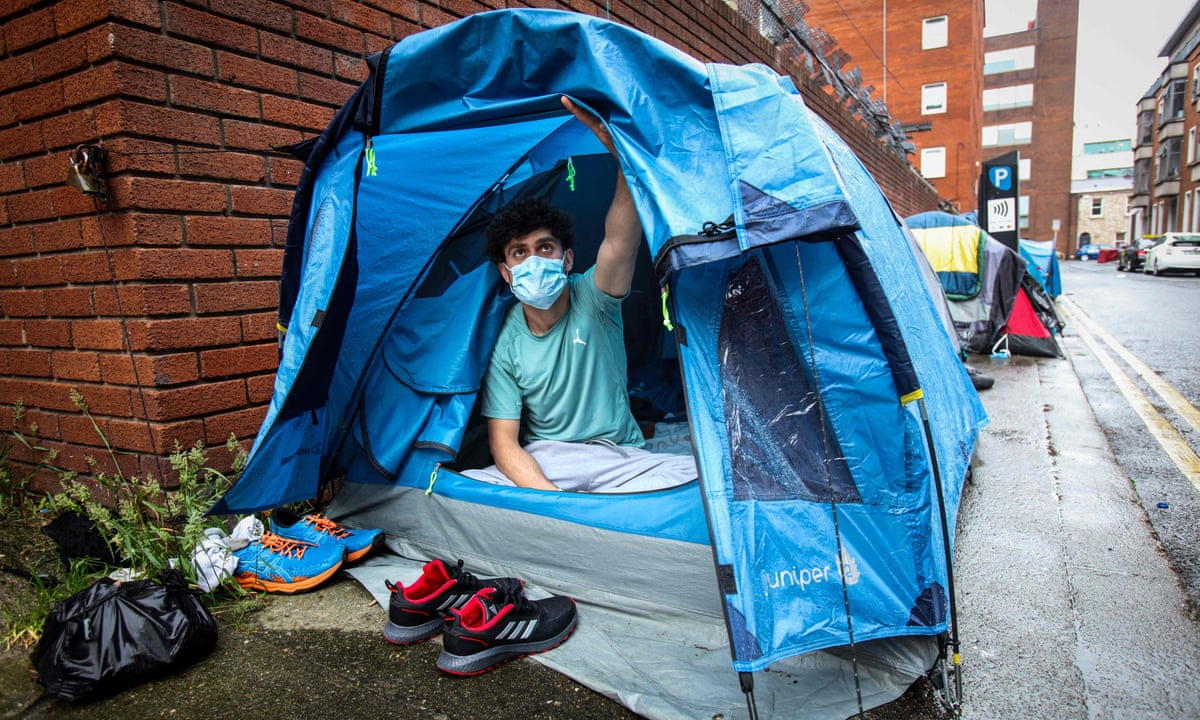
Many Temporary Protection holders are in a genuine limbo — they cannot return to Ukraine because the war continues, they cannot access social housing because of their immigration status, and they face significant barriers in the private rental market because of the cost and scarcity of accommodation. The risk of 'hidden homelessness' — people sleeping on sofas, in overcrowded accommodation, or in emergency shelters — is real and has been documented by frontline organisations working with the Ukrainian community.
Unlike the UK, which has developed a specific long-term visa pathway for Ukrainians who wish to remain beyond the initial temporary protection period, Ireland's approach has been more cautious, relying on the existing immigration system to absorb those who wish to stay. The adequacy of that approach is now being tested as the Temporary Protection Directive approaches its expiry.
Local Impact
The impact of the new residency test will be felt most acutely in the local authority areas that have the largest concentrations of Temporary Protection holders. Dublin, Cork, Galway, and Limerick have all seen significant Ukrainian communities establish themselves since 2022, with many families now deeply embedded in local schools, workplaces, and community organisations. The exclusion of these families from the social housing list will place additional pressure on the private rental market in these cities, where rents are already at record levels.
Local authorities have been asked to provide data on the number of Temporary Protection holders currently on social housing waiting lists who will be affected by the new legislation. The figures, when published, are expected to provide a clearer picture of the scale of the problem and the resources that will be needed to address it.
What's Next
The Irish Refugee Council and Mercy Law Resource Centre have indicated they are considering a legal challenge to the exclusion of Temporary Protection holders from the social housing list, arguing that it may be incompatible with EU law and the European Convention on Human Rights. A decision on whether to proceed with a challenge is expected in the coming weeks. The Government has indicated it will keep the policy under review as the situation in Ukraine evolves and as the Temporary Protection Directive approaches its scheduled expiry.