Congress Ends 75-Day DHS Shutdown as House Republicans Cave on ICE Funding
The Department of Homeland Security reopened on April 30 after Congress passed a funding package ending the longest partial shutdown in the agency's history -- 75 days -- with House Speaker Mike Johnson forced to accept a bill that contains zero new funding for Immigration and Customs Enforcement, a stunning reversal for a Republican majority that had staked its credibility on border enforcement.
Background
The DHS shutdown began in mid-February when House conservatives blocked a continuing resolution over demands for expanded ICE funding and stricter border enforcement measures. The standoff exposed a deep fracture within the House Republican conference, pitting hardline members who refused any bill without immigration enforcement dollars against moderates representing competitive districts who faced mounting constituent pressure over airport delays and federal worker pay disruptions.
DHS Secretary Markwayne Mullin had warned repeatedly in recent weeks that the department was approaching a fiscal cliff, with funds for core operations -- including the Transportation Security Administration -- nearly exhausted. TSA checkpoints at major airports including O'Hare in Chicago, Hartsfield-Jackson in Atlanta, and LAX in Los Angeles had begun operating with reduced staffing, producing lines stretching hundreds of yards during peak travel periods.
Key Developments
The House passed the funding package by a voice vote on April 30, a procedural maneuver that avoids a recorded roll call and shields individual members from accountability. President Donald Trump signed the bill into law hours later. Senate Majority Leader John Thune had cleared the upper chamber earlier in the day with bipartisan support.
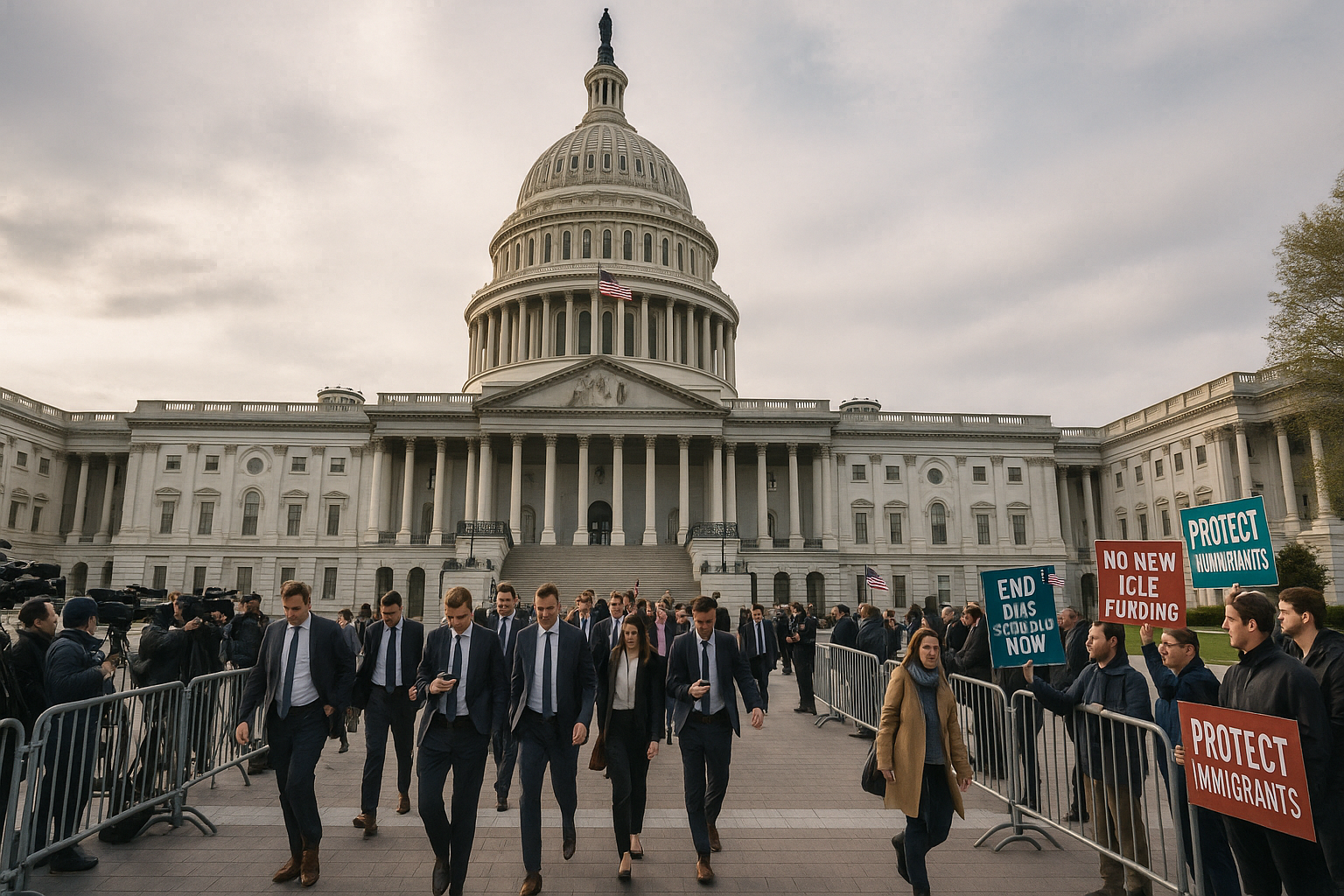
The final bill contains no new ICE funding -- a direct concession to Democratic demands and a significant retreat from the position House conservatives had held for more than two months. Rep. Chip Roy of Texas called the outcome "asinine," though he directed his frustration at the broader political dynamics rather than Speaker Johnson personally. Rep. Andy Harris of Maryland and Rep. Zach Nunn of Iowa were among the moderate Republicans who had applied the most sustained pressure on leadership to resolve the impasse.
Republican leadership announced it will pursue ICE and border enforcement funding separately through the budget reconciliation process, which requires only a simple Senate majority and bypasses the Democratic filibuster. That path carries its own procedural risks and timeline uncertainties, with reconciliation negotiations already complicated by disagreements over tax cuts and Medicaid spending.
Why Americans Should Care
The 75-day shutdown had tangible consequences for Americans across the country. TSA workers in major hub cities -- including Dallas-Fort Worth, Denver International, and Miami International -- went without full paychecks for weeks, with many relying on food banks and emergency assistance programs. Federal contractors supporting DHS operations in border states including Texas, Arizona, and New Mexico faced contract suspensions that rippled through local economies.
For travelers, the staffing shortfalls translated into longer security lines and delayed flights throughout March and April. Customs and Border Protection operations at ports of entry in El Paso, San Diego, and Laredo operated at reduced capacity, slowing commercial freight crossings that affect supply chains for retailers and manufacturers nationwide. The resolution restores full operational funding, but the political fight over ICE appropriations will resume through reconciliation -- meaning border-state communities and immigration advocates face another round of high-stakes negotiations before the fiscal year ends.
Why It Matters
The DHS shutdown resolution marks a significant test of Speaker Johnson's ability to manage his fractious conference -- and the outcome reveals the limits of hardline leverage in a chamber where Republicans hold only a narrow majority. The 1995-96 government shutdown, which lasted 21 days and cost the federal government an estimated $1.4 billion, was once considered the benchmark for political brinkmanship. The 75-day DHS standoff dwarfs that precedent in duration, though its scope was limited to a single department rather than the full government.
Internationally, the shutdown drew attention from US allies who rely on DHS for visa processing and border coordination. Canada and Mexico both flagged concerns about cross-border commerce disruptions. The episode also underscores a structural tension in American governance: the House Freedom Caucus can block legislation but cannot independently pass it, creating a dynamic where maximalist demands frequently collapse under the weight of practical consequences. The reconciliation gambit for ICE funding may produce a similar cycle -- conservative demands, moderate resistance, and eventual compromise -- unless Republican leaders can hold their conference together through a more complex legislative vehicle.
What's Next
Republican leadership has committed to pursuing ICE and border enforcement funding through the budget reconciliation bill currently being assembled in the House Budget Committee. That process is expected to take several weeks, with a floor vote unlikely before June. Democrats have signaled they will use every procedural tool available to slow or block the reconciliation package. DHS Secretary Mullin has indicated the department will begin rebuilding operational reserves immediately, with full staffing at TSA checkpoints expected to be restored within two weeks.
Sources: CNN; The Washington Post